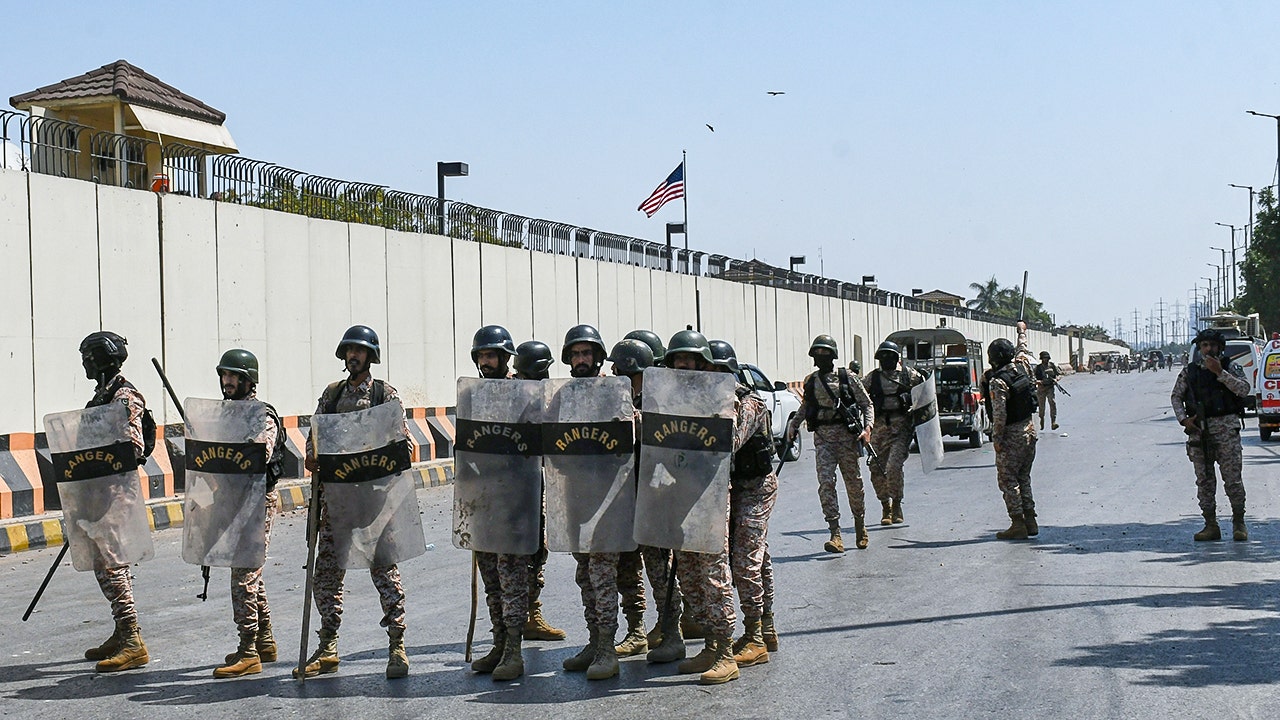
Karachi, Pakistan — At least nine people were killed and more than two dozen injured in violent clashes outside the U.S. Consulate General in Karachi on Wednesday, as hundreds of protesters attempted to storm the diplomatic compound amid reports of escalating tensions in the Middle East.
The unrest erupted following unconfirmed reports that Iran's Supreme Leader, Ayatollah Ali Khamenei, was killed in a joint U.S.-Israeli strike, igniting outrage among Shiite Muslim communities in Pakistan. Witnesses described chaotic scenes outside the consulate, where demonstrators chanted anti-American and anti-Israeli slogans while trying to breach the perimeter walls. According to local officials, security forces, including police and paramilitary units, responded with force to contain the crowd, leading to the deadly confrontations.
"Many of the protesters were Shiite Muslims who expressed outrage over Khamenei’s reported death and alleged U.S. involvement," witnesses told The Associated Press. The clashes left between 25 and 30 people wounded, with injuries ranging from gunshot wounds to beatings, as reported by Pakistani authorities. Photographs from the scene showed burning tires and debris scattered along the streets near the consulate, with paramilitary rangers firing tear gas and warning shots to disperse the mob.
Pakistani officials swiftly tightened security measures around U.S. diplomatic missions across the country. In addition to Karachi, enhanced protections were deployed at the U.S. Embassy in Islamabad, the consulate in Lahore, and the one in Peshawar, amid fears that the violence could spread to other cities. "We have increased our presence to ensure the safety of all diplomatic facilities," a spokesperson for the Sindh provincial government said, though specific details on troop deployments were not disclosed.
The U.S. Embassy in Islamabad issued an immediate security alert to American citizens in Pakistan, urging caution in light of the demonstrations. In a statement posted on X, formerly known as Twitter, the embassy said: "We are monitoring reports of ongoing demonstrations at the U.S. Consulates General in Karachi and Lahore, as well as calls for additional demonstrations at U.S. Embassy Islamabad and Consulate General Peshawar." The alert continued: "We advise U.S. citizens in Pakistan to monitor local news and observe good personal security practices, including being aware of your surroundings, avoiding large crowds, and ensuring your STEP registration is up to date."
The violence in Karachi is part of a broader wave of anti-American sentiment in Pakistan, fueled by perceptions of Western aggression in the region. Demonstrators have long criticized U.S. foreign policy, particularly its support for Israel and military actions against Iran. Pakistan, with its significant Shiite population, has seen sporadic protests over Iran's nuclear program and its role in regional conflicts, but Wednesday's events marked a sharp escalation.
At the heart of the unrest lies the reported death of Ayatollah Khamenei, which has not been independently verified by major international outlets. According to reports from Fox News, the strike was part of coordinated U.S. and Israeli operations targeting Iranian military infrastructure. The Pentagon has dubbed its involvement Operation Epic Fury, aimed at degrading Tehran's air defenses and command centers. Meanwhile, the Israel Defense Forces referred to their component as Operation Lion’s Roar, focusing on neutralizing what they describe as imminent threats to Israel and its allies.
U.S. officials have stated that the strikes are intended to counter Iran's support for proxy groups and its advancing nuclear ambitions, though details remain classified. "These actions are necessary to protect our interests and those of our partners," a Pentagon spokesperson said in a briefing earlier this week, without confirming specifics about leadership targets. Iranian state media has gone silent on the matter, with reports of a nationwide blackout attributed to "regime paranoia" following the attacks on key compounds.
Contrasting reports have emerged from within Iran itself. While Shiite communities abroad, like those in Pakistan, mourned the alleged loss, some accounts suggest celebrations among Iranian dissidents worldwide over the reported killing of supreme leaders. "Iranians celebrate worldwide after supreme leaders are killed in Israeli strikes," one headline noted, highlighting divisions within the country. However, these celebrations appear limited to exile groups and opposition voices, with no confirmation from inside Iran due to restricted communications.
Pakistan's government has historically navigated a delicate balance in its relations with both the U.S. and Iran. As a key non-NATO ally of the United States, Islamabad receives significant military and economic aid, but it also shares a long border with Iran and maintains cultural ties with its Shiite minority. Prime Minister Shehbaz Sharif's administration condemned the violence in Karachi but stopped short of criticizing the U.S. strikes, instead calling for restraint from all parties. "We urge peaceful expression of grievances and will not tolerate attacks on diplomatic missions," Sharif said in a televised address.
Experts on South Asian affairs point to the potential for wider instability. "This incident underscores the ripple effects of Middle East conflicts on Pakistan's domestic scene," said Ayesha Siddiqa, a Lahore-based security analyst. "With economic woes already straining the country, such protests could exacerbate sectarian tensions between Sunni and Shiite groups." Siddiqa noted that similar demonstrations have occurred in the past, including during the 2019 U.S. drone strike that killed Iranian General Qassem Soleimani, but the scale in Karachi appeared unprecedented.
The broader context involves ongoing U.S.-Iran hostilities, which have intensified over the past year. Tehran’s nuclear program, its backing of militias in Iraq, Syria, and Yemen, and recent attacks on U.S. bases have prompted a series of retaliatory measures. The strikes on Iranian facilities, including air defenses and command centers, represent the most aggressive U.S.-Israeli coordination since the 2018 withdrawal from the Iran nuclear deal. According to U.S. officials, the operations have successfully neutralized several threats, though Iran has vowed retaliation through its proxies.
As night fell in Karachi, the streets around the consulate remained tense, with additional protests reported in Lahore. Pakistani authorities arrested dozens of demonstrators, charging them with rioting and attempted trespass. The U.S. State Department has not commented directly on the consulate attack but reiterated its commitment to the safety of diplomatic personnel. "Our thoughts are with those affected, and we are working closely with Pakistani partners," a department official said.
Looking ahead, the situation remains fluid. With calls for more demonstrations circulating on social media, Pakistani security forces are on high alert. The U.S. has evacuated non-essential staff from its missions in Pakistan as a precaution, according to sources familiar with the matter. Internationally, the events have drawn condemnation from human rights groups, who called for investigations into the use of force by security personnel.
The Karachi clashes serve as a stark reminder of how interconnected global conflicts can ignite local fury. As the U.S. and Israel press their campaign against Iran, the human cost in allied nations like Pakistan continues to mount, raising questions about the long-term stability of the region.