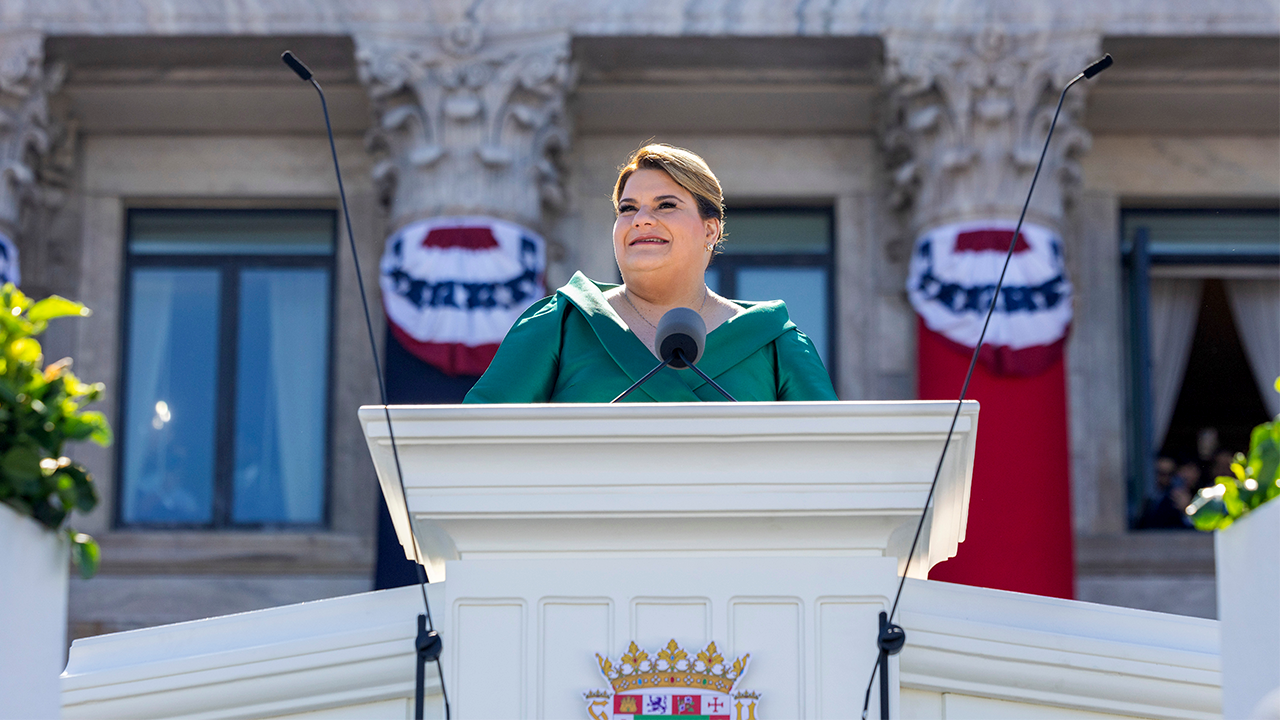
SAN JUAN, Puerto Rico — Puerto Rico's Republican Governor Jenniffer González signed a controversial bill into law on Thursday, amending the territory's Penal Code to recognize an unborn baby as a human being. The measure, Senate Bill 923, alters provisions defining murder and aims to ensure consistency between civil and criminal laws, according to the governor's office. Critics, however, warn that the change could pave the way for restricting or even criminalizing abortion in the U.S. territory, where the procedure remains legal.
The legislation is named in honor of Keishla Rodríguez, a pregnant woman who was murdered in April 2021. Her partner, former Puerto Rican boxer Félix Verdejo, was convicted of the killing and sentenced to two life terms in prison. Supporters of the bill argue that it strengthens penalties for crimes against pregnant women without touching on abortion rights. "The measure aims to maintain consistency between civil and criminal provisions by recognizing the unborn child as a human being," Governor González said in a statement released by her office.
Under the amended law, intentionally killing a pregnant woman that results in the death of her conceived child at any stage of gestation would be classified as first-degree murder. This complements existing statutes that already treat such acts severely, but the new language explicitly grants legal recognition to the unborn as human beings. The government emphasized that the focus is on protecting pregnant victims of violence, drawing directly from Rodríguez's tragic case to underscore the need for tougher enforcement.
Opposition to the bill has been swift and vocal, particularly from women's rights advocates and medical professionals. Rosa Seguí Cordero, an attorney and spokesperson for the National Campaign for Free, Safe and Accessible Abortion in Puerto Rico, described the law as a direct assault on reproductive freedoms. "A zygote was given legal personality," she told The Associated Press. "We women were stripped of our rights."
Dr. Carlos Díaz Vélez, president of Puerto Rico's College of Medical Surgeons, expressed deep concerns about the potential impact on healthcare delivery. He warned that the law could foster "defensive health care," where physicians hesitate to treat complex pregnancies out of fear of facing murder charges. "This will bring complex clinical decisions into the realm of criminal law," Díaz Vélez said in an interview with The Associated Press, adding that it could lead to "disastrous consequences."
The doctor also highlighted privacy issues, noting that the legislation might allow third parties to interfere in medical decisions between doctors and pregnant patients, potentially violating established privacy protections. Furthermore, he pointed out that the healthcare system lacks the protocols and regulations needed to implement such changes effectively. "The system is not prepared for this," he said.
Annette Martínez Orabona, executive director of the American Civil Liberties Union in Puerto Rico, criticized the rushed legislative process behind the bill. She argued that it was approved without adequate public hearings, leaving significant ambiguities in how it affects civil rights. "There is no doubt that the measure did not undergo adequate analysis before its approval and leaves an unacceptable space for ambiguity regarding civil rights," Martínez Orabona told The Associated Press. "The legislative leadership failed to fulfill its responsibility to the people, and so did the governor."
Proponents, including lawmakers who sponsored the bill, maintain that the amendment is narrowly tailored to address violent crimes against pregnant women and has no bearing on abortion access. They point to similar laws in other U.S. states and territories that enhance penalties for fetal homicide without banning reproductive procedures. In Puerto Rico, where abortion has been legal since the 1930s and is performed without the strict gestational limits seen in many mainland states, supporters say the law fills a gap in the legal code rather than overhauling it.
The signing comes amid a broader national debate on abortion rights in the United States, intensified since the Supreme Court's 2022 decision to overturn Roe v. Wade. Puerto Rico, as an unincorporated U.S. territory, operates under federal oversight but maintains its own laws on many social issues. The territory's abortion rate has historically been high, with clinics providing services up to 24 weeks of pregnancy, though access has been challenged by funding cuts and logistical barriers in rural areas.
Governor González, who assumed office in January 2025 after winning the election as a member of the pro-statehood New Progressive Party, has positioned herself as a moderate on social issues. Her administration has focused on economic recovery in the wake of hurricanes and fiscal crises, but this law marks a significant step into the culture wars. The bill passed the Senate and House along party lines, with Republican-leaning legislators praising it as a pro-life victory, while Democrats and independents decried it as ideologically driven.
Legal experts are already dissecting the implications. While the law does not explicitly mention abortion, opponents fear it could be used in future court challenges to argue that fetuses have full personhood rights, potentially subjecting providers to homicide charges. In contrast, backers cite cases like Rodríguez's to argue that the real victims are women denied justice for lost pregnancies due to inconsistent laws.
The absence of public input has fueled accusations of opacity in the legislative process. Advocacy groups had called for hearings to discuss the bill's broader ramifications, but none were held before its passage in late 2024. This has led to promises of legal challenges from organizations like the ACLU, which may seek to test the law's constitutionality in Puerto Rico's courts or even federal venues.
Looking ahead, medical associations are urging the development of guidelines to clarify how the law applies to obstetric care. Dr. Díaz Vélez suggested that without swift regulatory action, emergency rooms could see delays in treatment for miscarriages or ectopic pregnancies, conditions that already strain the island's underfunded health system. Puerto Rico's healthcare infrastructure, still recovering from Hurricane Maria in 2017, faces additional pressures from an aging population and migration outflows.
On the national stage, the law has drawn attention from pro-life organizations, some of which hailed it as a model for other jurisdictions. Meanwhile, reproductive rights groups, including national entities like Planned Parenthood, have condemned it as part of a creeping erosion of bodily autonomy in U.S. territories. As debates over abortion pills and federal policies continue to roil the mainland, Puerto Rico's move underscores the uneven landscape of reproductive rights across American soil.
For now, the law stands, but its long-term effects remain uncertain. Governor González's office has not responded to requests for further comment on the criticisms, but the measure's enactment signals a potential shift in the territory's approach to fetal rights. As Puerto Rico navigates its unique status within the U.S., this legislation may serve as a flashpoint in ongoing conversations about justice, health, and autonomy.