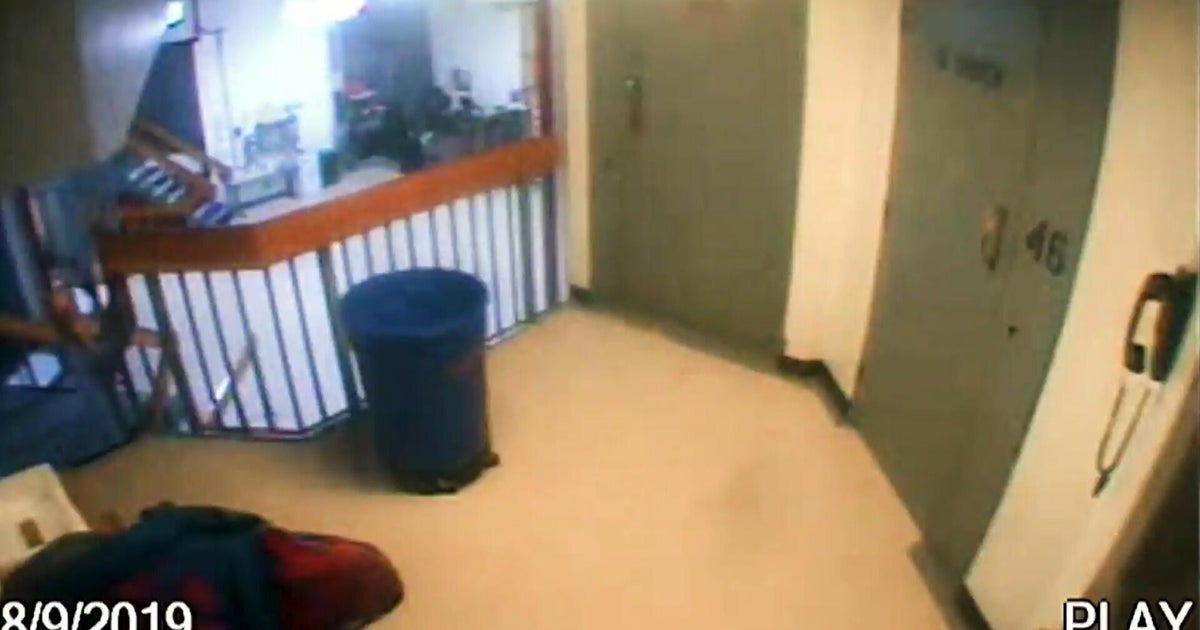
New questions have emerged more than six years after the death of financier and convicted sex offender Jeffrey Epstein in a New York federal jail, as video logs suggest an unidentified person may have entered his housing tier on the night he died. Epstein, who was awaiting trial on federal sex trafficking charges, was found unresponsive in his cell at the Metropolitan Correctional Center in Manhattan on August 10, 2019, and was pronounced dead later that morning. The official ruling was suicide by hanging, but the case has long been shrouded in controversy, with conspiracy theories and investigative lapses fueling public skepticism.
According to a recent analysis highlighted by CBS News, surveillance video logs from the facility indicate that someone possibly accessed Epstein's special housing unit tier around the time of his death. This development, reported in a CBS News video segment, comes amid ongoing scrutiny of the Bureau of Prisons' handling of the high-profile inmate. Epstein's death occurred just weeks after his arrest on July 6, 2019, for allegedly operating a sex trafficking network involving dozens of underage girls, a case that implicated numerous powerful figures from politics, business, and entertainment.
The video logs in question reportedly show activity that has not been publicly detailed before, raising fresh doubts about the security protocols in place that night. Prison officials at the time stated that two guards assigned to monitor Epstein's unit had fallen asleep and failed to conduct required checks every 30 minutes, leading to both being charged with falsifying records. One guard, Michael Thomas, pleaded guilty to the charges in 2021 and was sentenced to time served, while the other, Tova Noel, also admitted guilt in a related case.
"This new information from the video logs adds another layer to an already troubling story," said a former federal prosecutor who spoke on condition of anonymity to CBS News, emphasizing the need for transparency in high-stakes cases like Epstein's. The analysis suggests the individual captured in the logs was not part of the routine staff rounds, though officials have not confirmed the person's identity or purpose for entering the tier.
Epstein's brother, Mark Epstein, has long questioned the suicide ruling, pointing to inconsistencies in the autopsy and jail procedures. In interviews following the death, Mark Epstein told reporters that his brother had been upbeat about his legal defense and showed no signs of suicidal intent. "Jeffrey was not despondent; he was fighting this," Mark Epstein said in a 2019 statement to the Associated Press, a sentiment he has reiterated in subsequent years.
The Metropolitan Correctional Center, a notoriously understaffed facility in lower Manhattan, was criticized for its conditions even before Epstein's death. In the weeks leading up to August 10, 2019, Epstein had been removed from suicide watch after an earlier incident on July 23, where he was found semiconscious with marks on his neck. Jail psychologists cleared him for return to the special housing unit, a decision that drew backlash from Epstein's legal team, who argued he needed better protection.
Investigators from the Justice Department's inspector general released a 2023 report detailing multiple failures, including malfunctioning cameras outside Epstein's cell and inadequate staffing. The report noted that of the 11 cameras meant to cover the special housing unit, two were inoperable that night, and footage from others was either corrupted or missing. "The confluence of negligence described in this report was a perfect storm of incompetence," the report stated, attributing the lapses to chronic underfunding and poor management at the Bureau of Prisons.
While the new video log details do not directly contradict the suicide finding, they have reignited calls for a more thorough independent review. Civil rights advocates, including those from the ACLU, have pointed to Epstein's case as emblematic of systemic issues in federal detention centers. "Epstein's death highlights how the most vulnerable in our justice system are often failed by it," said Rachel Maddow, host of MSNBC's Rachel Maddow Show, in a 2019 broadcast that echoed broader media coverage.
Epstein's connections to influential figures, such as former President Bill Clinton, Britain's Prince Andrew, and billionaire Leslie Wexner, have kept the story in the public eye. Court documents unsealed in early 2024 from a defamation lawsuit involving Epstein accuser Virginia Giuffre revealed more names, though many were already known. Giuffre, who settled her suit against Ghislaine Maxwell—Epstein's convicted accomplice—in 2017, has maintained that Epstein's network was vast and protected.
Maxwell, sentenced to 20 years in prison in 2022 for her role in the trafficking scheme, has remained silent on Epstein's death. During her trial in New York federal court, prosecutors presented evidence of Epstein's private island, Little St. James, and his Manhattan townhouse as hubs of the operation, where girls as young as 14 were allegedly abused from the 1990s through the 2010s.
The timing of the video log revelation coincides with renewed interest in Epstein-related litigation. In July 2024, a federal judge in New York dismissed a lawsuit against the Bureau of Prisons by Epstein's estate, citing sovereign immunity, but the decision did not address evidentiary questions like the new footage. Legal experts say any push for reopening the investigation would require congressional action or a new whistleblower.
Former Attorney General William Barr, who oversaw the initial probe, called Epstein's death a "perfect storm of screw-ups" in 2019 interviews. Barr, now out of office, has not commented on the latest developments, but sources close to the matter told CBS News that the video analysis was conducted by independent forensic experts reviewing declassified Bureau of Prisons records.
As the sixth anniversary of Epstein's death approaches in August 2025, victims' advocates are urging the Justice Department to release all remaining surveillance materials. "Full disclosure is the only way to restore trust," said lawyer Bradley Edwards, who represents several Epstein survivors, in a recent statement to Reuters. Edwards' clients have pursued civil suits against Epstein's estate, which has paid out over $150 million in settlements since 2019.
The broader implications of these lingering questions extend beyond Epstein to the integrity of the U.S. correctional system. With over 2.1 million people incarcerated nationwide, according to the Bureau of Justice Statistics, incidents like this underscore vulnerabilities in monitoring high-risk inmates. Reforms proposed in Congress, including the Prison Oversight Act of 2023, aim to mandate better camera systems and staffing ratios, but progress has been slow.
While the video logs may not prove foul play, they ensure that Epstein's story remains a cautionary tale of power, privilege, and institutional failure. As investigations continue to unfold piecemeal, the public awaits clarity on whether this latest clue will lead to definitive answers or join the list of unresolved mysteries surrounding one of the most notorious cases in modern American history.