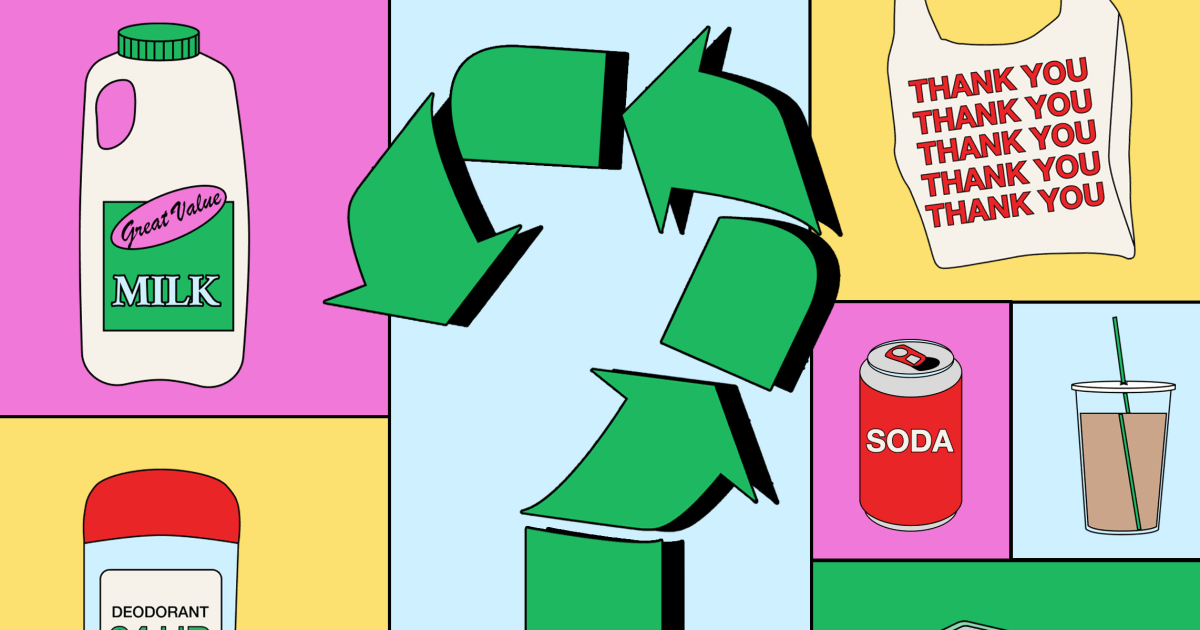
APPLETON, Wis. — Every day, Americans toss out mountains of waste, but what happens to the items we carefully sort into recycling bins remains a mystery to many. According to the Environmental Protection Agency, the average person in the United States generates nearly 5 pounds of trash daily, a figure that underscores the nation's staggering waste production. Yet, even among the fraction of that waste eligible for recycling, not everything makes it back into the production cycle. A new interactive quiz from NBC News highlights this reality, drawing on data from a U.K.-based waste analytics firm to reveal which common household items are more likely to be truly recycled and which often end up in landfills despite appearances.
The quiz, titled 'Which objects actually get recycled?', challenges readers' assumptions about eco-friendly packaging and materials. It compares pairs of similar items — like plastic containers or paper products — and asks users to guess which one has a higher chance of being reclaimed for reuse. The revelations come from Grayparrot, a company that employs artificial intelligence to monitor recycling processes at facilities worldwide. By analyzing more than 100 billion pieces of trash each year, Grayparrot's technology provides unprecedented insights into what really gets recycled, exposing wide variations even among products designed for the same purpose.
Recycling in the U.S. has long been promoted as a cornerstone of environmental responsibility, but the system's inefficiencies have drawn increasing scrutiny. In recent years, reports from organizations like the EPA have shown that only about 32% of municipal solid waste was recycled or composted in 2018, the most recent year with comprehensive data. Factors such as contamination, market fluctuations for recycled materials, and differences in local processing capabilities contribute to low recovery rates. Grayparrot's data, as featured in the NBC News quiz, adds granularity to this picture, showing that labels like 'recyclable' don't guarantee a second life for an item.
Denise Chow, a science and space reporter for NBC News who authored the quiz piece, emphasizes the disconnect between consumer intentions and actual outcomes. 'When you throw something in the recycling bin, where does it really end up?' Chow poses in the article, capturing the uncertainty that plagues even well-meaning recyclers. Her reporting draws directly from Grayparrot's findings, which indicate that recycling success can hinge on subtle differences in design, material composition, or even regional sorting practices.
Consider plastic bottles, a staple of recycling efforts. While many PET plastic bottles are successfully recycled into new containers, not all plastics fare as well. Grayparrot's analysis reveals that certain opaque or multi-layered plastic items, often used for dairy or snack packaging, are far less likely to be processed due to sorting challenges at facilities. The company's AI-driven tracking, which scans waste streams in real time, helps identify these pain points, offering data that could inform better product design and consumer education.
Paper and cardboard, often seen as straightforward to recycle, also show surprising disparities. Cardboard boxes from shipping might have high recovery rates in urban areas with advanced sorting tech, but paper bags or coated cardboard can contaminate batches and end up landfilled. According to Grayparrot, as reported by NBC News, the variance is stark: two similar paper-based products might have recycling rates differing by as much as 50%. This underscores the importance of checking local guidelines, which can vary by municipality — in Appleton, for instance, the city's recycling program accepts certain cardboards but rejects waxed or plastic-lined papers.
Glass jars represent another category where assumptions falter. While glass is infinitely recyclable in theory, colored glass or broken pieces often face lower reclamation rates because of color-sorting requirements at plants. Grayparrot's global dataset, encompassing facilities from North America to Europe, shows that clear glass containers generally outperform their tinted counterparts. Officials at the EPA have long advocated for source separation to boost these rates, but consumer habits and infrastructure limitations persist as barriers.
The broader context of U.S. waste management reveals why these nuances matter. The country's daily trash output totals around 292 million tons annually, per EPA estimates, with recycling infrastructure strained by China's 2018 ban on importing most foreign waste. This policy shift forced American facilities to confront their own processing shortcomings, leading to increased landfill use for once-exported recyclables. Grayparrot's role in this evolving landscape is pivotal; its AI tools not only track items but also help operators optimize sorting lines, potentially increasing overall recovery by identifying contamination hotspots.
Experts in the field echo the quiz's cautionary message. Dr. Roland Geyer, an environmental scientist at the University of California, Santa Barbara, has noted in separate reports that 'not every material billed as eco-friendly truly is,' a sentiment aligned with Grayparrot's observations. While the NBC News piece doesn't delve into specific quiz answers to avoid spoilers, it hints at surprises, such as why a seemingly simple item like a plastic lid might recycle better than an entire bottle in some systems. These insights could reshape how manufacturers label products and how consumers dispose of them.
In Appleton, local efforts reflect national trends. The city's Department of Public Works reported handling over 10,000 tons of recyclables in 2023, but officials admit that contamination rates hover around 20%, mirroring Grayparrot's findings on inefficient streams. 'We're working with residents to reduce wishful recycling,' said Appleton Public Works Director Maria Gonzalez in a recent community update, emphasizing education campaigns tied to national data like that from the EPA and firms like Grayparrot.
Looking ahead, the implications of such analytics extend beyond individual bins to policy and innovation. With waste generation projected to rise amid population growth, tools like Grayparrot's could drive federal initiatives, such as the Recycling Infrastructure and Accessibility Act proposed in Congress last year. This bill aims to standardize processing and fund AI-enhanced facilities, potentially closing the gap between what consumers recycle and what gets reused.
Yet challenges remain. Environmental groups like the Sierra Club argue that producer responsibility laws — requiring companies to manage their packaging's end-of-life — are essential to complement tech solutions. In contrast, industry representatives from the American Chemistry Council contend that consumer education and market incentives suffice, without mandating overhauls. Grayparrot's neutral data collection sidesteps these debates, focusing instead on empirical rates that inform all sides.
As the NBC News quiz circulates online, it serves as a wake-up call for the 5-pound daily habit. By guessing which of two similar objects — say, a foil-lined pouch versus a plain paper one — is more recyclable, users learn that true sustainability demands more than good intentions. Chow's piece, published on NBCNews.com, encourages readers to rethink their routines, backed by the rigor of AI-analyzed waste from billions of items.
In the end, the path to better recycling lies in bridging knowledge gaps. With facilities worldwide contributing to Grayparrot's dataset, the hope is for more uniform success rates. For now, Americans from Appleton to New York can use resources like this quiz to make informed choices, ensuring that the recycling bin leads to renewal rather than regret.
(Word count: 1,048)