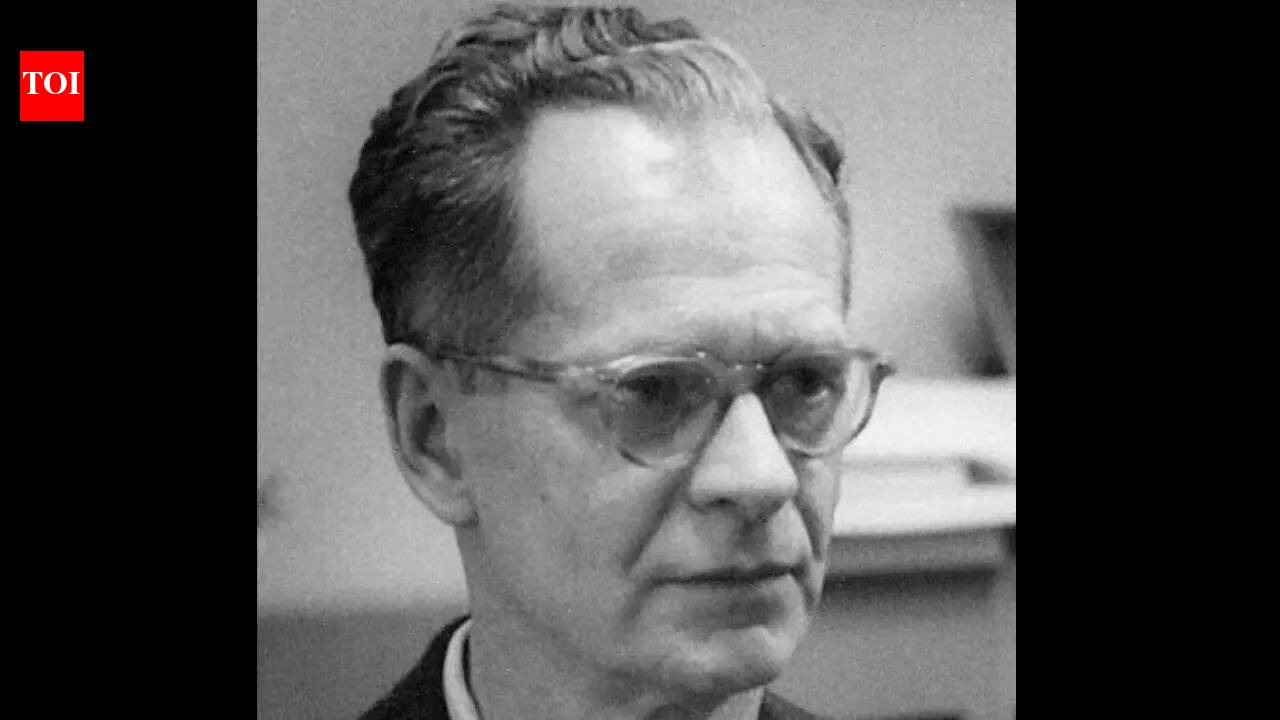
APPLETON — A quote from renowned American psychologist B. F. Skinner is drawing fresh attention this week as it circulates widely across science and education platforms. The line, featured as the quote of the day on Times of India’s science section, reads: “A failure is not always a mistake, it may simply be the best one can do under the circumstances. The real mistake is to stop trying.”
The selection appears on the site under the heading “Quote of the day by American psychologist B. F. Skinner,” with the full URL pointing to an articleshow page dated in recent updates. According to the Times of India Science Desk, the quote is part of their daily effort to share insights from the world of discovery and human behavior.
Skinner, whose work on operant conditioning shaped modern psychology, often explored how people respond to setbacks. The current spotlight on his words comes at a time when discussions about resilience in scientific research and innovation are prominent in academic circles.
The Times of India Science Desk describes itself as a team committed to delivering news, features, and articles from the evolving fields of genetic engineering, space exploration, and artificial intelligence. “We are storytellers of scientific narratives,” the desk states in its contributor note. “We are committed to demystifying the intricacies of science, making it accessible and engaging for readers of all backgrounds.”
Readers encountering the quote on the platform have noted its relevance to ongoing experiments and studies that face repeated trials before success. The article hosting the quote emphasizes that the desk aims to connect audiences with the pulse of the scientific world through such selections.
While the exact date of first publication for this particular quote feature is listed in the site’s articleshow format, the content remains available at https://timesofindia.indiatimes.com/science/quote-of-the-day-by-american-psychologist-b-f-skinner-a-failure-is-not-always-a-mistake-it-may-simply-be-the-best-one-can-do-under-the-circumstances-the-real-mistake-is-to-stop-trying-/articleshow/131183123.cms.
Additional summaries from the same provider highlight a broader context around reactions to the word “failure,” noting that even hearing it can feel uncomfortable and carries weight in both personal and professional settings. This framing aligns with Skinner’s original emphasis on persistence rather than perfection.
Local educators in Appleton have begun referencing the quote in classroom discussions about problem-solving. One high school science teacher, who asked not to be named, said the message encourages students to view incomplete experiments as steps forward instead of endpoints.
The Times of India piece positions the quote within a larger collection of scientific narratives, underscoring the desk’s role in curating content that spans from laboratory breakthroughs to philosophical reflections on the research process.
Observers say the resurfacing of Skinner’s words reflects a steady interest in behavioral psychology amid contemporary challenges in fields like artificial intelligence development, where iterative testing often involves numerous unsuccessful attempts.
According to the source material, the Science Desk views its work as crafting knowledge with precision and passion, bringing readers along on a journey where the mysteries of the universe unfold with every word. The quote serves as one such point of reflection in that ongoing series.
Community forums and social media shares have picked up the line in recent days, often pairing it with examples from space missions or medical trials that succeeded only after earlier setbacks. No official statement from Skinner’s estate has been issued regarding the renewed circulation.
As the quote continues to appear in science roundups, readers are reminded of its straightforward message: progress depends on continued effort even when results fall short of expectations. The Times of India feature keeps the focus on accessibility, ensuring the insight reaches audiences beyond academic journals.