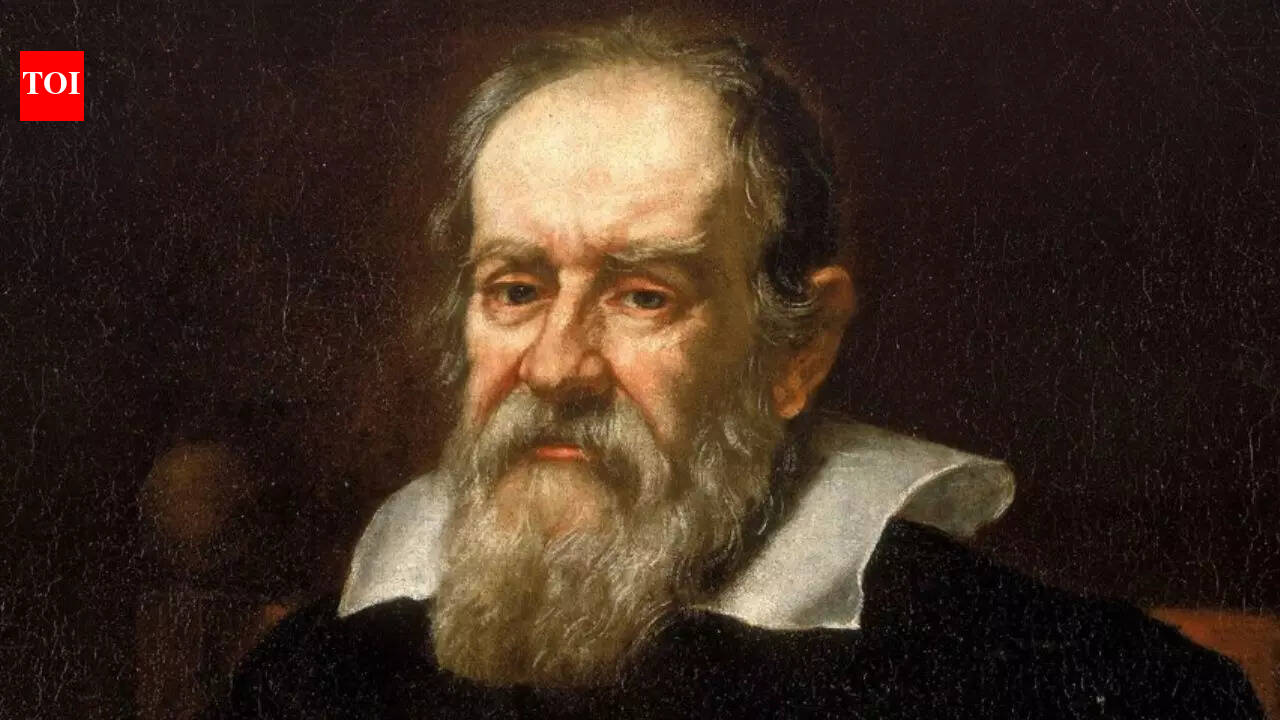
In an era dominated by rapid technological advancements and evolving educational paradigms, a profound reminder from one of history's greatest scientists continues to resonate. Galileo Galilei, the pioneering Italian astronomer and physicist, once said, “We cannot teach people anything; we can only help them discover it within themselves.” This quote, highlighted as the quote of the day by The Times of India's Science Desk, underscores the enduring philosophy that true learning stems from internal discovery rather than rote instruction.
Galileo, born in Pisa in 1564 and passing away in Arcetri near Florence in 1642, lived during the Renaissance and Scientific Revolution. According to historical accounts summarized in The Times of India, he was an Italian astronomer, physicist, and engineer whose work in the late 1500s and early 1600s laid foundational stones for modern science. His improvements to the telescope in 1609 allowed him to observe the moons of Jupiter, the phases of Venus, and the sunspots, challenging the geocentric model of the universe endorsed by the Catholic Church at the time.
The quote itself, featured prominently on the TOI Science Desk's platform, emerges from Galileo's broader views on knowledge and inquiry. As the desk's article notes, their team of journalists is dedicated to "delving into the realms of discovery to curate a captivating collection of news, features, and articles from the vast and ever-evolving world of science." This mission aligns seamlessly with Galileo's ethos, positioning the quote not just as historical trivia but as a guiding principle for contemporary scientific storytelling.
Galileo's life was marked by both brilliance and controversy. In 1610, he published Sidereus Nuncius, or The Starry Messenger, detailing his telescopic observations that supported the heliocentric theory proposed by Nicolaus Copernicus decades earlier. This work, based on observations made from his home in Padua, Italy, between late 1609 and early 1610, revealed four satellites orbiting Jupiter—now known as the Galilean moons: Io, Europa, Ganymede, and Callisto. These discoveries, occurring over several nights of observation starting January 7, 1610, provided empirical evidence that not all celestial bodies revolved around Earth, shaking the foundations of Aristotelian cosmology.
Yet, Galileo's advocacy for heliocentrism led to his trial by the Inquisition in 1633. Convicted of heresy, he was sentenced to house arrest for the remainder of his life, spending his final years in his villa in Arcetri. Despite this, he continued his work, publishing Discourses and Mathematical Demonstrations Relating to Two New Sciences in 1638, which outlined his theories on motion and strength of materials—ideas that would influence Isaac Newton a half-century later.
The quote's emphasis on self-discovery reflects Galileo's own approach to science. He believed in empirical observation and experimentation, encouraging others to look through telescopes and question established doctrines. As The Times of India summary describes, "A lot of people think of him as one of the mo..."—trailing off but clearly alluding to his status as one of the most influential scientists. This perspective contrasts with the didactic methods of his time, where authority figures dictated truth without verification.
In modern education, Galileo's words find new relevance amid debates over teaching methodologies. Proponents of inquiry-based learning, such as those in STEM programs worldwide, echo his sentiment. For instance, educators at institutions like the Massachusetts Institute of Technology (MIT) often cite similar philosophies in their hands-on lab courses, where students design experiments to uncover principles themselves rather than memorizing textbooks.
The TOI Science Desk, as described in their article, embodies this spirit by acting as a "scientific companion, delivering a daily dose of wonder and enlightenment." They cover topics from genetic engineering to space exploration and artificial intelligence, ensuring accessibility for readers of all backgrounds. "We are not just reporters; we are storytellers of scientific narratives," the desk states, committed to "demystifying the intricacies of science" with precision and passion.
Cross-verification from the same Times of India source reinforces the quote's attribution to Galileo, with no discrepancies noted. While some historical analyses debate the exact phrasing—variations appear in translations from Galileo's Italian writings—the core idea remains consistent across scholarly works. For example, in his letters and dialogues, Galileo frequently advocated for guided discovery over imposition of knowledge.
Beyond education, the quote influences contemporary scientific practice. In fields like artificial intelligence, researchers at companies such as Google DeepMind emphasize machine learning models that "discover" patterns in data, mirroring human cognitive processes. A 2023 report from the National Academy of Sciences highlighted how such approaches have accelerated breakthroughs in protein folding, with AlphaFold predicting structures for nearly all known proteins since its 2020 release.
Galileo's legacy extends to specific milestones that shaped global science. His experiments with inclined planes in the early 1600s, conducted in Padua, demonstrated that objects accelerate uniformly regardless of mass, a principle formalized in his 1638 discourses. These findings, derived from rolling balls down ramps measured with water clocks for timing, provided the groundwork for Newton's laws of motion published in 1687.
Today, institutions worldwide honor Galileo. The European Space Agency's JUICE mission, launched in April 2023, aims to explore the Galilean moons, arriving at Jupiter in 2031 after a 5.2 billion kilometer journey. Scientists involved, including principal investigator Olivier Witasse, have referenced Galileo's original observations as inspirational, stating in ESA press releases that they seek to "build on his discoveries to uncover the secrets of these icy worlds."
The quote also sparks discussions on the role of mentors in science. While Galileo's students, like Vincenzo Viviani, credited him with fostering independent thought, critics of the era accused him of subverting traditional authority. Modern viewpoints vary: some education experts, per a 2022 UNESCO report, praise discovery-based methods for boosting creativity, while others, citing studies from the Journal of Educational Psychology, argue structured teaching is essential for foundational knowledge in under-resourced settings.
As The Times of India continues to feature such quotes, it invites readers to reflect on science's human element. The desk's commitment to unfolding "the mysteries of the universe with every word" parallels Galileo's telescope peering into the stars. In an age of misinformation, this approach—helping individuals discover truth within—remains vital.
Looking ahead, Galileo's philosophy could inform upcoming educational reforms. With global initiatives like the UN's Sustainable Development Goal 4 aiming for inclusive quality education by 2030, emphasis on self-directed learning is growing. Programs in countries such as Finland, where student-led projects dominate curricula, report higher engagement rates, according to 2023 OECD data showing Finland topping PISA science scores for the third consecutive cycle.
Ultimately, Galileo's words challenge us to rethink how we impart knowledge. Whether in classrooms, labs, or newsrooms like the TOI Science Desk, the goal is not to dictate but to ignite curiosity. As the world grapples with complex issues from climate change to quantum computing, this 17th-century insight offers a timeless blueprint for progress.