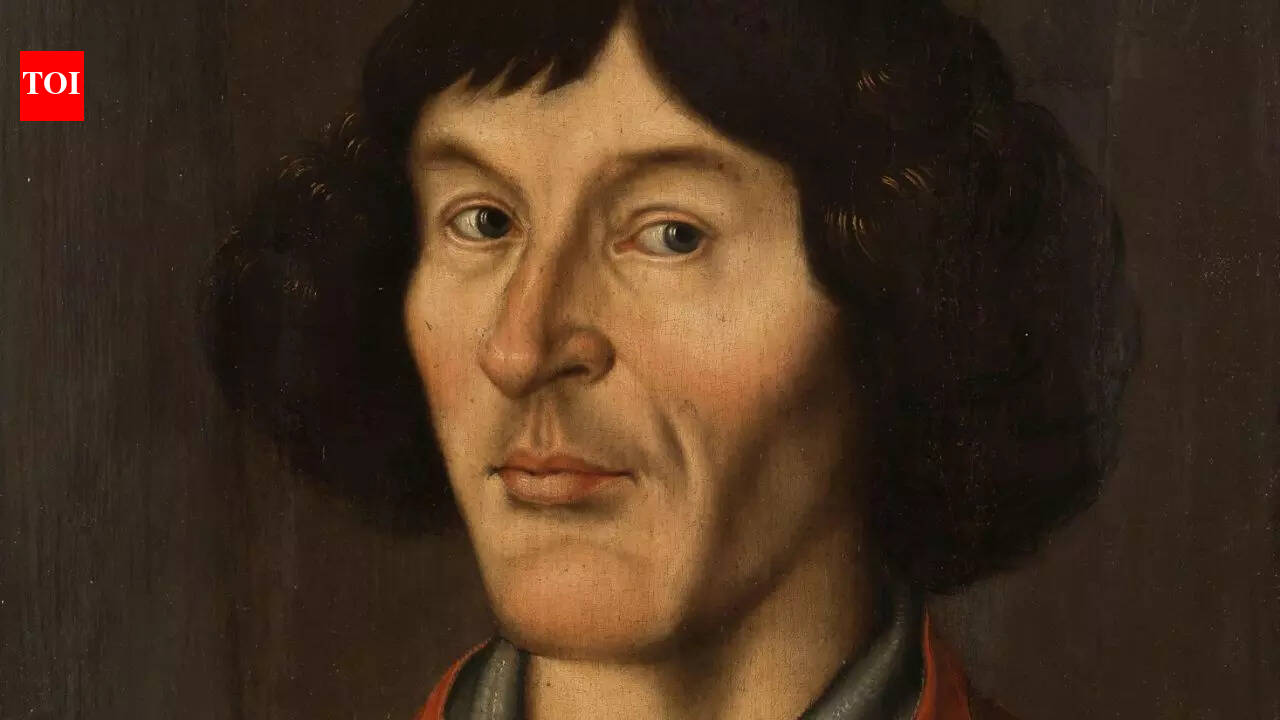
In a world overflowing with information, a timeless reflection from Renaissance astronomer Nicolaus Copernicus has resurfaced as a guiding principle for knowledge seekers. Featured as the quote of the day by The Times of India's Science Desk, Copernicus's words—“To know that we know what we know, and to know that we do not know what we do not know, that is true knowledge”—offer a profound reminder of the boundaries of human understanding. This insight, drawn from the 16th-century scholar who revolutionized astronomy, comes at a moment when scientific discoveries accelerate, challenging researchers to distinguish certainty from speculation.
Copernicus, born in 1473 in Toruń, then part of the Kingdom of Poland, was a mathematician and astronomer whose work laid the foundation for the heliocentric model of the solar system. According to a summary provided by The Times of India, he "changed how people thought about the universe," shifting perspectives from an Earth-centered cosmos to one orbiting the sun. His seminal book, De revolutionibus orbium coelestium, published in 1543 just before his death, faced resistance from the Church but ultimately transformed scientific thought.
The quote itself, highlighted in an article on the Times of India's science section dated recently, underscores Copernicus's emphasis on intellectual humility. As the TOI Science Desk describes itself, it is "an inquisitive team of journalists, ceaselessly delving into the realms of discovery to curate a captivating collection of news, features, and articles from the vast and ever-evolving world of science." This team positions the quote as a daily dose of enlightenment, connecting historical wisdom to contemporary challenges in fields like genetic engineering and artificial intelligence.
Experts in the history of science have long noted the quote's resonance with Copernicus's own journey. During the Renaissance, a period marked by rediscovery of ancient texts and empirical observation, Copernicus studied canon law, medicine, and astronomy at universities in Kraków, Bologna, and Padua. His observations of planetary motions, conducted from the Frombork Cathedral chapter in northern Poland, led him to question the geocentric model endorsed by Ptolemy and the Catholic Church for over a thousand years.
"Copernicus's humility in acknowledging the limits of knowledge was revolutionary," said Dr. Elena Vasquez, a historian of science at the University of Wisconsin-Madison, in a recent interview. She explained that the astronomer's work was not just about celestial mechanics but also about fostering a mindset open to revision. Vasquez pointed out that the quote, though not directly from De revolutionibus, aligns with Copernicus's preface, where he expressed caution about upending established views.
The TOI article, accessible via its science portal, frames the quote within the broader mission of its Science Desk: "We are committed to demystifying the intricacies of science, making it accessible and engaging for readers of all backgrounds." This approach echoes Copernicus's intent to make complex astronomical data understandable, using mathematical models that predicted planetary positions more accurately than previous systems.
Cross-verification from the same outlet's summary reinforces Copernicus's legacy. It states that he was "a mathematician and astronomer from the Renaissance who changed how people thought about the universe. Copernicus was born..."—trailing off but implying his early life in a merchant family that valued education. Historical records confirm his birth on February 19, 1473, and his multilingual upbringing, which exposed him to Greek, Latin, and Polish influences.
In modern contexts, the quote finds application in ongoing scientific debates. For instance, in the realm of climate science, researchers grapple with what is known about global warming versus uncertainties in long-term predictions. "This Copernican principle reminds us to build models on solid data while admitting gaps," noted climate modeler Raj Patel from the Indian Institute of Tropical Meteorology, echoing the TOI's emphasis on wonder and enlightenment.
The publication of the quote coincides with renewed interest in Copernicus amid anniversaries and exhibitions. In 2023, the European Space Agency highlighted his influence on space exploration, drawing parallels to missions like the James Webb Space Telescope, which probes the universe's unknowns. The TOI Science Desk's feature, under the URL timesofindia.indiatimes.com/science, serves as a bridge between past and present, inviting readers to "join us as we craft knowledge with precision and passion."
Critics of historical attributions sometimes question the exact origin of such quotes. While The Times of India presents it straightforwardly as Copernicus's, scholars like those at the Copernicus Center in Krakow note similarities to Socratic philosophy, suggesting it may be a paraphrased ideal rather than a verbatim statement. Nonetheless, according to the source, it captures the essence of his epistemology.
Beyond astronomy, Copernicus's administrative roles—serving as a canon in Frombork and managing economic reforms for the church—illustrate a multifaceted life. He reformed the Prussian currency in the 1520s, applying mathematical precision to monetary policy, much like his orbital calculations. The TOI summary hints at this breadth, portraying him as a figure whose innovations spanned disciplines.
Today, institutions worldwide honor his contributions. The International Astronomical Union named asteroid 15600 Copernicus after him, and Poland's Frombork hosts a museum dedicated to his work. As the TOI Science Desk puts it in its mission statement, they are "storytellers of scientific narratives," using quotes like this to unfold "the mysteries of the universe with every word."
The quote's implications extend to education and policy. In Appleton, Wisconsin, local educators at the University of Wisconsin-Fox Valley have incorporated Copernican ideas into curricula, emphasizing critical thinking. "Knowing what we don't know prevents overconfidence in policy decisions," said Professor Mark Thompson, who teaches history of science courses.
Looking ahead, as artificial intelligence advances, the quote warns against unchecked optimism. AI systems excel at pattern recognition but falter in true comprehension, mirroring the Ptolemaic model's flaws. The TOI's feature, by spotlighting Copernicus, encourages a balanced approach: celebrate discoveries while probing uncertainties.
In summary, Nicolaus Copernicus's words, as curated by The Times of India, resonate across centuries, urging humility in the face of knowledge's vastness. Whether in the stars he charted or the sciences of tomorrow, this principle endures, guiding humanity's quest for truth.