LONDON — The British Academy Film and Television Arts Awards, held earlier this week at the Royal Festival Hall, became the center of a heated controversy when a nominee's involuntary vocal tic uttered a racial slur during a live presentation by two prominent Black actors. John Davidson, a BAFTA nominee and advocate for Tourette syndrome awareness, experienced a coprolalia episode — the involuntary outburst of obscene words — just as Michael B. Jordan and Delroy Lindo took the stage to present the first award of the evening. The incident, which occurred on Sunday, has sparked widespread debate, particularly among Black individuals living with Tourette syndrome, who describe a profound sense of conflict between understanding the neurological condition and acknowledging the harm caused by the slur.
The outburst, which included the N-word, immediately drew outrage from attendees and viewers, overshadowing much of the ceremony's glamour. According to witnesses and social media reactions, the moment left Black celebrities and audience members visibly stunned. Davidson, who has been open about his Tourette syndrome, quickly excused himself from the situation, but the damage was done. The British Broadcasting Corporation (BBC), which broadcast the event, aired the uncensored slur in its delayed transmission two hours after the live show, a decision that amplified the backlash. Unlike many awards shows such as the Oscars, which employ a seconds-long tape delay to catch such incidents, the BAFTAs did not implement similar precautions.
Chloe Winston, a 24-year-old Black woman from the United States who also lives with coprolalia, captured the emotional turmoil in a statement to reporters. “It’s been pretty difficult because I feel like there’s such a clash between both sides,” Winston said. “A tic is not intentional, but it still causes harm. And I think that does require accountability.” Her words reflect a broader sentiment among those affected, who grapple with the involuntary nature of tics while recognizing the slur's painful resonance in a society still reckoning with racism.
The BAFTA organizers and the BBC issued apologies in the days following the event, but critics deemed them inadequate. BAFTA stated it was "deeply sorry for the distress caused," while the BBC announced plans to edit the slur out of its on-demand iPlayer streaming service. However, the initial broadcast decision drew sharp rebukes, with many pointing to the broadcaster's responsibility in handling sensitive content. "Just because he ticced that does not mean it was intentional. But then also that still caused hurt or harm for people that heard it, which again is why I’m mad at the BAFTAs and the BBC for keeping it in the broadcast in the first place because they had the power to take it out," said Jhónelle Bean, a Black American Sign Language interpreter with Tourette syndrome, in a TikTok video that amassed over 3 million views.
Bean's video highlighted the "complexity and duality" of the situation, urging viewers to hold space for both empathy toward Davidson and solidarity with those harmed by the slur. She also condemned discriminatory online comments suggesting Davidson "should have been locked away" or fitted with a "muzzle," labeling them as ableist. At the same time, Bean pushed back against those dismissing Black attendees' offense, arguing that minimizing the slur's impact ignores its historical weight. The discourse has exposed tensions between anti-racism efforts and disability rights, with advocates calling for nuanced understanding rather than polarized takes.
Tourette syndrome, a neurodevelopmental disorder affecting approximately 1.4 million people in the U.S. alone according to the Centers for Disease Control and Prevention, involves sudden, repetitive movements or sounds known as tics. Symptoms often emerge in elementary school, peaking between ages 10 and 14, said Dr. Jeremiah Scharf, a tic disorder specialist at Massachusetts General Hospital. Vocal tics can start innocently, like coughing or sniffing, but in cases of coprolalia — which impacts 10% to 15% of those with Tourette syndrome, per the Tourette Association of America — they manifest as obscene or socially inappropriate phrases.
“We know that there’s this sort of sensory and motor loop happening. And again, similarly in the vocalizations, they typically start with things like coughing, sniffing, or other just non-specific sounds,” Scharf explained. “Unfortunately, for this subset of people, it is incredibly disabling because they don’t want to say those things. It’s very distressing to them. They feel significant remorse about it.”
Scharf emphasized that tics are involuntary, akin to a sneeze, and can be triggered by stress, lack of sleep, or emotional upset. Treatment varies, including medications and behavioral therapies that require extensive practice to recognize and manage impending tics. There is no universal cure, and for many, the condition persists into adulthood, complicating daily life.
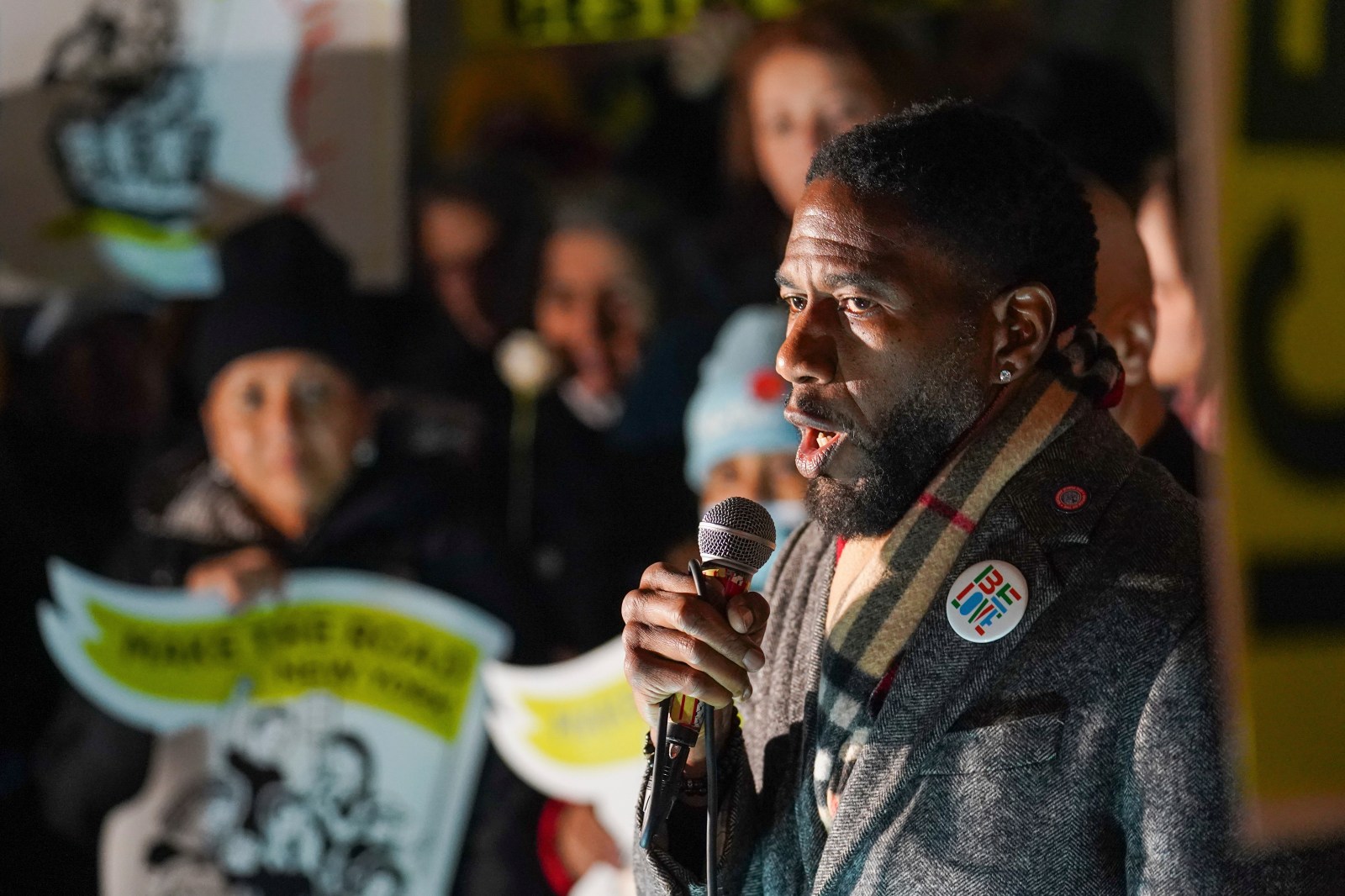
For Black individuals with Tourette syndrome, the BAFTA incident has intensified existing challenges at the intersection of race and disability. Jumaane Williams, New York City's public advocate who is Black and has coprolalia, praised Davidson for stepping away from the stage, though he noted it could have happened sooner. “For me, it was all about making sure we’re practicing care. And I don’t think that happened for the two actors that were there or the Black folks who were there or people who didn’t want to hear the word,” Williams said. He described holding in a tic as “painful both physically and mentally,” underscoring the personal toll.
Williams has used his platform to advocate for greater awareness, often sharing stories from New Yorkers who approach him at events. “Sometimes in the street or an event people will bring their family member up which is always a pretty emotional space for me because when I see the kid, I know what they’re going through,” he added. His experiences highlight the isolation many feel, particularly in communities where tics might be misinterpreted as aggression or drug use.
Reice Griffin, a 20-year-old rising leader and ambassador for the Tourette Association of America, echoed these concerns. As a Black woman with the disorder, she has faced assumptions about her tics leading to racial profiling. “I thought that because I had Tourette syndrome that, like, public speaking was out the window,” Griffin said, recalling her initial fears. Now, she speaks at schools and participates in virtual support groups for Black young adults, aiming to help others feel less alone. Interactions with law enforcement add another layer of anxiety: “Law enforcement is not well equipped to deal with Tourette syndrome, but also historically, as a Black person, you never really want to be around law enforcement,” she noted.
The association is responding by expanding resources, such as printable “I Have TS” cards to explain the condition during encounters with authorities. Griffin recently attended one of these virtual meetings, which are part of efforts to build networks for people of color who often feel sidelined in broader disability advocacy.
The controversy has also fueled misinformation about Tourette syndrome, with some online commentators perpetuating stereotypes that could worsen discrimination. Advocacy groups warn that this might lead to increased racial profiling for Black individuals whose tics include vocal outbursts. In response, organizations like the Tourette Association are leveraging the BAFTA moment to promote education and grow support systems tailored to Black communities.
As the dust settles, the incident serves as a stark reminder of the need for better protocols at live events, including tape delays and sensitivity training. BAFTA has not announced specific changes yet, but pressure from disability and racial justice advocates continues to mount. For those like Winston, Bean, Williams, and Griffin, the event has become a catalyst for visibility, pushing for empathy that bridges divides rather than deepening them. In a statement, the Tourette Association cautioned against assumptions based on tic content, stressing that coprolalia is a biological response, not a reflection of intent.
Ultimately, the BAFTA controversy underscores ongoing struggles against both racism and ableism, with Black people with Tourette syndrome at the forefront. As Williams put it, fostering care in such moments is essential. With growing calls for inclusive support groups and policy reforms, advocates hope this uncomfortable spotlight will lead to meaningful progress for marginalized voices in the disability community.