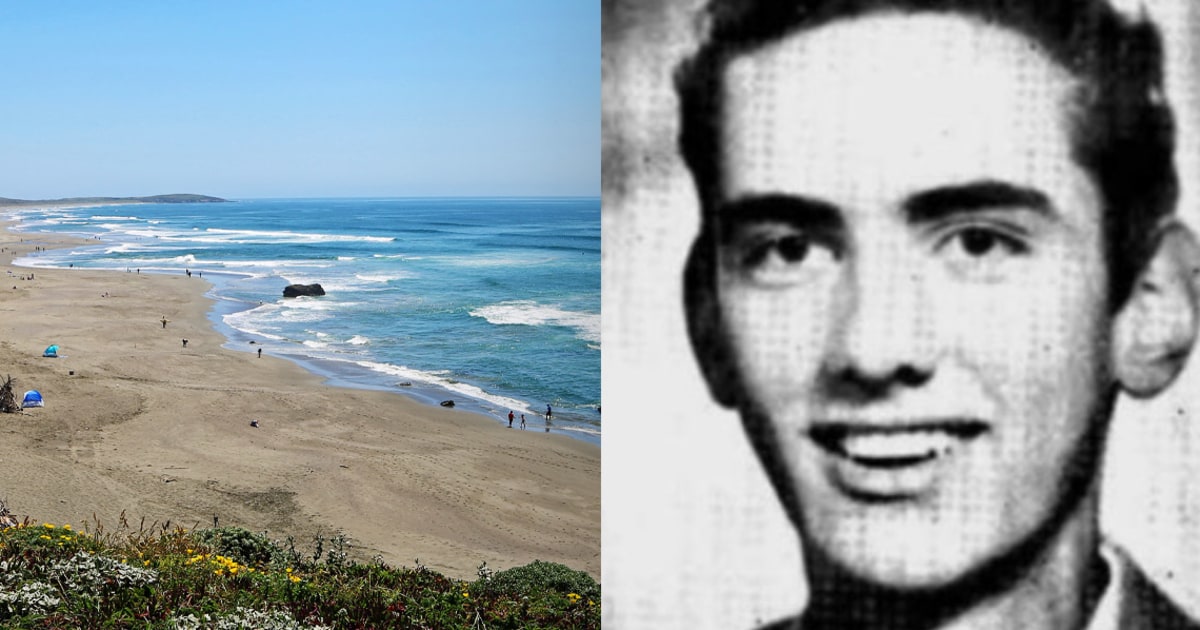
In a remarkable case of investigative genetic genealogy, partial human remains discovered on a Northern California beach four years ago have been identified as those of Walter Karl Kinney, a former banker who disappeared more than two decades earlier. Kinney, who was 59 at the time of his vanishing in August 1999, lived in Santa Rosa, just a short drive from the Sonoma County shoreline where the bone was found. The identification, announced last week by the DNA Doe Project, a nonprofit organization specializing in solving cold cases through DNA analysis, brings closure to a mystery that spanned multiple discoveries and years of unanswered questions.
The story began on a seemingly ordinary day in June 2022, when a family out collecting seashells along Salmon Creek Beach in Sonoma County stumbled upon a long bone embedded with surgical hardware. According to the DNA Doe Project, the family promptly reported their find to authorities, who recovered the remains and turned them over for forensic examination. What followed was a painstaking process involving DNA extraction and genealogical research that ultimately linked the bone to Kinney, a man whose own family had long mourned his absence.
The Sonoma County Sheriff’s Office expressed gratitude for the collaboration in a Facebook post last week. “Thank you to the DNA Doe Project for helping us put a name to the human remains found at Salmon Creek Beach,” the office stated. “We value this partnership as we continue working together to identify remains found in Sonoma County.” This identification marks another success in the ongoing effort to resolve unidentified remains cases in the region, where coastal erosion and tides often unearth long-lost evidence.
Kinney's disappearance in 1999 had left his family in limbo. He was last seen in August of that year, and by 2003, his daughter had reached out to investigators about her missing father. At the time, authorities had already recovered human remains that washed ashore south of Bodega Bay in 1999, not far from where Kinney lived. Those remains were tentatively linked to him through x-ray records matching surgical hardware, but full confirmation eluded investigators until now.
The DNA Doe Project's involvement began after the 2022 discovery. Forensic experts developed a DNA profile from the bone, which was uploaded to GEDmatch, a public database designed for genetic genealogy in January of this year. “A team working on the case began to make headway shortly afterward,” the organization said in a news release. Researchers traced potential relatives, identifying a family that had relocated from the East Coast to the San Diego area. As they delved deeper, Kinney's name emerged as a strong match.
A critical breakthrough came when the team uncovered an article about the 1999 beach remains. This connected the dots between the two sets of discoveries, both bearing signs of surgical implants consistent with Kinney's medical history. Traci Onders, the lead investigator for the DNA Doe Project on this case, described it as one of the most unusual she has encountered. “It’s not often we see someone end up as a John Doe twice,” Onders said in a statement. “But thanks to investigative genetic genealogy, we were able to resolve this mystery and provide some answers to everyone involved in this case.”
Investigative genetic genealogy has revolutionized cold case resolutions in recent years, allowing experts to build family trees from DNA matches rather than relying solely on direct relatives. In Kinney's case, the method proved invaluable, especially since the remains were partial and degraded by years in the ocean. The DNA Doe Project, founded in 2017, has identified over 20 previously unknown individuals through such techniques, often partnering with law enforcement agencies like the Sonoma County Sheriff’s Office.
Kinney's daughter shared poignant memories of her father in statements released by the DNA Doe Project. She described him as “smart, sensitive, almost to a fault,” adding that “this world was just too harsh a place for him.” These words paint a picture of a man who may have struggled with the pressures of life, though the circumstances of his disappearance remain unclear. Authorities have not released details on the cause of death, and the investigation into what happened in 1999 continues.
The dual identification—first in 1999 and now in 2022—highlights the challenges of coastal forensics in California. Sonoma County, with its rugged coastline and strong currents, has seen numerous such discoveries over the years. In 1999, the remains south of Bodega Bay were among several unidentified cases that piled up before advanced DNA tools became widely available. The 2003 tip from Kinney's daughter had provided a lead, but without modern genealogy, it couldn't seal the connection.
Experts note that cases like this are not uncommon along the Pacific shore, where shipwrecks, drownings, and disappearances contribute to a backlog of unidentified remains. The National Missing and Unidentified Persons System (NamUs) database lists thousands of such cases nationwide, with California accounting for a significant portion due to its extensive coastline. The DNA Doe Project's success here underscores the growing role of nonprofits in bridging gaps left by underfunded public agencies.
Local officials in Sonoma County have praised the partnership as a model for future collaborations. Sheriff’s Office spokesperson Heather Cockriell told reporters that the identification provides “a sense of peace” for families and closure for the community. While the exact events leading to Kinney's death are still under review, the confirmation ends decades of speculation. Kinney, a former banker, was known in Santa Rosa for his quiet demeanor and professional background in finance.
Beyond the personal story, this case illustrates broader advancements in forensic science. GEDmatch, the database used here, has faced scrutiny over privacy concerns since its role in the Golden State Killer case in 2018, but it remains a vital tool for ethical genealogy research. Users must opt-in for law enforcement matches, ensuring a balance between public safety and individual rights. The DNA Doe Project adheres to strict guidelines, reviewing cases pro bono to aid those without resources.
For Kinney's family, the news comes after more than 24 years of uncertainty. The daughter, who contacted police in 2003, has expressed relief at finally knowing her father's fate, though the emotional weight lingers. “We’ve waited so long for answers,” she said, according to the DNA Doe Project. This resolution allows the family to proceed with memorial plans and perhaps seek further details from ongoing investigations.
As Sonoma County continues to grapple with unidentified remains—over 100 cases remain open in the database—the identification of Walter Karl Kinney serves as a beacon of hope. It demonstrates how persistence, technology, and collaboration can unravel even the most perplexing mysteries. Authorities encourage anyone with information on missing persons to come forward, emphasizing that tips can lead to breakthroughs like this one.
In the end, the story of Kinney's remains washing up twice on California shores is a testament to the sea's enduring secrets and human determination to uncover them. While the full circumstances of his 1999 disappearance may never be entirely known, the DNA Doe Project's work has ensured that Walter Karl Kinney will not be forgotten as just another John Doe.