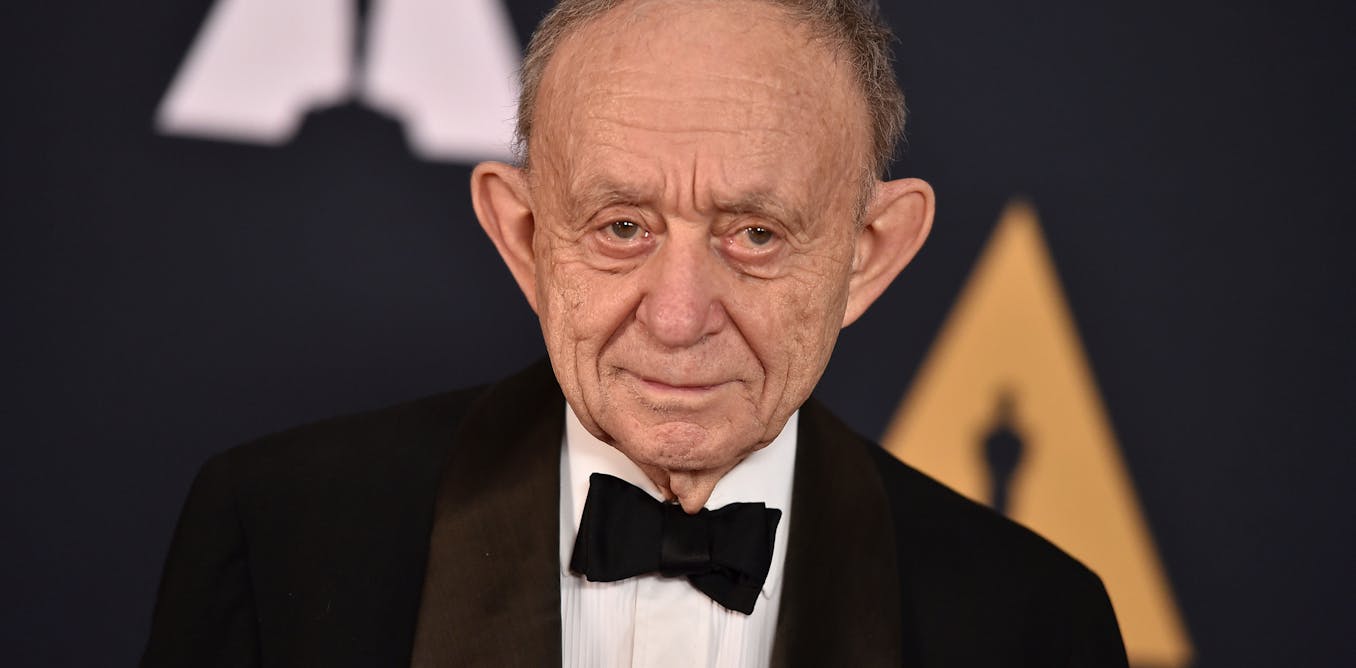
Frederick Wiseman, the pioneering American documentary filmmaker whose unflinching portrayals of institutions and everyday life reshaped the genre, died on Monday at the age of 96. According to reports from The Conversation, Wiseman passed away in his home in Cambridge, Massachusetts, leaving behind a legacy of more than 50 films that captured the raw intricacies of American society without narration or overt commentary.
Born in 1930 into a Jewish family in Boston, Wiseman initially pursued a career in law, studying at Yale University and later teaching at Boston University. His early fascination with documentary cinema led him to produce The Cool World in 1963, a film directed by Shirley Clarke that explored the lives of a youth gang in Harlem. It was during his time teaching legal medicine that Wiseman encountered the subject of his breakthrough work: Bridgewater State Hospital, a facility for the "criminally insane" in Massachusetts.
This encounter inspired Titicut Follies, released in 1967, which Wiseman directed and produced. The film offered a stark, observational look inside the hospital, showing inmates in bare cells, instances of force-feeding, and the often apathetic or bullying behavior of staff. According to The Conversation, the documentary was banned in the United States for 20 years due to its controversial content, though it received critical acclaim in Europe. The ban highlighted the tensions Wiseman's work often provoked, challenging viewers and authorities alike to confront uncomfortable truths about institutional power.
Titicut Follies marked the beginning of what Wiseman called his "institutional series," a body of work that delved into the inner workings of American organizations. Films like High School (1968), which examined life at a Philadelphia high school; Law and Order (1969), focusing on police operations in Kansas City; Hospital (1970), set in a New York metropolitan hospital; and Welfare (1975), portraying the struggles of New Yorkers navigating poverty and bureaucracy, established his signature style.
Wiseman's approach eschewed traditional documentary techniques such as voice-over narration, interviews, talking-head experts, or added music. Instead, he favored an observational method, allowing events to unfold naturally before the camera. Critics at the time labeled this "Direct Cinema," a term associated with the American branch of the French cinéma vérité movement, meaning "truthful cinema." Wiseman was often compared to contemporaries like Robert Drew, known for his 1960 film Primary about John F. Kennedy's Democratic primary campaign, and D.A. Pennebaker, whose 1967 documentary Don't Look Back followed Bob Dylan on tour.
Though Wiseman rejected the Direct Cinema label, his films shared the movement's reliance on lightweight, hand-held cameras and portable sound equipment, which enabled a discreet "fly on the wall" perspective. This technology allowed his small crews to film unobtrusively in settings like high school classrooms, hospital corridors, and welfare offices. As Wiseman once explained in an interview cited by The Conversation, "The principal that governs the shooting is chance." His process involved capturing 100 to 150 hours of footage, then spending nine to ten months in editing to craft a dramatic structure from the material.
Wiseman acknowledged the blurred lines between fact and fiction in his work, describing his films as "reality fictions" with a deliberate sequence and rhythm. In the editing room, he meticulously reviewed footage for subtle details and connections, creating a narrative flow that invited viewers to draw their own conclusions. For instance, in High School, the film observes students and teachers in daily routines—from classrooms and detention to sports fields—culminating in a poignant scene where a teacher reads a letter from a former student serving in Vietnam. This subtle linkage between education and the military-industrial complex emerges without explicit guidance, leaving the interpretation to the audience.
Unlike filmmakers such as Michael Moore, whose documentaries often advance a clear agenda, Wiseman maintained a veneer of neutrality. "I don’t go in with a thesis I try to prove or disprove," he said in a statement quoted by The Conversation. "The shooting of the film is the research. My response to that experience is what the final film is about." This method, while appearing impartial, carried a profound political undercurrent, questioning power dynamics within institutions and their impact on ordinary lives.
One of Wiseman's most acclaimed works, Welfare (1975), is regarded by many as his masterpiece. The nearly three-hour film documents the frustrations of impoverished New Yorkers as they interact with a labyrinthine welfare system, highlighting daily indignities in pursuit of benefits and food stamps. Set against the backdrop of 1970s urban decay, it portrayed the human cost of bureaucratic indifference, drawing praise for its empathetic yet detached gaze.
Over his six-decade career, Wiseman's subjects ranged widely, from public spaces and commercial enterprises to cultural landmarks. He filmed the bustling ecosystems of Central Park in Central Park (1996), the opulent operations of the Neiman Marcus department store in Commercial (1983), the affluent leisure of Aspen, Colorado, in Aspen (1993), and the gritty intensity of a boxing gym in Austin, Texas, in Boxing Gym (2008). Each project adhered to his observational ethos, revealing societal layers through unfiltered observation.
Even in his later years, Wiseman remained prolific. At age 93, he released Menus-Plaisirs – Les Troisgros (2023), a four-hour exploration of the French restaurant Le Bois sans feuille in Roanne, France, run by the Troisgros family. The film delved into the meticulous world of haute cuisine, from sourcing ingredients to kitchen orchestration, showcasing Wiseman's enduring curiosity about human endeavor.
Wiseman's influence extends globally, inspiring a new generation of documentarians. French filmmaker Alice Diop, known for chronicling immigrant experiences in Parisian suburbs in works like Saint Omer (2022), has cited Wiseman as a key influence. Similarly, Chinese director Wang Bing, whose Youth trilogy (2013-2021) follows migrant workers in Zhujiajiao, has drawn from Wiseman's institutional deep dives. These filmmakers echo his commitment to long-form, immersive storytelling that prioritizes lived experience over exposition.
Throughout his career, Wiseman received numerous accolades, including a Lifetime Achievement Award from the International Documentary Association in 2012 and an Honorary Academy Award in 2016. His films, distributed primarily through public television and film festivals, have been screened worldwide, amassing a devoted following among cinephiles and scholars. Despite occasional controversies, such as the Titicut Follies ban—lifted in 1991 for educational purposes—Wiseman's body of work has been celebrated for its artistic integrity and social insight.
The circumstances of Wiseman's death were not immediately detailed in reports, but his passing comes at a time when documentary filmmaking grapples with evolving technologies like digital cameras and streaming platforms. His analog-era techniques, reliant on synch-sound and patient editing, stand in contrast to today's fast-paced production norms, yet they continue to serve as a benchmark for authenticity.
As tributes pour in from the film community, Wiseman's oeuvre remains a vital resource for understanding American institutions—from prisons and schools to parks and restaurants. His films, available through platforms like Criterion Channel and PBS, invite ongoing study, much like the meticulous attention he devoted to every frame. In an era of polarized media, Wiseman's neutral yet probing lens offers a timeless model for capturing the complexities of reality.