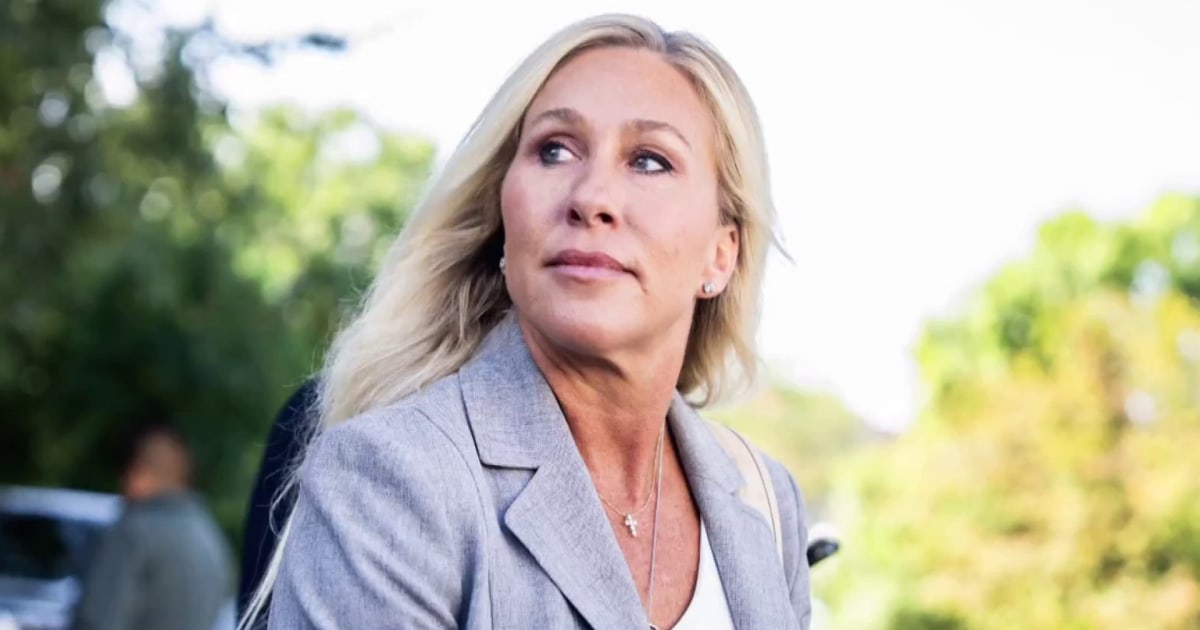
WASHINGTON — Rep. Marjorie Taylor Greene, the firebrand Republican congresswoman from Georgia known for her outspoken conservative views, announced on Thursday that she plans to resign from her seat in the U.S. House of Representatives effective January 5, 2026. The decision, which Greene attributed to a desire to pursue new opportunities outside of Congress, comes amid reports of a deepening rift with former President Donald Trump, her longtime political ally.
Greene, who represents Georgia's 14th Congressional District, made the announcement in a video statement posted to her social media accounts. "After much prayer and reflection, I have decided to step down from my role in Congress on January 5, 2026," Greene said in the video, according to NBC News. She did not elaborate extensively on her future plans but hinted at focusing on "broader fights for America" beyond the Capitol.
The timing of Greene's resignation is notable, as it aligns closely with the start of the 119th Congress, which convenes on January 3, 2026. Her departure would create a vacancy in a solidly Republican district, potentially triggering a special election to fill the seat. Georgia election officials have not yet commented on the logistics, but state law typically requires such elections to be held within 120 days of a vacancy.
Greene's announcement has sent ripples through Republican circles, where she has been both a polarizing figure and a loyal supporter of Trump. Elected in 2020, Greene quickly rose to prominence with her vocal endorsement of conspiracy theories and criticism of fellow Republicans she deemed insufficiently conservative. Her tenure has been marked by multiple censures from her own party and attempts to strip her of committee assignments.
At the heart of the recent developments is Greene's reported public fallout with Trump. According to sources close to the matter, tensions escalated over disagreements regarding the direction of the Republican Party post-2024 election. NBC News reported that the rift stemmed from Greene's criticism of Trump's handling of certain policy issues, though specifics remain unclear. "This comes after her public fallout with President Trump over the ..." the network's coverage noted, trailing off without further detail in initial reports.
Trump, who has not publicly responded to Greene's announcement as of Friday morning, has historically praised her as a "warrior" for the MAGA movement. In 2021, he defended her against bipartisan efforts to remove her from committees, calling the actions "a disgrace." However, insiders suggest that Greene's increasingly independent streak, including her vocal opposition to some of Trump's endorsed candidates in primaries, may have strained their relationship.
Republican leaders in Congress reacted cautiously to the news. House Speaker Mike Johnson, R-La., issued a statement wishing Greene well and thanking her for her service. "Marjorie has been a fierce advocate for her constituents and conservative principles," Johnson said. "We respect her decision and look forward to continuing our work to deliver for the American people."
Democrats, meanwhile, viewed the resignation through a different lens. House Minority Leader Hakeem Jeffries, D-N.Y., remarked that Greene's departure would "remove a voice of division from the House." He added, "While we disagree on many issues, her time in Congress has often exacerbated partisan tensions rather than resolving them."
Greene's political career has been anything but conventional. Before entering Congress, she was a business owner in northwest Georgia and gained national attention through social media posts promoting QAnon-related theories and questioning the 2020 election results. Upon taking office, she faced swift backlash, including a House vote to strip her of committee roles in February 2021, citing her past endorsements of violence against political figures.
Despite these controversies, Greene maintained strong support in her district, winning re-election in 2022 and 2024 with margins exceeding 60%. Her district, which spans rural areas and parts of the Appalachian foothills, has consistently voted Republican in federal elections. Political analysts predict that her successor will likely continue the district's conservative tilt.
The announcement also revives questions about the internal dynamics of the GOP's hard-right wing. Greene was a key player in efforts to oust Speaker Johnson in 2023 and has frequently challenged party leadership on issues like Ukraine aid and government spending. Her exit could embolden more moderate Republicans or, conversely, intensify calls for purity tests within the party.
Looking back, Greene's relationship with Trump was instrumental to her rise. She was one of the first lawmakers to endorse his 2024 presidential bid and traveled to Mar-a-Lago multiple times during his campaign. Yet, reports of friction emerged late last year, particularly after Greene publicly criticized Trump's selection of a running mate, though she later walked back some statements.
Experts on congressional politics offered varied interpretations of the resignation. "This could signal a shift in how Trump wields influence over the House GOP," said Sarah Binder, a political scientist at the Brookings Institution. "Greene's departure removes a staunch ally but also a potential liability." On the other hand, conservative commentator Matt Schlapp, chairman of the American Conservative Union, suggested that Greene's move was strategic. "She's positioning herself for a bigger platform, perhaps media or a gubernatorial run," Schlapp said.
As for what's next, Greene's office confirmed that she intends to complete her current term through the end of 2025, focusing on legislative priorities like border security and energy independence. "Congresswoman Greene remains committed to her work until the very last day," a spokesperson said. The vacancy process in Georgia will begin immediately upon her resignation, with Gov. Brian Kemp expected to set the election date.
The broader implications of Greene's decision extend to the Republican Party's strategy heading into the 2026 midterms. With Trump potentially returning to the White House, his influence over primaries could reshape the House GOP caucus. Analysts note that Greene's exit might encourage other Trump-aligned members to reassess their roles, especially if policy battles intensify.
In the end, Greene's resignation marks the end of a tumultuous chapter in American politics. From her explosive debut to her unyielding advocacy, she embodied the populist fervor that has defined the modern GOP. As she steps away from Congress, questions linger about her next move and the party's path forward without one of its most vocal warriors.