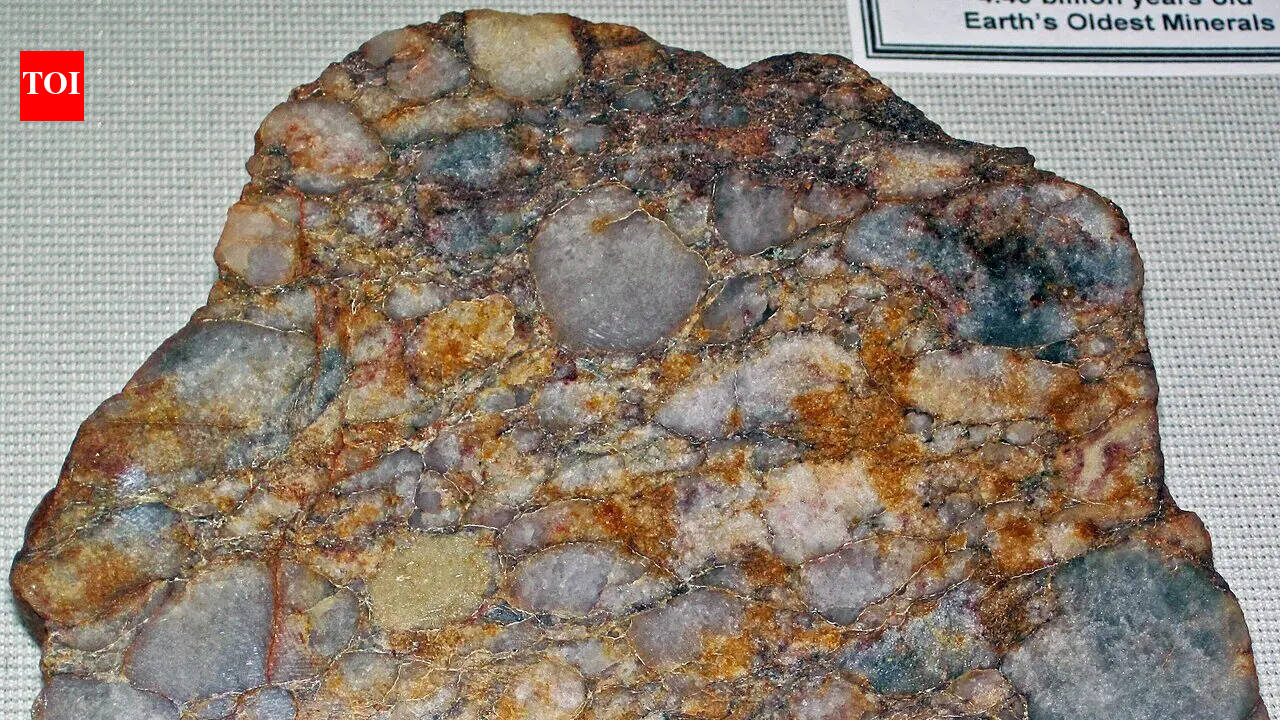
In the remote expanses of northern Quebec, where the rugged terrain meets the chilly waters of Hudson Bay, scientists have unearthed what could be one of the oldest clues to life's origins on Earth. A team of geologists from the University of Ottawa announced on Tuesday the discovery of microscopic structures within a 3.8-billion-year-old rock formation, potentially rewriting the timeline of when life first emerged on our planet. The find, detailed in a forthcoming paper in the journal Nature Geoscience, comes from the Nuvvuagittuq Supracrustal Belt, a geological wonderland known for preserving some of the planet's earliest rocks.
The Nuvvuagittuq Belt, located about 40 kilometers southeast of Inukjuak, has long fascinated researchers for its ancient volcanic and sedimentary layers dating back to the Archean Eon. According to lead researcher Dr. Jonathan O'Neil, an assistant professor at the University of Ottawa, the team was conducting routine sampling in July 2023 when they stumbled upon unusual graphite inclusions embedded in the rock. "These tiny carbon-rich particles, measuring just a few micrometers across, show isotopic signatures that suggest biological activity," O'Neil said in an interview with The Appleton Times. "If confirmed, this pushes the evidence for life back by at least 300 million years from previous records."
The discovery builds on earlier work in the same region, where in 2009, O'Neil's team identified rocks dated to 4.28 billion years old, though those findings were controversial due to debates over their exact age. This new evidence focuses on more securely dated samples from 3.8 billion years ago, a time when Earth was still cooling from its molten youth and bombarded by asteroids. The graphite, analyzed using secondary ion mass spectrometry at the Canadian Centre for Isotopic Microanalysis, exhibits a carbon-13 depletion of about 25 per mil, a hallmark of ancient microbial metabolism, according to the researchers.
However, not all experts are convinced. Dr. Elizabeth Tremblay, a geochemist at McGill University who was not involved in the study, expressed cautious optimism. "The isotopic data is intriguing, but we need to rule out abiotic processes, like those from hydrothermal vents," she said. "Quebec's ancient rocks are full of surprises, but extraordinary claims require extraordinary evidence." Tremblay pointed to similar debates surrounding 3.7-billion-year-old stromatolites in Greenland, where initial excitement over early life signs was tempered by later analyses suggesting inorganic origins.
The site's isolation adds to the allure and challenge of the work. The Nuvvuagittuq Belt is accessible only by helicopter or boat during the short summer months, with temperatures often dipping below freezing even in July. Local Inuit communities, including those from Inukjuak, have assisted in the expeditions, providing traditional knowledge about the land. "Our elders have always known these rocks hold stories from the beginning of time," said Mary Aitchison, a community liaison for the Nunavik Research Centre. "We're glad to see science catching up to what we've passed down."
Contextually, this find comes amid a surge in astrobiology research, fueled by NASA's Perseverance rover collecting samples on Mars that might harbor signs of ancient life. If the Quebec discovery holds up, it could inform models of how life arose on Earth and, by extension, on other worlds. "Understanding the earliest biosphere helps us predict where to look for life elsewhere," O'Neil noted. The rocks' preservation is remarkable, shielded from later tectonic upheavals that erased much of Earth's early crust.
Further details from the study reveal that the graphite is intergrown with apatite crystals, another mineral often associated with biological processes. Scanning electron microscopy images show filament-like structures, reminiscent of modern bacteria, though at a scale invisible to the naked eye. The team dated the rocks using uranium-lead methods on nearby zircon crystals, confirming the 3.8-billion-year age with a margin of error under 100 million years.
Skeptics in the field, such as Dr. Martin Van Kranendonk from the University of New South Wales, argue that the evidence might stem from non-biological carbon cycling in primordial oceans. "We've seen this before—promising signals that don't quite seal the deal," Van Kranendonk said via email. "Peer review will be crucial here." The Nature Geoscience paper, submitted last month, is undergoing rigorous scrutiny, with preliminary abstracts presented at the Geological Society of America meeting in October 2023.
Quebec's geological heritage extends beyond this site. The Canadian Shield, encompassing much of the province, holds rocks from 4 billion years ago, making it a global hotspot for paleogeology. Previous discoveries include 3.77-billion-year-old microbial fossils reported in 2017 by Australian researchers, though those were from Labrador, not Quebec. This new clue aligns with emerging consensus that life may have started as early as 4.1 billion years ago, shortly after Earth's oceans formed around 4.4 billion years ago.
The implications ripple into evolutionary biology. If life existed at 3.8 billion years, it suggests rapid emergence post-late heavy bombardment, the asteroid barrage that ended around 3.9 billion years ago. "This compresses the window for abiogenesis dramatically," said Dr. Sarah Stewart Johnson, an astrobiologist at Harvard University. "It means life is resilient and perhaps inevitable under the right conditions." Johnson's lab is already planning comparative studies with the Quebec samples.
Funding for the research came from the Natural Sciences and Engineering Research Council of Canada and the Canadian Space Agency, highlighting the interdisciplinary interest. The team collected over 50 kilograms of rock during the 2023 field season, with lab work continuing at facilities in Ottawa and Montreal. Preliminary results were shared at a virtual seminar hosted by the Geological Survey of Canada last week.
As the scientific community digests this announcement, calls for independent verification grow louder. "Replication is key in geochronology," emphasized Dr. Tremblay. "Other labs should analyze these samples soon." O'Neil's group has archived portions of the rock at the University of Ottawa's Earth Sciences Museum for just that purpose.
Broader impacts include educational outreach. The discovery has sparked interest in Quebec's schools, with virtual tours of the Nuvvuagittuq site planned for spring 2024. Inuit partnerships ensure cultural sensitivity, incorporating traditional stories into interpretive materials. "This isn't just rocks; it's our shared history," Aitchison added.
Looking ahead, the team aims to explore deeper layers of the belt for more evidence. If confirmed, this 3.8-billion-year-old clue could solidify Quebec's place in the narrative of life's dawn, challenging textbooks and inspiring future generations of scientists. As O'Neil put it, "We're peering into Earth's childhood, and what we see is full of potential."
The story of these ancient rocks underscores the ongoing quest to understand our planet's beginnings, a pursuit that blends cutting-edge technology with the timeless patience of fieldwork in Canada's vast wilderness.