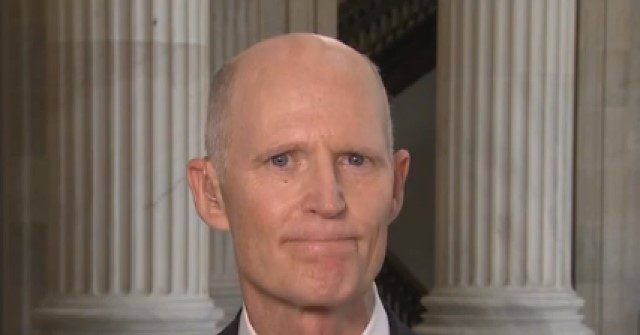
Sen. Rick Scott said Tuesday that Raul Castro and his family would depart Cuba before U.S. authorities could detain the former Cuban leader. Speaking on Bloomberg’s “Balance of Power,” the Florida Republican described the move as likely given Castro’s age and desire to avoid imprisonment.
Scott pointed to the rapid removal of Venezuelan President Nicolás Maduro as evidence that action against Cuban leadership would not require extensive effort. “Well, let’s remember, the Cubans were supporting — were defending Maduro, and that took, what, seven minutes to take out Maduro? So, it won’t take much to pick up Raul Castro,” Scott said.
Co-host Kailey Leinz pressed the senator on whether he expected U.S. forces to enter Cuba. Scott replied that he believed Castro would leave voluntarily. “Absolutely, I expect that to happen,” he said when asked if the scenario would unfold.
Scott, 95, noted that Castro is also 95 and would not want to face the same fate as Maduro. “I think Raul Castro is going to leave the country, along with his family. He doesn’t want to be in prison the rest of his life. I think he’s 95 years old. He doesn’t want to do what’s happened to Maduro and die in prison in the United States. So, I think he’s going to leave before we pick him up,” Scott stated.
The comments come amid ongoing U.S. policy discussions regarding Cuba and Venezuela. Scott has long criticized the Cuban government and supported stricter measures against regimes aligned with Havana. His remarks referenced the quick collapse of Maduro’s defenses earlier this year, which some analysts attributed to shifting alliances and internal pressures.
Leinz sought clarification during the exchange to confirm whether Scott anticipated direct U.S. intervention. Scott maintained that Castro’s departure would occur first, framing it as a personal decision driven by self-preservation rather than an immediate military operation.
Scott represents Florida, a state with a large Cuban-American population that has historically influenced U.S. policy toward Havana. His statements align with previous calls for accountability regarding Cuban officials and their support for regional leaders such as Maduro.
Officials in Washington have not confirmed any plans for operations inside Cuba. Scott’s prediction remains a personal assessment based on the timeline of recent events in Venezuela and the advanced age of Cuban leadership.
The interview highlighted Scott’s view that Cuban citizens are already positioned for change, though he did not elaborate on specific internal developments. The senator’s office has not issued additional statements beyond the broadcast remarks.
Background on the Maduro situation includes reports that his government lost key military support within days, leading to his reported detention. Scott used that example to argue that similar dynamics could apply to Cuba without prolonged conflict.
Critics of Scott’s position have questioned the feasibility of such scenarios, noting the complexities of Cuban governance and international relations. Supporters, however, view the comments as a signal of continued pressure on authoritarian regimes in the region.
No timeline was provided for any potential developments. Scott emphasized that Castro’s exit would likely precede any U.S. action, describing it as a logical outcome given the former leader’s circumstances.
The Bloomberg appearance drew attention on social media, with users sharing clips of the exchange. Scott has maintained an active presence on foreign policy issues involving Latin America throughout his Senate tenure.