WASHINGTON — A recent Supreme Court ruling striking down President Donald Trump's sweeping tariffs on Chinese goods has injected fresh uncertainty into the already tense U.S.-China trade relationship, just as both nations prepare for a high-stakes summit. The decision, handed down on Friday, invalidates the tariffs imposed under emergency powers, prompting Trump to vow immediate countermeasures and alternative strategies to protect American interests.
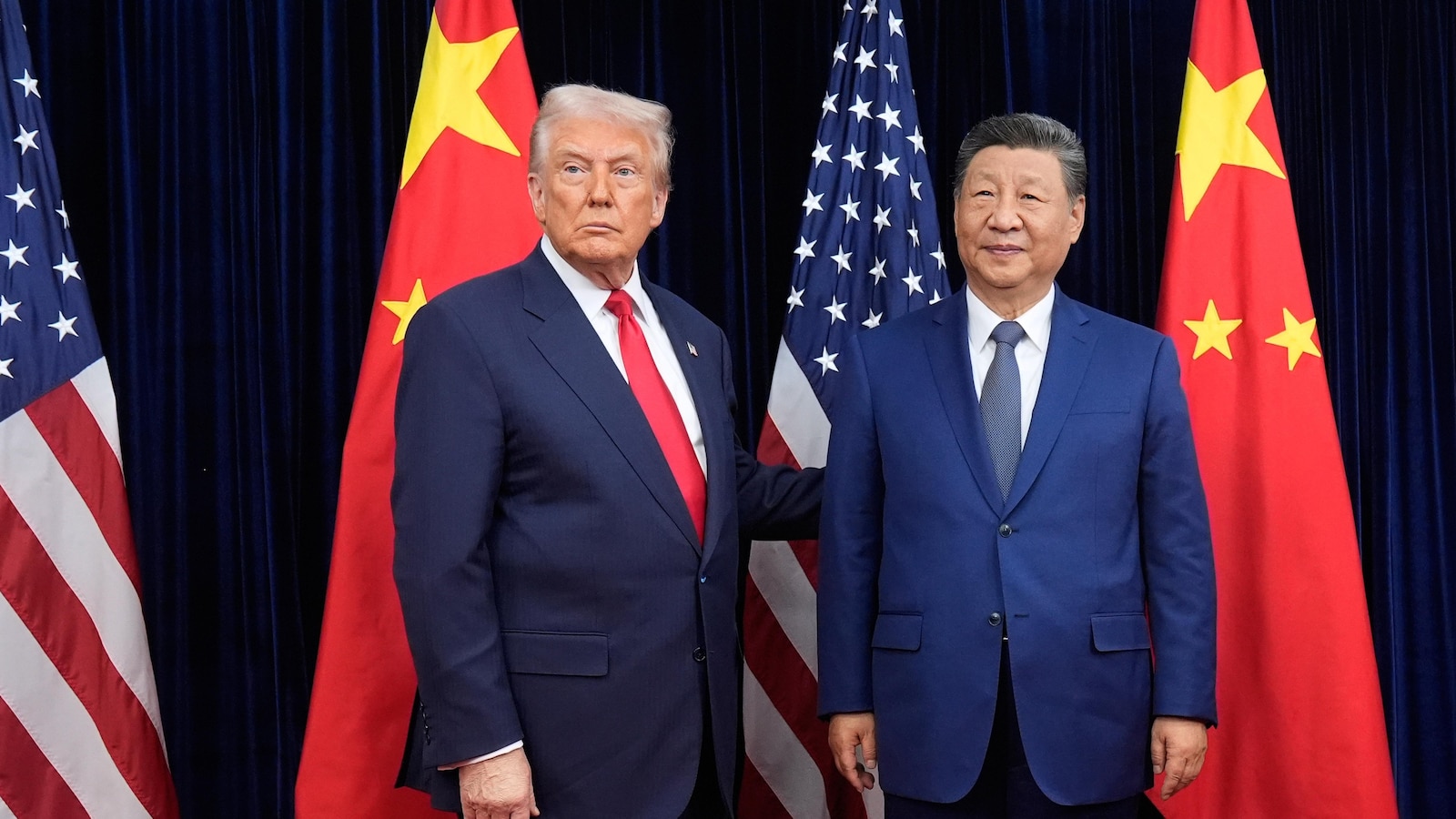
The ruling comes at a pivotal moment, with Trump scheduled to travel to Beijing from March 31 through April 2 to meet with Chinese President Xi Jinping. Analysts suggest the decision could bolster China's negotiating position, though Beijing is expected to tread carefully to preserve a fragile trade truce established last year. "It will give China a moral boost in their negotiations with Trump's team ahead of the summit, but they are prepared for the scenario that nothing actually changes in reality," said Sun Yun, director of the China program at the Stimson Center, a Washington-based think tank.
Trump, visibly frustrated by the court's action, addressed reporters shortly after the decision. He announced plans to impose a temporary 10% global tariff, quickly escalating it to 15%, while exploring other avenues for import duties. Pointing to China's trade surplus as a core issue, Trump argued that the imbalance has funded Beijing's military buildup at America's expense. "China had hundreds of billions of dollars in surpluses with the United States. They rebuilt China. They rebuilt the army. We built China’s army by allowing that to happen," Trump said. He added a personal note on his rapport with Xi, stating, "I have a great relationship with President Xi, but he respects our country now."
The tariffs in question originated early in Trump's current term. Shortly after returning to the White House last year, he invoked an emergency powers law to slap 20% tariffs on Chinese imports, citing Beijing's alleged failure to curb the export of chemicals used in fentanyl production. This was followed by broader reciprocal tariffs on multiple countries, including a 34% rate on China. Beijing retaliated aggressively, driving tariffs into triple digits temporarily before both sides de-escalated through negotiations.
Those talks culminated in a summit between Trump and Xi in South Korea in October, leading to a one-year trade truce with a 10% baseline tariff. As part of the agreement, Trump reduced the fentanyl-related tariff to 10%, and China recommitted to restricting exports of precursor substances for the opioid. The Supreme Court's intervention now threatens to unravel this delicate balance, creating ripples beyond the bilateral relationship.
Experts anticipate that Xi will avoid aggressively leveraging the ruling during the upcoming summit, opting instead to build personal ties with Trump. "The more that Xi can do that, the more likely it is that the fragile trade truce between the United States and China will take hold in earnest and that Trump will be amenable to security concessions that give China greater freedom of maneuver in Asia," said Ali Wyne, a senior research and advocacy adviser focused on U.S. policy toward China at the International Crisis Group.
From Beijing's perspective, the Chinese Embassy offered a measured response. Spokesperson Liu Pengyu emphasized mutual benefits in avoiding escalation. "Tariff and trade wars serve neither country’s interest," Liu said. He urged Washington and Beijing to collaborate for "greater certainty and stability for China-U.S. economic and trade cooperation and the global economy."
The decision's fallout extends to other U.S. trading partners, particularly in Asia, where nations have navigated Trump's tariff policies through painstakingly negotiated deals. "I would expect most Asian partners to proceed cautiously, with existing agreements largely holding as both sides work through the implications in the coming weeks," said Dan Kritenbrink, a partner at The Asia Group and former assistant secretary of state for East Asian and Pacific affairs under President Joe Biden.
Kritenbrink highlighted Japan as a key area of focus, especially ahead of Prime Minister Sanae Takaichi’s planned visit to Washington in March. Japan, a close U.S. ally, has experienced strained ties with China in recent months amid territorial disputes and economic pressures. The tariff uncertainty could complicate these dynamics, forcing Tokyo to reassess its trade strategies.
Within the U.S. government, options remain for sustaining pressure on China. Wendy Cutler, vice president of the Asia Society Policy Institute, noted that the Office of the U.S. Trade Representative is conducting an active investigation into China's adherence to prior trade pacts. "If China is found not to be fulfilling its obligations under the agreement, the U.S. government is allowed under a trade law to impose tariffs," Cutler said, suggesting this could serve as a swift "Plan B" for the administration.
Democrats in Congress have called for a more robust approach. Rep. Ro Khanna, the top Democrat on the House Select Committee on the Chinese Communist Party, pressed the White House to develop a "new, tougher strategy that holds China accountable for its unfair trade practices and leverages the collective power of our allies and partners." Khanna's comments reflect broader partisan divides on trade policy, with some Republicans echoing Trump's aggressive stance.
Consultants tracking political risks in China foresee limited long-term disruption. Gabriel Wildau, a managing director at Teneo focused on China-related analysis, pointed to Trump's history of using alternative legal tools during his first term. "Beijing probably assumes that the tariffs could be maintained or re-created with only modest difficulty," Wildau said. However, he added that China hopes to negotiate reductions in exchange for commitments like increased U.S. purchases of Chinese goods.
The broader implications of the ruling underscore the volatility in global trade. Trump's initial tariffs disrupted supply chains worldwide, inflating costs for consumers and businesses. The Supreme Court's move, while a legal setback, highlights ongoing debates over executive authority in trade matters. Legal experts have noted that the decision limits the use of emergency powers for economic policy, potentially setting precedents for future administrations.
As the summit approaches, both leaders face domestic pressures. In the U.S., manufacturers and farmers affected by past tariffs continue to lobby for stability. In China, economic slowdowns amplify the need for export markets. Analysts predict that while the ruling provides short-term leverage to Beijing, Trump's unpredictability could lead to rapid policy shifts, keeping negotiations on edge.
Looking ahead, the coming weeks will reveal how the administration adapts. With Trump's travel plans confirmed by the White House, the Beijing meetings could either solidify the truce or ignite new tensions. For now, the global economy watches closely, as the U.S. and China balance competition with the risks of escalation.