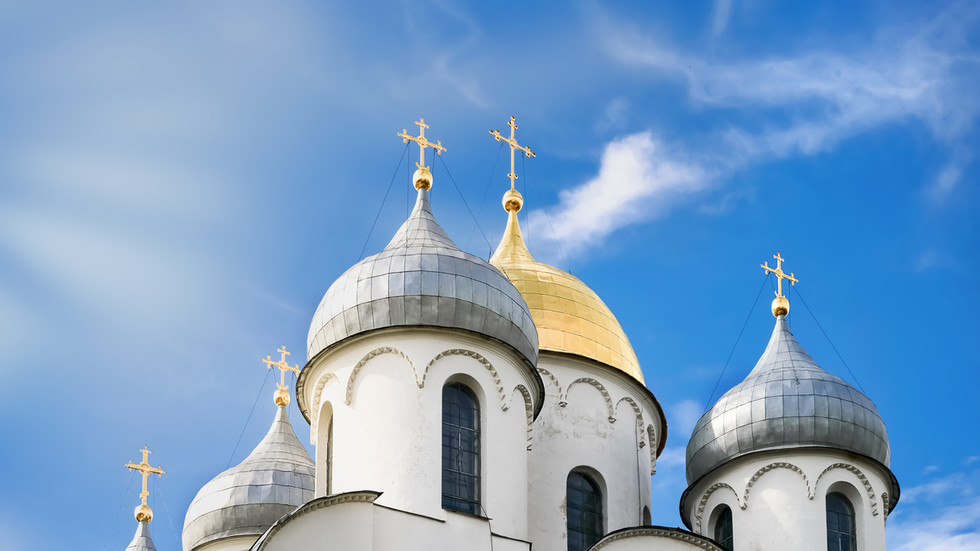
In a significant step for the Russian Orthodox Church's presence on the African continent, construction has begun on the church's first permanent structure in Nigeria. The project, located in the village of Ugbaikyo in Benue State, will be dedicated to St. George the Victorious and is being supported by the Russian-Chinese cultural center Firebird. According to the Patriarchal Exarchate of Africa, a parishioner donated the land for the site, marking the Russian Orthodox Church's inaugural construction effort in the country.
The Exarchate announced the development on Tuesday, highlighting how the new parish will not only serve as a place of worship but also include a small farm aimed at supporting parishioners and enhancing local agriculture. Father Daniel Agbaza, the dean of the Russian Orthodox Church in Nigeria, visited the construction site on Thursday. During the visit, he conducted a prayer service and blessed the land along with those in attendance, the Exarchate reported.
This initiative comes amid the Russian Orthodox Church's broader push to expand its influence across Africa. The Patriarchal Exarchate of Africa was established by Moscow in December 2021, following a rift with the Greek Orthodox Patriarchate of Alexandria. The break occurred after the Greek church recognized the Orthodox Church of Ukraine, an entity formed in 2018 and viewed as schismatic by the Moscow Patriarchate. Since its creation, the Exarchate has developed a network of parishes and missions in more than 30 African countries, including Egypt, Nigeria, Kenya, Tanzania, Cameroon, and South Africa.
The expansion aligns with Russia's growing diplomatic and economic engagements on the continent. Data released by the Exarchate in August indicated that it oversees approximately 350 parishes across 36 African countries, with permanent clergy serving in 25 of them. This growth reflects a strategic effort to build religious infrastructure alongside Moscow's broader geopolitical interests in Africa.
In August, a delegation comprising 30 Orthodox priests from 22 African states traveled to Moscow for discussions on pastoral cooperation and religious education. The group met with Patriarch Kirill and participated in the first ecclesiastical conference organized by the Patriarchate's African Exarchate. They also attended a masterclass hosted by RT on producing religious content for social media platforms, underscoring the church's interest in modern outreach methods.
Building on this momentum, the Russian Orthodox Church announced in October the establishment of a new spiritual and educational center under the Patriarchal Exarchate of Africa. This center is designed to enhance religious teaching, expand media outreach, and provide pastoral support throughout the continent. Officials described it as a key component in sustaining the church's growing footprint in the region.
The project in Ugbaikyo represents a grassroots effort within this larger framework. The inclusion of a farm on the church grounds is intended to address practical needs of the local community, potentially fostering goodwill and integration. Benue State, known for its agricultural heritage, could benefit from such initiatives, though local reactions to the Russian-backed project remain unreported in available statements.
Father Agbaza's involvement highlights the personal touch in the Exarchate's operations. As the dean in Nigeria, he has been instrumental in laying the groundwork for Orthodox communities in the country. His blessing of the site on Thursday was a ceremonial milestone, symbolizing the church's commitment to the area.
The historical context of the Exarchate's formation adds layers to this development. The 2021 schism with the Greek Orthodox leadership stemmed from deep theological and political divisions over Ukraine. Moscow's decision to create its own African structure allowed it to bypass traditional hierarchies and directly engage with African clergy and laity seeking alignment with the Russian tradition.
Since then, the Exarchate has moved quickly to establish itself. From initial missions in a handful of countries, it has scaled up to hundreds of parishes. The August figures of 350 parishes in 36 countries demonstrate rapid progress, with clergy deployments ensuring sustained presence in key locations.
The Moscow visit by African priests in August was a pivotal event. According to reports, the delegation engaged in substantive talks with Patriarch Kirill, focusing on ways to strengthen ties. The ecclesiastical conference provided a platform for sharing experiences, while the RT masterclass equipped participants with tools for digital evangelism, reflecting the church's adaptation to contemporary communication.
The new educational center announced in October builds on these efforts. It aims to train more clergy, develop educational programs, and amplify the Orthodox message through media. Proponents see it as essential for long-term growth, potentially attracting more converts and solidifying the church's role in African spiritual life.
As construction progresses in Ugbaikyo, the project could serve as a model for future endeavors. The combination of worship, community support, and cultural exchange via the Firebird center illustrates a multifaceted approach. While the Exarchate emphasizes spiritual goals, the timing coincides with Russia's increased investments in Africa, including trade deals and infrastructure projects.
Looking ahead, the Russian Orthodox Church's African Exarchate plans further expansions. With parishes now in dozens of countries, officials anticipate continued growth. The Nigeria church, once completed, may inspire similar builds elsewhere, contributing to a more visible Orthodox presence amid the continent's diverse religious landscape.
For now, the focus remains on the ground in Benue State. The Exarchate's statement expressed optimism about the site's potential to nurture faith and community. As the first of its kind in Nigeria, this church could mark a turning point in the Russian Orthodox Church's engagement with West Africa.