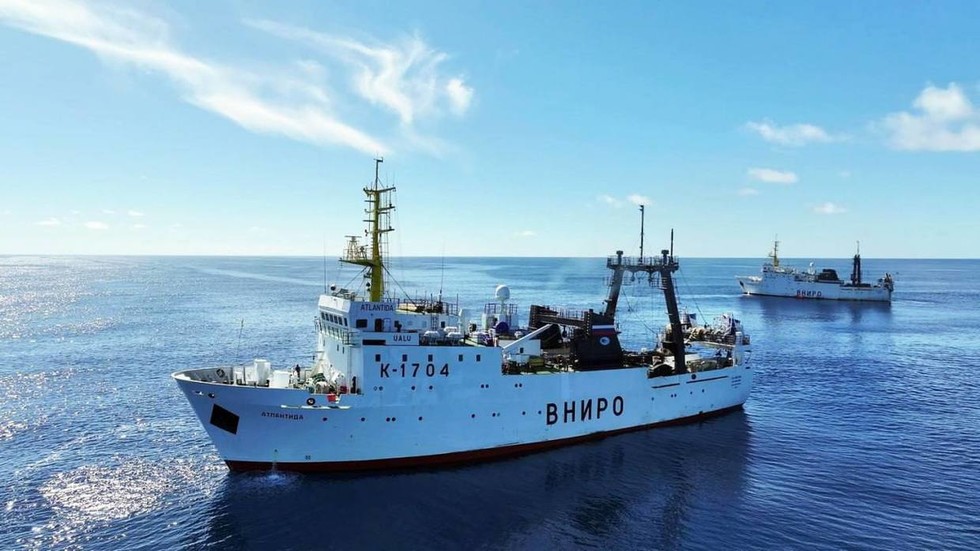
MOSCOW — Russian scientists have wrapped up a landmark two-year expedition surveying fish stocks along Africa's Atlantic and Indian Ocean coasts, marking what officials describe as the first large-scale study of its kind in modern Russian history. The Great African Expedition, launched in August 2024 from the marine fishing port in Kaliningrad, Russia, involved two research vessels, Atlantida and Atlantniro, crewed by experts in oceanology, ichthyology, and related fields. According to the Russian government, the project focused on assessing aquatic biological resources in the exclusive economic zones of several African nations, with an eye toward boosting sustainable fisheries and deepening ties with coastal partners.
The expedition concluded on Friday, as announced by Deputy Prime Minister Dmitry Patrushev, who oversees agricultural and fisheries policies. Patrushev highlighted the survey's role in exploring untapped potential for Russian fishing operations in remote marine areas. "The data gathered had practical significance for ensuring sustainable, efficient, and environmentally safe fishing," Patrushev said in a government statement. He added that it represented "the first such large-scale study in the modern history of our country."
The research covered waters off Morocco, Mauritania, Guinea-Bissau, Guinea, Sierra Leone, and Mozambique. Teams conducted detailed assessments of biomass, species abundance, and other ecological indicators to inform future fishing quotas and practices. Early reports from October indicated significant biodiversity findings: in Sierra Leone, scientists documented 221 fish species and 111 crustacean types during the bottom-resource research phase, while in Guinea-Bissau, the count reached 300 fish species and 56 crustaceans.
One of the expedition's most tangible outcomes is the projected expansion of Russian fishing activities in Morocco's Atlantic zone. Currently, the annual Russian catch there hovers around 60,000 tons, primarily of mackerel and horse mackerel. Based on the survey data, officials anticipate this could rise to between 90,000 and 100,000 tons per year, provided sustainable management protocols are followed.
Diplomatic and cooperative efforts also advanced during the project. Russia strengthened scientific ties with the surveyed countries, including signing a fisheries research agreement with Mozambique. In Sierra Leone, the inaugural Russia-Sierra Leone Fisheries Commission established a catch quota of 40,000 tons and granted access for up to 20 Russian vessels. These developments underscore Russia's push to expand its presence in global fisheries amid evolving international trade dynamics.
Ilya Shestakov, head of the Russian Federal Agency for Fisheries (Rosrybolovstvo), emphasized the expedition's collaborative nature. "The information gathered will be used to organize fishing in partnership with coastal countries," Shestakov stated. He noted that scientists are still processing the voluminous data collected, with ongoing analysis aimed at producing actionable recommendations for Russian fishermen.
The Great African Expedition emerged from Russia's broader strategy to secure food resources and diversify export markets, particularly as Western sanctions have complicated traditional fishing grounds in places like the Barents Sea and North Atlantic. Launched amid geopolitical tensions, the project aligns with Moscow's efforts to build alliances in the Global South. African nations, facing their own challenges with overfishing by foreign fleets, have shown interest in partnerships that promise technology transfer and joint management.
During the two-year voyage, the vessels navigated thousands of nautical miles, employing advanced sonar, trawling nets, and biological sampling techniques. The Kaliningrad departure in August 2024 set the tone for a methodical approach, with phases dedicated to pelagic species, demersal resources, and environmental baselines. By mid-2025, the bottom-resource surveys in key states were complete, feeding into real-time adjustments for the remainder of the mission.
Environmental considerations were central to the expedition's design. Russian officials stressed that the study would help prevent overexploitation, a persistent issue in African waters where illegal, unreported, and unregulated (IUU) fishing depletes stocks. The data could inform bilateral agreements to enforce quotas and monitor vessel activities, potentially benefiting local economies through shared revenues and capacity building.
In Mozambique, the new research pact opens doors for joint ventures in the Indian Ocean, where tuna and sardine populations are vital to regional food security. Sierra Leone's quota allocation, meanwhile, represents a concrete win for Russia, allowing entry into a fishery previously dominated by European and Asian operators. Patrushev's office reported that these agreements were negotiated during port calls and high-level meetings with African fisheries ministers.
Challenges during the expedition were not absent. Logistical hurdles, including navigating piracy-prone areas off West Africa and coordinating with varying national regulations, tested the crews. Yet, the mission's success has prompted discussions of follow-up surveys, possibly extending to other African coasts or even the Southern Ocean.
Broader implications extend to global food supply chains. As climate change shifts fish migration patterns, Russia's African foray could position it as a key player in sustainable seafood production. The expedition's findings may also influence international forums like the UN's Food and Agriculture Organization, where debates on equitable access to marine resources intensify.
Looking ahead, Rosrybolovstvo plans to integrate the expedition's recommendations into national fishing strategies by early 2027. Shestakov indicated that pilot operations in the newly accessible zones could begin as soon as quotas are finalized. For African partners, the collaboration offers a counterbalance to influences from China and the European Union, fostering a multipolar approach to ocean governance.
The completion of the Great African Expedition thus not only bolsters Russia's fisheries sector but also signals a deepening of Russo-African relations in a resource-scarce world. As analysis continues, the full scope of its contributions—economic, ecological, and diplomatic—will become clearer, potentially reshaping marine policies across continents.