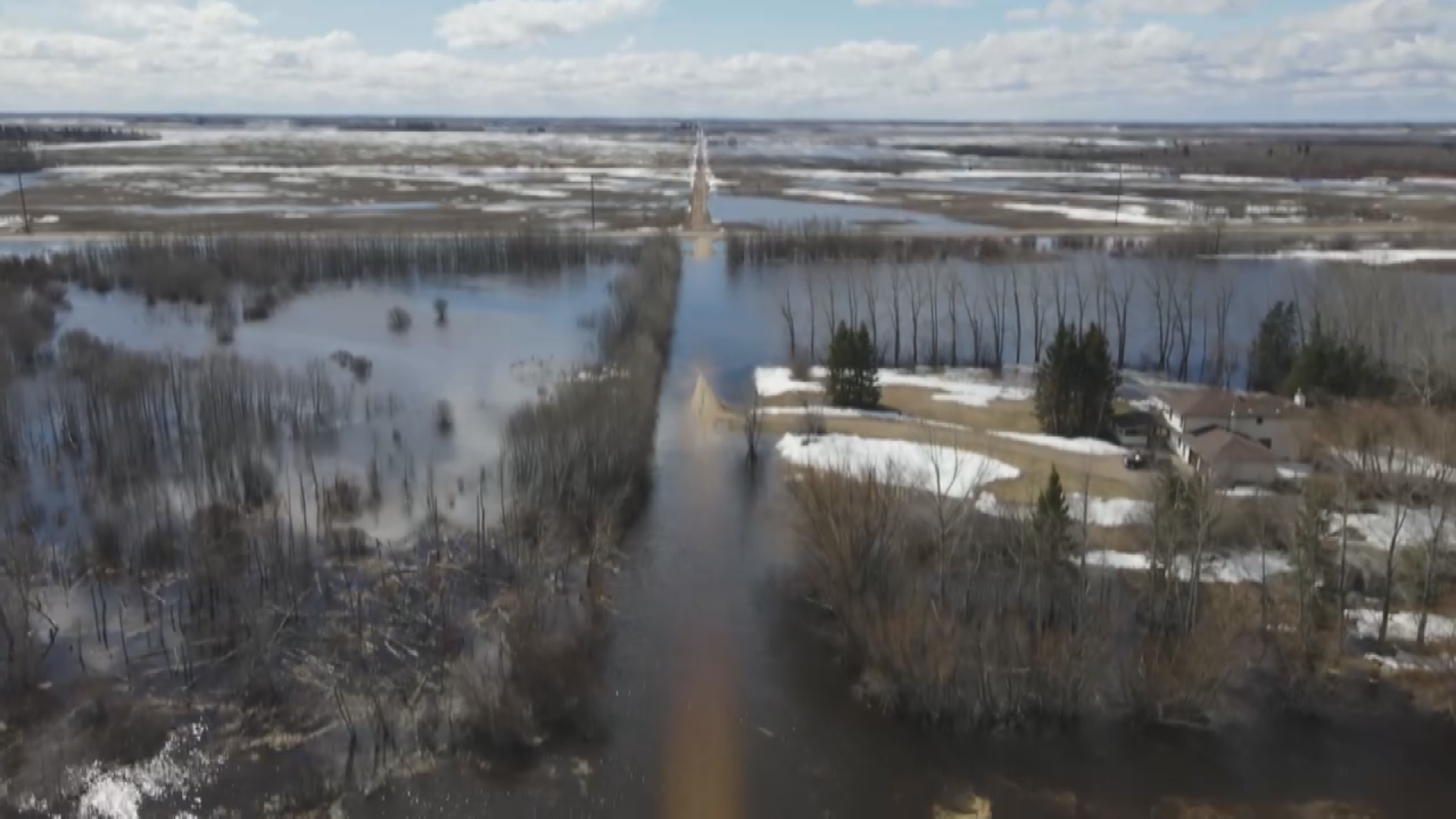
SASKATCHEWAN – As floodwaters continue to inundate rural areas across Saskatchewan, officials in several municipalities are voicing growing concerns over the mounting costs and timelines for repairing damaged infrastructure. With 35 local states of emergency declared amid one of the province's most severe flooding seasons in recent memory, communities are grappling with submerged roads, compromised bridges, and the daunting prospect of rebuilding without clear financial support from higher levels of government.
The flooding, which intensified in late spring and has persisted into early summer, has affected dozens of rural municipalities, or RMs, particularly in the central and northern regions of the province. Heavy rainfall combined with rapid snowmelt from earlier in the year has overwhelmed drainage systems and low-lying areas, leaving vast stretches of local roadways impassable. In the RM of Garden River, located about 200 kilometers northeast of Saskatoon, the situation has been particularly acute, with reeve Ryan Scragg describing the challenges faced by his small community.
“We’re a very small community in many respects… We don’t have a large budget, we don’t (have) a large workforce. So right now, even just responding to the pressures of the flooding that’s happening is really tough. And just to think of the monumental task of trying to repair all this is a bit daunting,” Scragg said in a recent interview. His comments echo sentiments from other affected RMs, where limited resources are being stretched thin to manage immediate crises while eyeing long-term recovery.
Government crews from the Ministry of Highways have been deployed to address the most critical damage, focusing initially on temporary fixes to restore basic access for residents and emergency services. These efforts include filling washouts and eroded sections of roads with riprap – large rocks and other durable materials designed to stabilize surfaces against further water flow. According to Dan Palmer, a senior communications consultant with the ministry, such measures are essential in the ongoing dynamic environment.
“It’s a dynamic situation with the water still happening. The flooding is still occurring, so they will do temporary repairs as quickly as they can and once water recedes and the flooding incident is over and things dry out, there can be a good assessment to see what needs to be done to provide a permanent repair,” Palmer explained.
This approach underscores the provisional nature of the current response, as full assessments cannot proceed until water levels drop significantly. In Garden River and similar areas, local teams have been primarily occupied with emergency measures rather than reconstruction. “For the most part we haven’t even had a chance to really start. It’s been more of a response,” Scragg noted. “Our guys are out running around with pumps, just trying to help people to alleviate the flooding concerns right now.”
The scale of the flooding draws parallels to previous events in Saskatchewan, such as the 2011 floods that caused widespread damage in the southern parts of the province and led to federal disaster relief exceeding $100 million. This year's crisis, however, appears more dispersed, impacting a broader swath of rural locales. The 35 declarations of local emergencies, reported by provincial authorities as of mid-June, represent a sharp increase from typical years, when such measures are far less common.
Financial uncertainties loom large for these communities. While the provincial government has programs in place for disaster recovery, including potential reimbursements through the Saskatchewan Disaster Assistance Program, the exact amount of emergency funding remains undetermined. Officials have indicated that comprehensive damage estimates will only emerge post-flood, complicating budgeting for RMs already operating on tight margins.
In Garden River, for instance, the reeve highlighted how the flooding has disrupted not just transportation but also agricultural activities crucial to the local economy. Farmers in the area, many of whom rely on gravel roads to access fields, have reported delays in planting and harvesting due to inaccessible routes. One local farmer, speaking on condition of anonymity, described watching culverts collapse under the force of rushing water, a scene repeated across multiple townships.
Provincial leaders have acknowledged the strain on rural infrastructure, which often receives less attention than urban developments. The Ministry of Highways, responsible for about 80 percent of Saskatchewan's road network, maintains that priority is being given to high-traffic routes, but smaller RM roads are equally vital for daily life. Palmer emphasized that coordination between provincial and municipal teams is key, with joint operations underway in hotspots like the RM of Hazelwood and the RM of Laird.
Environmental factors have exacerbated this year's flooding. According to meteorological data from Environment Canada, Saskatchewan experienced 150 percent of average precipitation in May alone, saturating soils and filling reservoirs to capacity. Climate experts have linked such extreme weather patterns to broader trends of increased variability in the Prairies, though officials caution against drawing direct causal lines without further study.
Community resilience is a recurring theme in dispatches from the front lines. In the RM of Garden River, volunteers have joined municipal workers in sandbagging efforts and distributing supplies to isolated households. Scragg praised the collaborative spirit, noting that neighboring RMs have shared equipment and personnel despite their own struggles. “It's times like these that show the strength of our rural networks,” he said.
Looking ahead, the timeline for recovery remains fluid. Palmer indicated that permanent repairs could stretch into the fall, depending on weather patterns and funding approvals. The province has allocated initial resources from its infrastructure budget, but advocates for rural municipalities are calling for a dedicated flood recovery fund to prevent future fiscal shortfalls.
The broader implications extend beyond immediate repairs. Economists estimate that prolonged road closures could cost the agricultural sector millions in lost productivity, with ripple effects on food supply chains across Western Canada. Insurance claims are already surging, with the Insurance Bureau of Canada reporting a 40 percent uptick in flood-related policies activated this season.
As waters begin to recede in some areas, optimism is tempered by caution. Scragg and his counterparts are preparing detailed reports for provincial review, hoping to secure swift aid. “We're in this together, but we need the support to match the scale of the damage,” Scragg concluded. For now, the focus remains on survival and stabilization, a testament to the enduring challenges of managing natural disasters in Canada's heartland.
In the coming weeks, provincial officials plan to convene with RM leaders for a comprehensive briefing, potentially unveiling preliminary funding commitments. Until then, communities like Garden River continue to navigate the floods, one pump and one sandbag at a time.