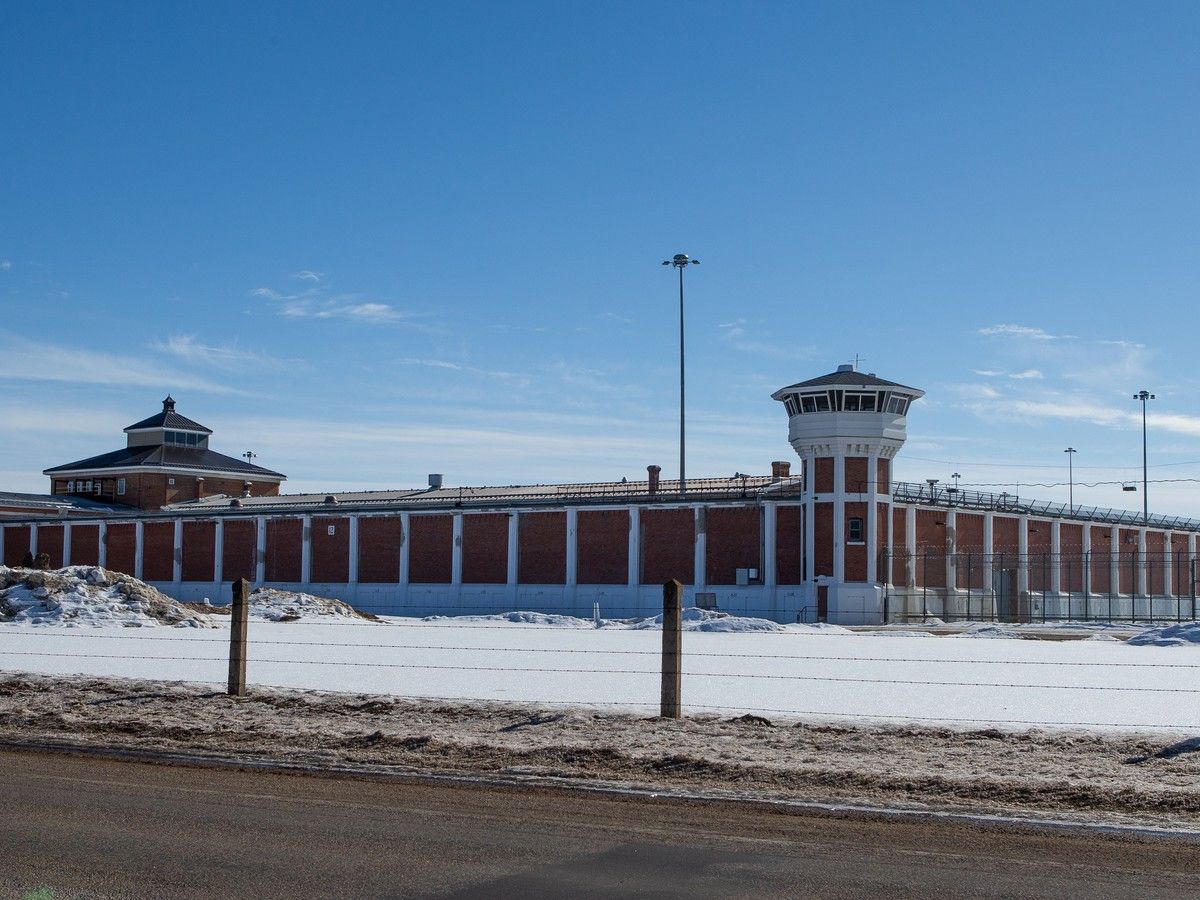
In a ruling that highlights concerns over the use of force in Canadian correctional facilities, a former inmate at the Saskatchewan Penitentiary has been awarded $65,000 in damages following an assault by a prison guard six years ago. Federal Court Justice William F. Pentney delivered the decision on April 16, granting Kelsey Stewart compensation for injuries sustained during the incident on February 4, 2020. Stewart, who was serving time in the medium-security prison at the time, had sought $240,000 from the federal government, arguing the assault not only caused physical harm but also underscored the need to prevent similar abuses in the future.
The altercation unfolded during what was intended to be a routine cell search around 10:15 a.m. According to the court's decision, three guards approached Stewart's cell and asked him to step out. Initially reluctant, Stewart agreed after a brief discussion with one of the officers. As he backed out of the cell with his hands raised behind his head, one guard placed his hands near Stewart's armpits to guide him through the doorway. But instead of a smooth exit, the guard suddenly slammed Stewart hard against the cell door, the judge detailed in his ruling.
Pentney, who reviewed surveillance video evidence multiple times, rejected the guard's written report claiming Stewart had 'turned violently' toward him. 'Based on the video evidence, I don’t believe that you ‘turned violently’ or really that you turned much, if at all,' the judge wrote, addressing Stewart directly in the decision. The footage showed Stewart facing away from the guards, with his hands up and then moving to his back, posing no apparent threat. Pentney emphasized that the guard, who was significantly larger than Stewart, had 'no good reason to slam you against the cell door so hard.'
The force did not end there. After the initial slam, one guard pinned Stewart against the door with his body while another applied a wrist lock to his right arm. The judge described how the slamming guard continued to apply pressure against Stewart's left side, rocking back and forth in a manner that suggested ongoing exertion. 'It is hard to know exactly what was happening, but it is clear he was using force against your left side,' Pentney noted. Stewart may have struggled slightly, but with one hand controlled and his body pinned, he had little ability to resist.
The situation eventually de-escalated, allowing the guards to pat Stewart down and relocate him temporarily while they searched his cell. He was returned to his cell afterward. Later that afternoon, around 2 p.m., a nurse conducted a post-use-of-force interview, which was recorded on video. The examination revealed visible injuries: a cut near Stewart's right eyebrow, a cut on his right cheek, scratches, and significant swelling on the left side of his face near his mouth. Stewart reported to the nurse that he had been punched on that side. The nurse glued the eyebrow cut initially, but it reopened, requiring stitches. Stewart was also referred to an eye doctor due to blurry vision, which resolved by his second visit.
While the surveillance videos captured the pinning and pressure, they did not clearly show any punches. Pentney speculated on the possibilities: 'He may have been punching you with his left hand — these would have been short punches (sometimes called ‘rabbit punches’) because his arm never goes back to ‘wind up’ and punch you.' Alternatively, the guard might have struck with his forearm. Regardless, the judge concluded that 'he was using some type of force against you on your left side; that much is clear from the videos.' The post-incident video confirmed the swelling, linking it to this additional, unjustified force.
In his assessment, Pentney determined that the injuries to both sides of Stewart's face stemmed from an 'unjustified and unlawful use of force' by the guard. 'Whatever happened, I find that the injuries to both sides of your face were caused by an unjustified and unlawful use of force,' the ruling stated. The judge found no provocation from Stewart and no justification for the sudden violence, noting his vulnerability as an inmate under the guards' authority. This vulnerability, Pentney added, exacerbated the harm: 'That made you vulnerable to the assault.'
The Attorney General of Canada, representing Correctional Service Canada, acknowledged that the force used was disproportionate to the circumstances. However, while admitting some damages were warranted, the government proposed a much lower award, in the range of $5,000 to $15,000. Pentney's decision far exceeded that, allocating $50,000 specifically for the battery, or assault. Additionally, he awarded $15,000 for the violation of Stewart's right to security of the person under section 7 of the Canadian Charter of Rights and Freedoms.
'The Charter is a very important law in Canada and breaking it is a very serious thing. That is what happened here,' Pentney wrote. He explained the higher amount by citing Stewart's immediate and ongoing pain and suffering, as well as the gravity of the Charter breach. 'I am awarding you $15,000 in damages for the breach of your Charter right,' the judge continued. In total, the damages came to $65,000, plus $9,000 for legal costs and $1,246 in disbursements.
'The total is “a lot more than the government said you should receive,” Pentney said. “Part of the reason I chose that amount is that you experienced immediate and some continuing pain and suffering as a result of the assault, and you should be compensated for that. A portion of the money is to recognize the serious way your Charter right was violated.”'
Pentney stopped short of broader recommendations for Correctional Service Canada, stating the evidence did not support findings that the agency needed to overhaul its discipline or prevent the guard from future inmate contact. Nonetheless, the case sheds light on tensions within federal prisons, where inmates' rights under the Charter can clash with security protocols. The Saskatchewan Penitentiary, located in Prince Albert, has faced scrutiny in the past for incidents involving excessive force, though specifics on prior cases were not detailed in the ruling.
Efforts to reach Stewart or confirm his current status were inconclusive. His lawyer, when contacted on Friday, declined to say whether Stewart remains incarcerated. Separately, Regina Police issued a wanted notice last month for a man named Kelsey Stewart, though it was unclear if this referred to the same individual. The federal government has not publicly commented on the ruling beyond its court submissions.
This decision comes amid ongoing discussions about prison reform in Canada, including calls for better training on de-escalation and use-of-force policies. Advocacy groups have pointed to similar lawsuits as evidence of systemic issues, while correctional officials maintain that such incidents are rare and handled through internal reviews. In Stewart's case, the judge's reliance on video evidence underscored the importance of documentation in holding authorities accountable.
As Stewart receives his award, the ruling serves as a reminder of the legal protections afforded even to those behind bars. Whether it prompts wider changes in correctional practices remains to be seen, but for now, it provides redress for one inmate's ordeal and a judicial rebuke of unwarranted violence in custody.