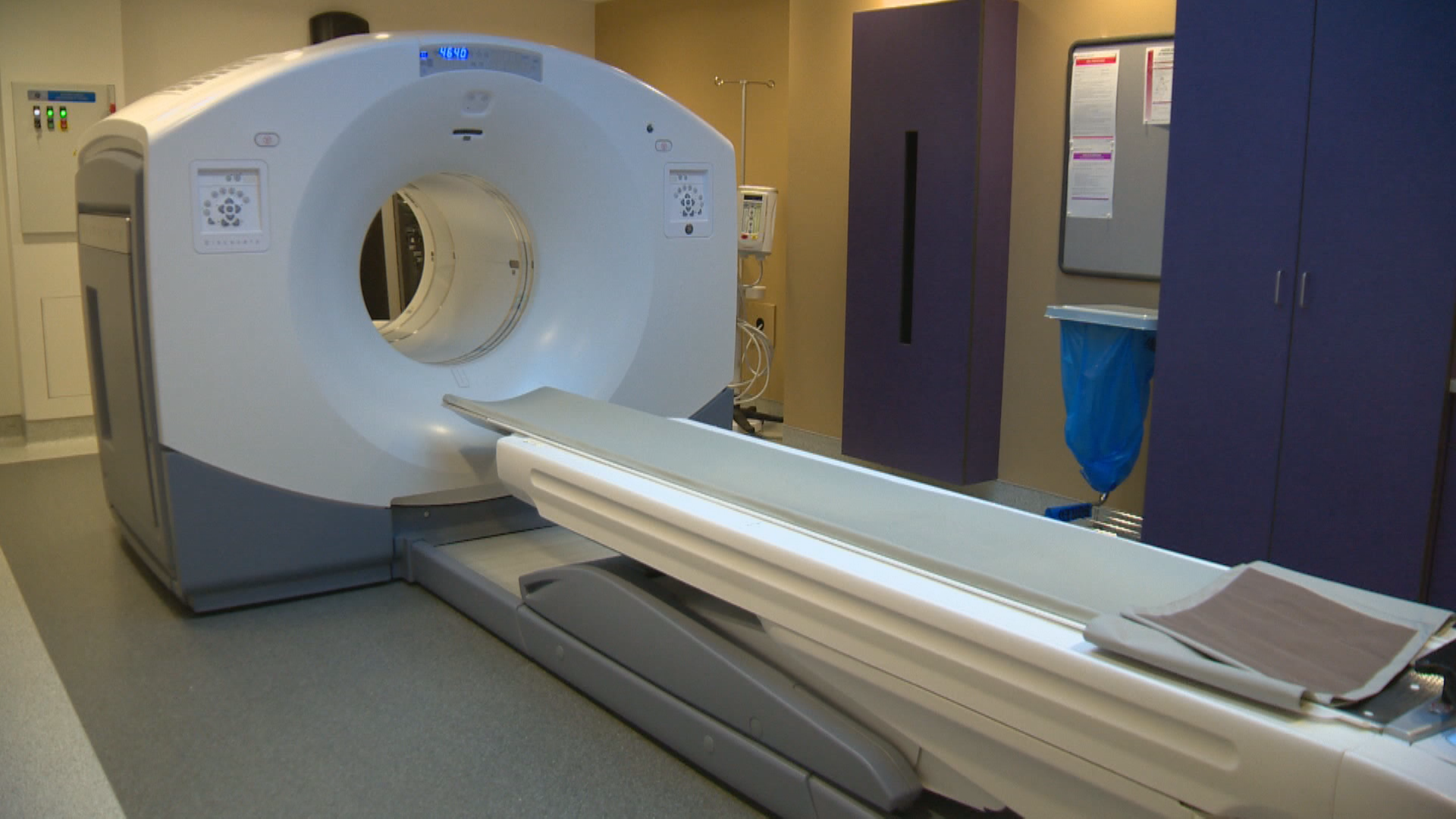
SASKATOON, Saskatchewan — Patients battling serious illnesses across Saskatchewan are facing extended delays in critical diagnostic testing after the province's only positron emission tomography/computed tomography (PET/CT) scanner went offline on December 23. The machine, essential for detecting and staging cancers and other life-threatening conditions, has left families scrambling for alternatives in a region where medical resources are already stretched thin.
The breakdown occurred at the Royal University Hospital in Saskatoon, the sole location in Saskatchewan equipped with this advanced imaging technology. According to the Saskatchewan Health Authority (SHA), the issue stems from a shortage of the fluid radioactive tracer required to operate the scanner, compounded by problems with the supplier. This tracer, which has a very short shelf life, is vital for the PET/CT process, as it allows the machine to highlight abnormal metabolic activity in the body, such as tumors.
Erin Neufeld, whose father is undergoing treatment for lung cancer, learned on Monday that his long-awaited scan had been abruptly cancelled. Her father had already endured a two-month wait for the procedure, which was meant to guide his next steps in treatment. "That is irresponsible that there is one PET scan machine for an entire province of people and everyone has to travel to Saskatoon for that one scan," Neufeld said in an interview with Global News. She emphasized the urgency of the situation, adding, "Every day, longer that we go without his treatment is one day closer to him not being well anymore and that’s unacceptable to me."
Neufeld's frustration echoes a broader concern among patients and advocates about the province's reliance on a single scanner to serve a population of more than 1.1 million people. Saskatchewan spans a vast area, with residents from remote communities like Prince Albert or Regina often required to travel hundreds of kilometers to Saskatoon for specialized care. The PET/CT scanner, installed in 2012 as part of efforts to improve cancer diagnostics, was intended to reduce the need for out-of-province referrals, but its vulnerability to breakdowns has repeatedly disrupted services.
The SHA has acknowledged the challenges and stated that a temporary supply of the radioactive tracer has been secured from Ontario, enabling the scanner to resume operations at half capacity. Officials said they are prioritizing the most urgent cases, such as advanced-stage cancers, while rescheduling others as quickly as possible. "We are working diligently to restore full services and minimize the impact on patients," an SHA spokesperson told reporters, though specific timelines for full recovery remain unclear.
Opposition voices have been quick to criticize the provincial government's handling of the situation. Keith Jorgenson, the Saskatchewan NDP's associate health critic, called the outage "unacceptable" and pointed to a lack of preparedness. "This should have been anticipatable on behalf of the government that something like this could happen, because it had happened before and they should have a plan in place, even if it was a plan in place as to how to accommodate people if it broke," Jorgenson said.
Indeed, this is not the first time Saskatchewan's PET/CT services have faltered. In 2018, patients faced similar delays due to technical issues with the machine, leading to extended wait times and some individuals seeking scans in neighboring provinces like Alberta or Manitoba. The NDP has argued that the recurring problems highlight systemic underinvestment in health infrastructure, noting that Saskatchewan lags behind other Canadian provinces in the number of such scanners per capita. For comparison, larger provinces like Ontario operate dozens of PET/CT machines across multiple centers.
Health experts outside the immediate fray have weighed in on the broader implications. Dr. Sarah Thompson, a radiologist not affiliated with the SHA, explained that PET/CT scans are particularly crucial for oncology, providing detailed images that combine metabolic and anatomical data to inform treatment decisions. "Delays in these scans can mean delays in starting chemotherapy or radiation, which in turn can affect patient outcomes," she said in a separate report. While Thompson did not directly comment on Saskatchewan's situation, her remarks underscore the stakes for patients like Neufeld's father.
Neufeld remains steadfast in her advocacy for her family. Despite the setback, she reports that her father is holding up well under the circumstances. "My dad is doing very well, but every day he doesn’t get to start his treatment puts him at a disadvantage," she said. The family is exploring options, including potential private scans or travel to out-of-province facilities, though costs and logistics pose significant barriers for many Saskatchewan residents.
The outage comes at a particularly challenging time for the province's health system, which has been under strain since the COVID-19 pandemic. Backlogs in diagnostic imaging have grown, with wait times for various scans averaging several weeks even under normal conditions. The SHA has faced criticism for staffing shortages and equipment maintenance issues, though officials maintain that investments in recent budgets, including $50 million for medical imaging upgrades, are addressing these gaps.
From the government's perspective, the Ministry of Health has defended its approach, stating that the tracer shortage was unforeseen but that contingency measures are now in effect. "Patient safety and timely care remain our top priorities," a ministry statement read. However, the NDP and patient advocates argue that more proactive steps, such as diversifying suppliers or acquiring a second scanner, are needed to prevent future disruptions.
Looking ahead, the SHA expects the scanner to operate at reduced capacity for the coming weeks, with full restoration dependent on resolving the supply chain issues. In the interim, some patients may be referred to facilities in Calgary or Winnipeg, where PET/CT services are more readily available. These referrals, while helpful, add to the emotional and financial burden on families already navigating serious illnesses.
The situation has sparked calls for a provincial review of diagnostic imaging capacity. Jorgenson suggested that the government convene an expert panel to assess long-term needs, potentially recommending additional scanners in Regina or other major centers. "Saskatchewan deserves better than crossing our fingers and hoping the machine doesn't break again," he added.
For families like the Neufelds, the wait continues, a stark reminder of the fragility of specialized care in rural and mid-sized provinces. As Erin Neufeld put it, the human cost of these delays cannot be overstated. With winter weather complicating travel and the holiday season amplifying isolation, the push for solutions grows more urgent by the day.
In the end, this episode highlights ongoing debates about health equity in Canada, where access to cutting-edge technology often varies dramatically by geography. While the SHA works to bridge the immediate gap, broader reforms may be necessary to ensure that no patient in Saskatchewan—or anywhere else—faces such precarious waits for potentially life-saving diagnostics.