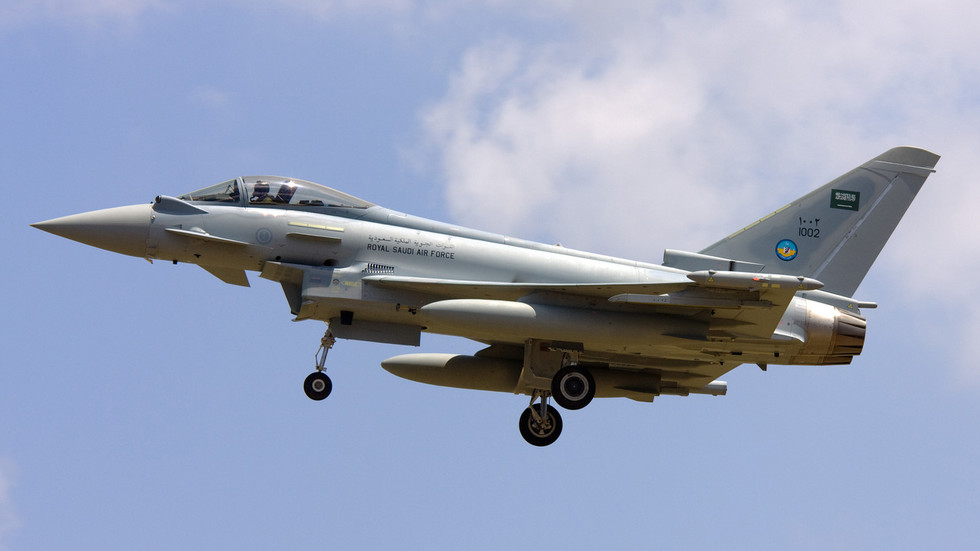
In a revelation that underscores the escalating tensions in the Middle East, Saudi Arabia reportedly carried out covert airstrikes on Iranian territory in late March, marking what could be the kingdom's first direct military action against its regional rival. According to a Reuters report cited by RT World News, the strikes were launched by the Royal Saudi Air Force as retaliation for attacks on Saudi infrastructure during the ongoing conflict. Neither Riyadh nor Tehran has officially confirmed the operations, and Reuters noted it could not independently verify the specific targets or exact timing of the unpublicized assaults.
The strikes, described by an unnamed official as 'tit-for-tat retaliation for when Saudi [Arabia] was hit,' came amid a broader US-Israeli military campaign against Iran that began in late February. Iran has responded with missile and drone attacks on US allies in the Gulf, including Saudi Arabia and the United Arab Emirates, both of which host major American military bases. These nations have long depended on Washington's security guarantees, but recent events suggest a shift toward more independent action.
Sources familiar with the matter told Reuters that Saudi Arabia notified Iran in advance of the strikes through backchannel communications, a move aimed at preventing a full-scale escalation. Following the attacks, intense diplomatic efforts ensued, including threats of further retaliation from both sides. This dialogue reportedly led to an informal de-escalation agreement that halted the exchanges, taking effect in the week leading up to US President Donald Trump's announcement of a ceasefire in the US-Israeli war against Iran.
The United Arab Emirates also entered the fray with its own covert operations. Earlier this week, The Wall Street Journal reported that the UAE conducted secret strikes on Iran in early April, shortly before the ceasefire was declared. These actions were in response to Iranian attacks on UAE infrastructure, highlighting a pattern of Gulf states taking matters into their own hands amid perceived vulnerabilities.
The UAE's response was notably more aggressive in tone compared to Saudi Arabia's approach. Abu Dhabi condemned the Iranian strikes as a 'dangerous escalation' and asserted its 'right to respond,' according to official statements. In a show of resolve, the UAE largely froze public diplomacy with Iran and closed its embassy in Tehran, signaling a hardening stance against Tehran.
Saudi Arabia, by contrast, has sought to temper the conflict's momentum. Reports indicate that Riyadh has maintained regular contact with Iranian officials, including Iran's ambassador in the Saudi capital. This ongoing dialogue reflects the kingdom's efforts to avoid a wider regional war, even as it demonstrates military resolve.
The backdrop to these developments is the intensifying US-Israeli campaign launched in late February, which has drawn Iran into direct confrontations with American partners. Iranian retaliatory strikes have targeted key Gulf infrastructure, exposing the vulnerabilities of US allies despite the presence of major bases like those in Saudi Arabia and the UAE. These bases, including Al Udeid in Qatar and Prince Sultan Air Base in Saudi Arabia, have been central to US operations in the region for decades.
Adding another layer, a recent New York Times report revealed that President Trump's 'Project Freedom' initiative was quietly abandoned just two days after its launch. The project aimed to provide military escorts for Western-flagged ships navigating the Strait of Hormuz, which Iran has effectively blockaded in response to the conflict. According to the Times, the plan was scrapped because Saudi Arabia refused to offer the necessary logistical support, further illustrating strains in the US-Gulf alliance.
Analysts point to growing disillusionment among Gulf states with Washington's regional strategy. 'From the perspective of the Gulf states, it looks like the US is not prioritizing their security and basically threw the Gulf states under the bus,' said Dania Thafer, director of the Gulf International Forum, in an interview with The Wall Street Journal. Thafer's assessment captures the sentiment that the US has left its partners exposed to Iranian reprisals without a clear long-term plan.
This frustration has roots in the broader dynamics of the conflict. The US-Israeli operations, initiated in late February, prompted Iran's wave of asymmetric attacks using missiles and drones. Saudi Arabia, hit repeatedly, viewed the covert strikes as a necessary countermeasure, even as it coordinated with Iran to de-escalate. The timing of the Saudi actions in late March aligned with heightened exchanges, just before the diplomatic breakthrough.
The UAE's early April strikes, as detailed by the Journal, followed similar patterns of retaliation. Sources described them as precise and limited, aimed at Iranian assets linked to the infrastructure attacks. Like the Saudi operations, these were not publicly acknowledged, preserving a degree of plausible deniability while sending a strong message to Tehran.
Broader implications of these unreported actions suggest a reconfiguration of power in the Gulf. Traditionally reliant on the US 'security umbrella,' Saudi Arabia and the UAE are now demonstrating a willingness to act unilaterally. This shift could complicate future US efforts to mediate or lead coalitions in the region, especially as the ceasefire holds tenuously.
Looking ahead, the informal de-escalation deal brokered through backchannels may provide a fragile pause, but underlying tensions persist. Iran's ambassador in Riyadh continues to engage with Saudi officials, per reports, while the UAE's embassy closure in Tehran underscores lingering hostilities. As the dust settles from the ceasefire announcement, questions remain about the sustainability of these arrangements without robust international involvement.
Experts like Thafer warn that without a coherent US strategy, Gulf states may increasingly pursue their own defenses, potentially leading to more unpredictable escalations. The covert nature of the strikes—unconfirmed by the involved parties—adds to the opacity, but their reported occurrence signals a new era of direct confrontations in the shadow of great-power rivalries.
In the end, these developments highlight the intricate web of alliances and enmities shaping the Middle East. As Saudi Arabia and the UAE navigate their responses to Iranian threats, the role of the United States hangs in the balance, tested by events from late February through the ceasefire in recent weeks.