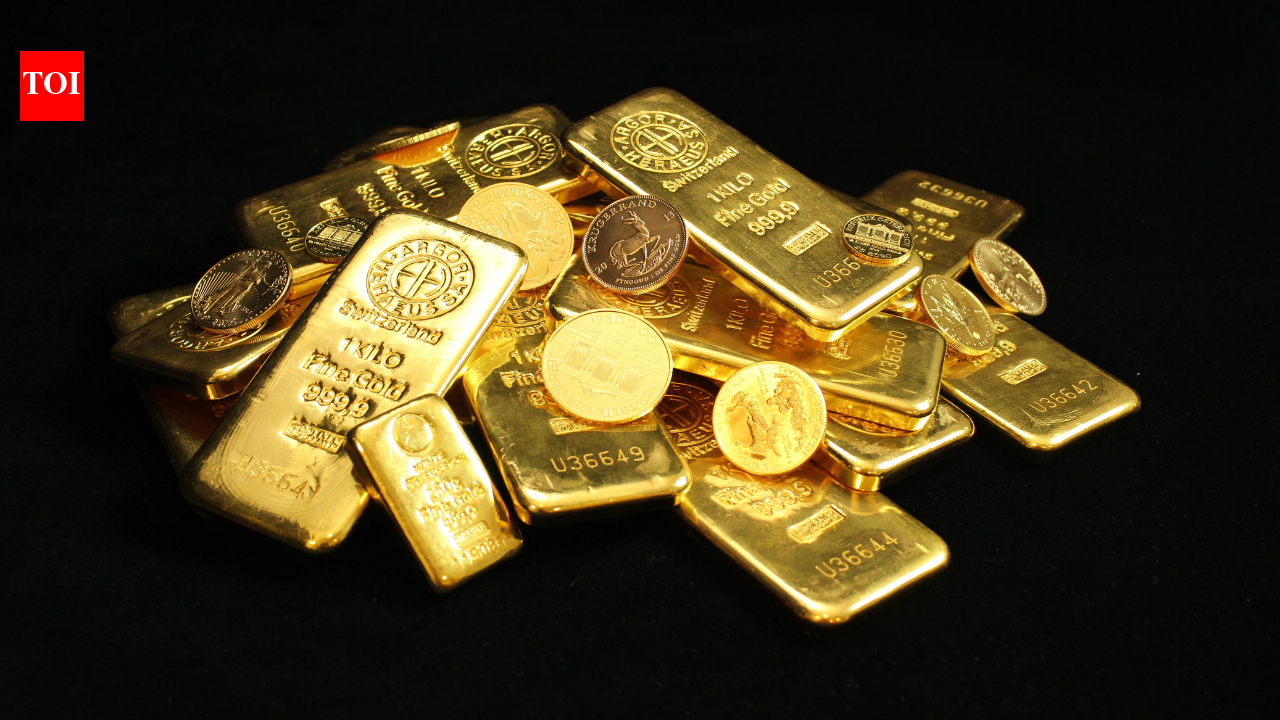
Scientists have finally uncovered the reason gold maintains its distinctive shine even after thousands of years, according to a report published by The Times of India. The finding addresses a question that has intrigued historians and chemists alike, as ancient coins, jewellery and royal artifacts continue to gleam long after other metals have tarnished.
The Times of India Science Desk highlighted the discovery in a recent article, noting that gold’s resistance to corrosion sets it apart from most elements. Civilisations across the globe have prized the metal for its unchanging appearance, from Egyptian tombs to Roman coins still recovered in near-pristine condition.
According to the report, researchers identified specific atomic properties that prevent oxygen and other elements from bonding with gold’s surface under normal conditions. This stability explains why artefacts buried for centuries emerge looking much as they did when first crafted.
Experts quoted in the coverage emphasised that the discovery builds on decades of study into noble metals. “Gold has fascinated civilisations for millennia because of one remarkable quality: it rarely loses its shine,” the summary from the Times of India stated.
While the precise experimental methods were not detailed in the initial dispatch, the article pointed to advanced surface analysis techniques that allowed scientists to observe gold at the atomic level. These observations reportedly revealed why the metal resists the oxidation that dulls silver and copper over time.
Historians have long documented gold’s durability in archaeological finds. Egyptian jewellery recovered from the tomb of Tutankhamun in 1922 still displayed its original brilliance, a fact often cited in discussions of the metal’s unique chemistry.
The Times of India piece placed the new research within a broader context of materials science, where understanding corrosion resistance has applications ranging from electronics to medical devices. Gold’s properties make it valuable in high-reliability components that must perform without degradation.
Officials at research institutions involved were not immediately available for additional comment, though the report indicated the study drew on both theoretical modelling and laboratory verification. Further papers detailing the work are expected in peer-reviewed journals.
Public interest in the finding has been high, given gold’s enduring cultural and economic significance. Jewellers and collectors have noted that the scientific explanation aligns with practical experience of the metal’s longevity.
Additional context from the article mentioned that similar investigations into other noble metals, such as platinum, are underway to determine whether comparable mechanisms are at play. Results from those projects could expand the practical uses of these elements in industry.
The discovery comes at a time when demand for gold in technology continues to rise, particularly in components requiring long-term stability. Manufacturers have cited the metal’s resistance to tarnish as a key factor in its selection for specialised applications.
Readers interested in the full scientific details are directed to the original Times of India coverage, which includes links to related studies on noble metal chemistry. The report positions the finding as a milestone in explaining a phenomenon observed since antiquity.