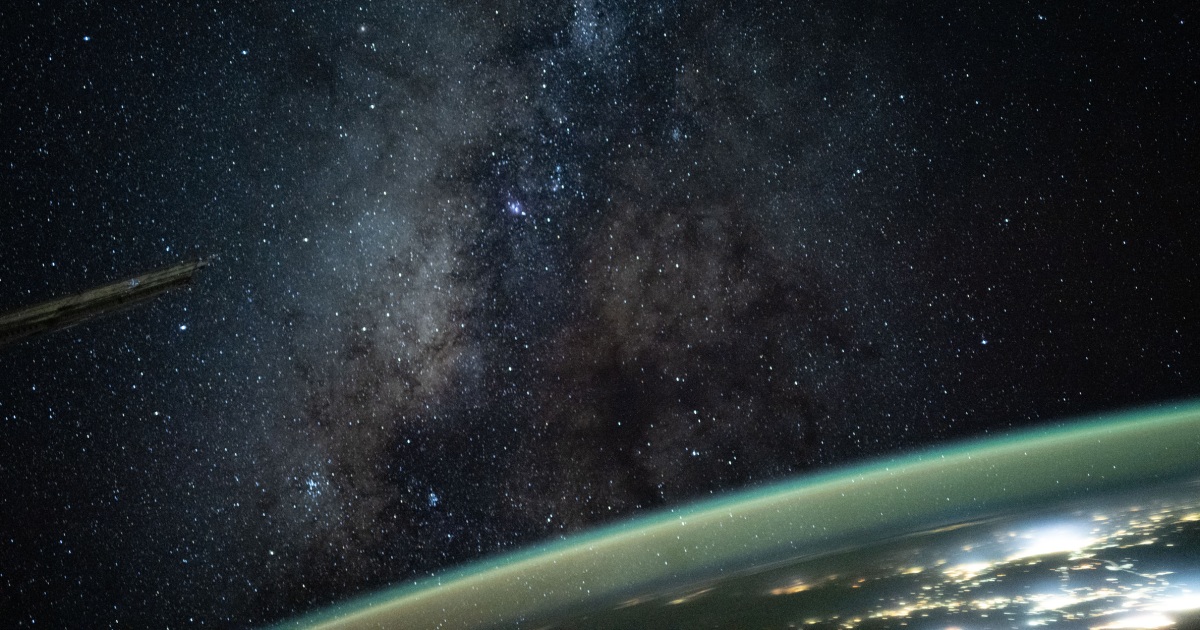
In a potential breakthrough that has astronomers buzzing, a Japanese astrophysicist claims to have detected the first direct evidence of dark matter, the elusive substance thought to underpin much of the universe's structure. Tomonori Totani, a professor in the astronomy department at the University of Tokyo, announced his findings based on observations from NASA's Fermi Gamma-ray Space Telescope, spotting unusual gamma-ray emissions in a halo-like pattern near the center of the Milky Way galaxy. The research, published Tuesday in the Journal of Cosmology and Astroparticle Physics, suggests these emissions could stem from dark matter particles annihilating each other, a long-sought signature in the decades-long hunt for this invisible matter.
Dark matter has puzzled scientists since the 1930s, when Swiss astronomer Fritz Zwicky first proposed its existence while studying the Coma Cluster of galaxies. Zwicky noticed that the galaxies within the cluster were moving far too quickly to be bound solely by the gravity of visible matter, implying the presence of unseen mass holding them together. Since then, dark matter has become a cornerstone of cosmology, inferred through its gravitational effects on everything from galaxy rotations to the cosmic microwave background. According to NASA, dark matter constitutes about 27 percent of the universe, dwarfing ordinary matter—which includes stars, planets, and people—at just 5 percent, with the remaining 68 percent attributed to the enigmatic dark energy.
Totani's study focused on gamma rays, the highest-energy form of light, captured by the Fermi telescope since its launch in 2008. These observations targeted a region near the Milky Way's core, where dark matter is theorized to be densest. What Totani found were intense gamma-ray signals spread out in a spherical halo across a broad swath of sky, with brightness equivalent to about one-millionth that of the entire galaxy. "To my knowledge, no phenomenon originating from cosmic rays or stars exhibits a spherically symmetric and the unique energy spectrum like the one observed in this case," Totani said in an email to NBC News.
The halo-like distribution is key to Totani's interpretation. If the emissions were pinpointed to a single source, they might be explained by more familiar cosmic events, such as a black hole or a pulsar. Instead, the diffuse pattern aligns with predictions for weakly interacting massive particles, or WIMPs, one of the leading candidates for dark matter. These hypothetical particles are thought to rarely interact with ordinary matter but could annihilate upon collision, producing gamma rays as a byproduct. Totani's excitement is palpable: "I’m so excited, of course!" he wrote. "Although the research began with the aim of detecting dark matter, I thought the chances of success were like winning the lottery."
Yet, Totani's claim has met with caution from other experts in the field. David Kaplan, a professor in the department of physics and astronomy at Johns Hopkins University, acknowledged the study's intrigue but emphasized the challenges in attributing gamma rays definitively to dark matter. "We don’t even know all the things that can produce gamma rays in the universe," Kaplan said. He pointed out that alternative sources, like fast-spinning neutron stars or black holes accreting matter and ejecting jets, could mimic such signals.
Eric Charles, a staff scientist at Stanford University’s SLAC National Accelerator Laboratory, echoed this skepticism, noting the complexities of interpreting emissions from the galactic center. "There’s a lot of details we don’t understand," Charles said, "and seeing a lot of gamma rays from a large part of the sky associated with the galaxy — it’s just really hard to interpret what’s going on there." The region's crowded stellar environment and diffuse interstellar medium make it notoriously difficult to isolate signals, he added.
Dillon Brout, an assistant professor in the departments of astronomy and physics at Boston University, described the area under study as "genuinely the hardest to model." In an email to NBC News, Brout stressed the need for rigorous verification: "So, any claims have to be treated with great caution. And, of course, extraordinary claims require extraordinary evidence." Brout's comments highlight a broader tension in dark matter research, where promising leads often falter under scrutiny.
The quest for dark matter has spanned nearly a century, evolving from Zwicky's initial hypothesis to sophisticated experiments worldwide. Underground detectors like those at the Large Underground Xenon experiment in South Dakota and the Gran Sasso National Laboratory in Italy have sought WIMPs through rare collisions with atomic nuclei, but so far without conclusive results. Space-based observatories, including Fermi, have complemented these efforts by hunting for annihilation products like gamma rays. Totani's work builds on prior analyses of Fermi data, which have hinted at excesses in gamma-ray emissions but lacked the halo signature he identifies.
One notable precursor was the 2010 detection of a gamma-ray "bubble" structure in the Milky Way's center, which some attributed to dark matter before alternative explanations, such as bursts from the galaxy's central black hole, gained traction. Totani's findings differ in their emphasis on the spherical symmetry and energy spectrum, which he argues set them apart from known astrophysical processes. Still, the scientific community remains divided, with some researchers calling for independent replication using other telescopes, like the upcoming Cherenkov Telescope Array.
If Totani's detection holds up, it could revolutionize our understanding of the cosmos. Dark matter not only influences galaxy formation but also the large-scale structure of the universe, from cosmic filaments to the distribution of clusters. "It would be a total game changer, because it really is something that seems to dominate the universe," Kaplan said. "It explains the formation of galaxies and therefore of stars and planets and us, and it’s a key part of our understanding of how the universe formed." Confirmation might also validate the WIMP model, guiding future particle physics experiments at facilities like the Large Hadron Collider.
Totani himself urges further investigation. "If correct, the results would be too impactful, so researchers in the community will carefully examine its validity," he said. "I am confident in my findings, but I hope that other independent researchers will replicate these results." The paper's publication in a peer-reviewed journal marks an important step, but as with all extraordinary science, the proof will lie in subsequent studies and data cross-checks.
Beyond the technical debates, Totani's work underscores the perseverance required in cosmology. Decades of indirect evidence—from gravitational lensing in galaxy clusters to the universe's expansion rate—have solidified dark matter's role, yet direct detection remains the holy grail. The Fermi telescope, orbiting Earth at an altitude of about 350 miles, continues to scan the skies, providing a wealth of data for reanalysis. As new missions like the Euclid space telescope, launched in July 2023, join the fray, the odds of pinning down dark matter may improve.
For now, the astronomical community watches closely. Skeptics like Brout and Charles advocate patience, warning against overinterpretation in a field rife with false positives. Proponents, inspired by Totani's boldness, see it as a spark that could ignite progress. In the vast, unseen architecture of the universe, a glimpse of dark matter—however tentative—remains one of science's most tantalizing prospects.
The implications extend to fundamental questions: What is dark matter made of? Does it challenge the Standard Model of particle physics? As researchers pore over Totani's data and plan follow-ups, the search presses on, a testament to humanity's drive to illuminate the shadows of the cosmos.