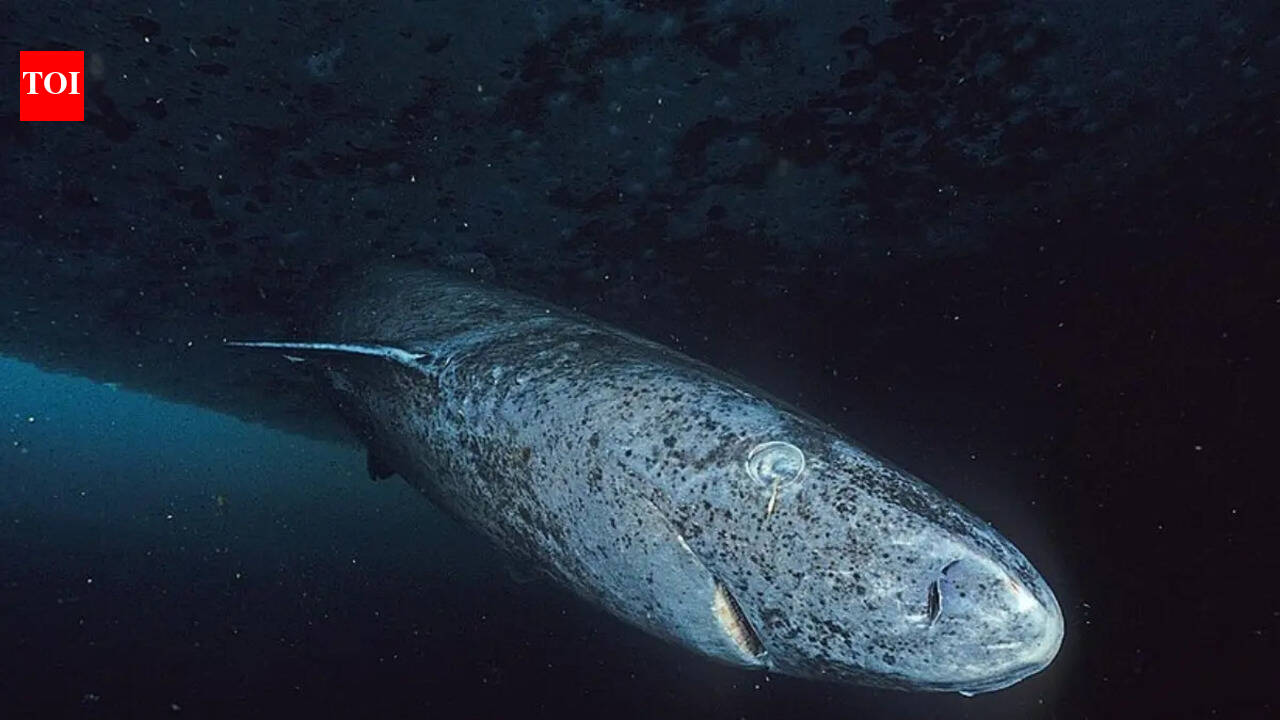
APPLETON, Wis. — In the frigid depths of the Arctic Ocean, a creature long overlooked by the modern world is emerging as a symbol of longevity that defies human understanding. Scientists have announced that the Greenland shark, often called the 'sleepy shark' for its sluggish demeanor, may hold the title of the oldest living vertebrate on Earth, with some individuals potentially reaching ages of up to 500 years. This revelation, detailed in recent reports from the Times of India, underscores the mysteries still hidden in our oceans and challenges preconceptions about aging in the animal kingdom.
The Greenland shark (Somniosus microcephalus) inhabits the cold waters of the North Atlantic and Arctic, where temperatures hover near freezing. According to researchers cited in the Times of India article, these massive predators, which can grow to lengths of over 20 feet, exhibit extremely slow metabolic rates that contribute to their exceptional lifespans. 'This sleepy shark may be the oldest living vertebrate on Earth,' the report states, highlighting a 2016 study led by scientists from the University of Washington that used radiocarbon dating on eye lenses to estimate the age of a female specimen at 392 years, with a possible range extending to 512 years.
That landmark study, published in the journal Science, involved analyzing 28 Greenland sharks caught off the coast of Greenland between 2010 and 2013. The oldest, a 16.4-foot female, was determined to have been born around 1620, during the time when the Pilgrims first arrived in North America. 'The age estimates for the largest Greenland sharks are 272 to 512 years,' the study's lead author, Julius Nielsen from the Greenland Institute of Natural Resources, told reporters at the time. This finding not only positions the shark as a vertebrate Methuselah but also surpasses the previous record holder, a 211-year-old bowhead whale.
Experts emphasize that the Greenland shark's longevity is tied to its environment. Living in waters where oxygen is scarce and temperatures are low, these sharks conserve energy by moving at speeds of less than two miles per hour. Their diet, which includes fish, seals, and even polar bears, is scavenged rather than hunted aggressively, further slowing their physiological processes. 'Greenland sharks are like the ultimate survivors of the deep sea,' said Steven E. Campana, a shark expert at the University of Iceland, in an interview with the Times of India. 'Their slow pace of life allows them to outlast nearly everything else in the ocean.'
Yet, this remarkable lifespan comes with challenges for conservation. Greenland sharks reproduce slowly, with females reaching sexual maturity only after about 150 years and giving birth to litters of around 10 pups after a gestation period of up to 16 years. According to the International Union for Conservation of Nature (IUCN), the species is listed as near-threatened, facing threats from fishing bycatch and potential impacts from climate change, which could warm Arctic waters and disrupt their habitat. 'If we lose these ancient creatures, we're losing a vital link in the marine ecosystem,' warned Nigel Hussey, a marine biologist at the University of Windsor, in comments echoed by the Times of India report.
The discovery has sparked interest beyond scientific circles, prompting discussions on bio-inspired research. Gerontologists are studying the shark's cellular mechanisms to understand why it ages so slowly, potentially unlocking insights into human longevity. For instance, the shark's low levels of oxidative stress and efficient DNA repair could inform treatments for age-related diseases. 'This isn't just about sharks; it's about what nature can teach us about living longer,' said João Pedro de Magalhães, a biologist at the University of Liverpool, who has referenced the Greenland shark in his work on aging.
Historical records add another layer of intrigue to the Greenland shark's story. Indigenous Inuit communities in Greenland have long utilized the species for food and oil, a practice dating back centuries. The sharks' flesh is toxic due to high levels of urea and trimethylamine oxide, requiring a fermentation process known as 'hákarl' in Iceland to make it edible. Reports from the 19th century describe encounters with these behemoths, but it wasn't until modern radiocarbon techniques that their true age was revealed. 'We've been sharing the planet with these living fossils without realizing it,' noted an Inuit elder in a documentary featured alongside the Times of India coverage.
Not all experts agree on the exact upper limits of the shark's lifespan. While the 2016 study provides the most robust data, some researchers caution that environmental factors could skew age estimates. For example, variations in carbon isotope levels in the Arctic might affect the accuracy of eye-lens dating. 'The 500-year mark is an upper estimate, but it's plausible given their biology,' said Alison Kock, a fisheries scientist with the South African National Parks, in a separate analysis published in Marine Policy. This perspective highlights the ongoing debates in marine biology, where direct observation of such long-lived species remains elusive.
Climate change poses the most pressing threat to these ancient swimmers. As Arctic ice melts, warmer waters could force Greenland sharks into deeper, less hospitable zones or expose them to new predators and competitors. A 2022 report from the Arctic Monitoring and Assessment Programme warned that ocean acidification, driven by rising CO2 levels, might impair the sharks' ability to regulate their internal chemistry. 'These sharks have survived ice ages; now they're up against human-induced changes,' said the report's coordinator, Lars-Otto Reiersen, emphasizing the need for international protections.
Efforts to protect the Greenland shark are gaining momentum. In 2018, the North Atlantic Fisheries Organization (NAFO) implemented measures to reduce bycatch, including gear modifications and seasonal closures in key habitats. Scientists are also advocating for the species' inclusion on Appendix II of the Convention on International Trade in Endangered Species (CITES), which would regulate trade to prevent overexploitation. 'Conservation isn't optional; it's essential for preserving biodiversity,' stated Melissa Garren, policy director at Oceana, in a statement supporting the initiative.
The Greenland shark's story also intersects with broader ocean exploration. Recent expeditions, such as those by the Schmidt Ocean Institute, have used remotely operated vehicles (ROVs) to observe these sharks in their natural habitat, revealing behaviors like resting on the seafloor for extended periods—hence the 'sleepy' moniker. Footage from a 2023 dive off Svalbard, Norway, captured a shark estimated at over 300 years old gliding silently through the darkness, a reminder of the ocean's untapped secrets.
As research continues, the Greenland shark serves as a poignant emblem of resilience in a changing world. With ongoing studies at institutions like the Bedford Institute of Oceanography in Canada, scientists hope to refine age estimates and track population trends using satellite tagging. 'We're just beginning to scratch the surface of what these creatures can tell us,' said Nielsen in a follow-up interview. The implications extend to evolutionary biology, where the shark's slow adaptation highlights the fragility of deep-sea ecosystems.
In the end, the Greenland shark's potential 500-year lifespan invites reflection on time itself. While humans measure life in decades, these oceanic ancients have witnessed centuries of environmental shifts, from the Little Ice Age to the industrial revolution. Protecting them, experts argue, is not only about saving a species but honoring the deep time embedded in our planet's history. As the Times of India report concludes, this 'sleepy shark' reminds us that some wonders endure far beyond our imagination.
Future expeditions and genetic analyses promise more revelations. Collaborations between Arctic nations, including Denmark, Canada, and Norway, are funding research to map shark migration patterns and assess health impacts from pollutants like mercury, which accumulate in their tissues over centuries. 'The data we're gathering now could safeguard their future,' said a spokesperson for the Greenland government, underscoring the global stakes in this Arctic tale.