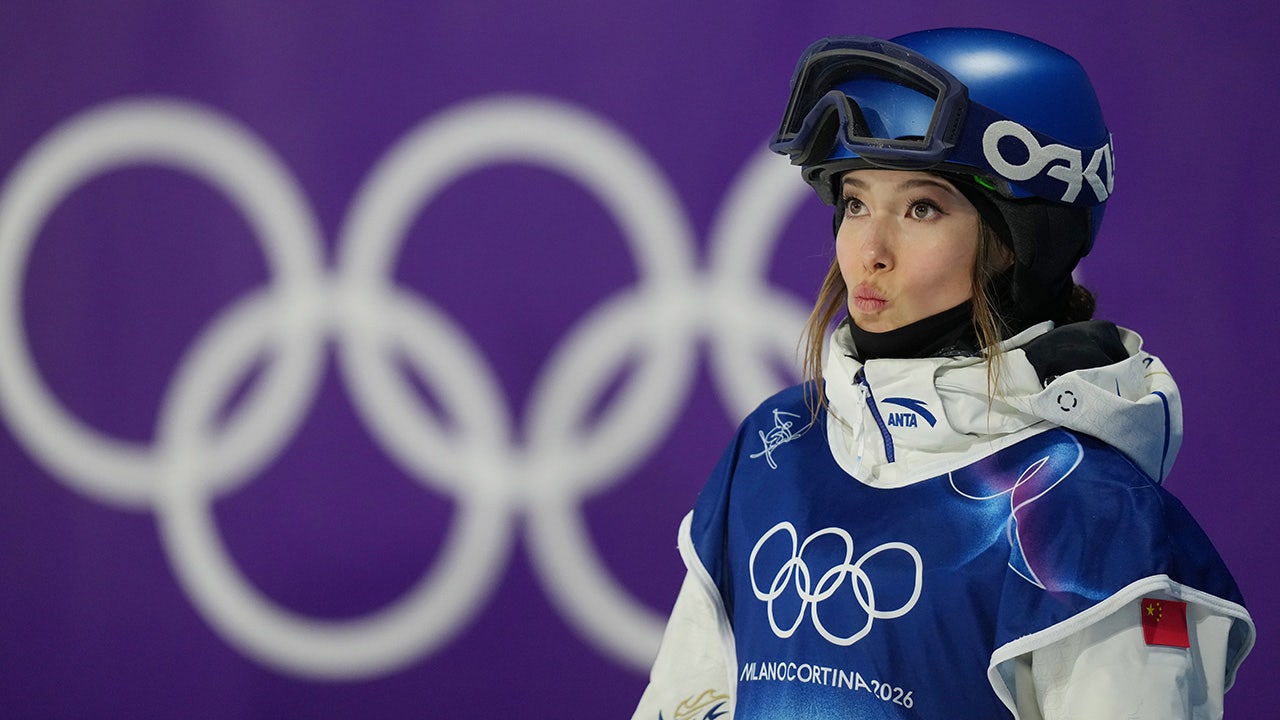
In a pointed critique during a recent Fox News interview, Treasury Secretary Scott Bessent accused American-born Olympic skier Eileen Gu of 'selling out' to China by choosing to compete for the country over the United States. Bessent made the remarks on Friday's edition of 'The Will Cain Show,' drawing a comparison between Gu and billionaire Democrat donor George Soros. 'It was just like this young Olympic athlete that the Vice President was talking about earlier on the previous show. America was great to her, she sold out to China. America was great to Mr. Soros,' Bessent said, framing Gu's decision as a betrayal amid heightened U.S.-China tensions.
The controversy surrounding Gu, a 22-year-old freestyle skiing prodigy, has intensified during the Milan Cortina 2026 Winter Olympics in Italy. Born in San Francisco to a Chinese mother and American father, Gu announced in 2019 that she would represent China in international competitions, citing a desire to honor her heritage. This choice has drawn sharp criticism from some American political figures, who view it as disloyalty, especially given China's status as a geopolitical rival to the U.S.
Bessent's comments echoed sentiments expressed earlier in the week by Vice President JD Vance. During a Tuesday appearance on Fox News' 'The Story With Martha MacCallum,' Vance responded to a question about Gu by emphasizing national pride. 'I certainly think that someone who grew up in the United States of America who benefited from our education system, from the freedoms and liberties that makes this country a great place, I would hope they want to compete with the United States of America,' Vance said. He added, 'So, I'm going to root for American athletes. I think part of that is people who identify themselves as Americans. That's who I'm rooting for in this Olympics.'
Gu, who has won two silver medals in her first two events at these Games—a silver in women's freeski big air on February 16, 2026, and another in a subsequent competition—addressed Vance's remarks directly on Thursday. Speaking to reporters after her performance, she responded lightheartedly but firmly. 'I’m flattered. Thanks, JD! That’s sweet,' Gu said, according to USA Today. When pressed on whether she felt like 'a bit of a punching bag for a certain strand of American politics,' Gu acknowledged the scrutiny. 'I do,' she replied. 'So many athletes compete for a different country. ... People only have a problem with me doing it because they kind of lump China into this monolithic entity, and they just hate China. So it's not really about what they think it's about. And also, because I win. Like if I wasn't doing well, I think that they probably wouldn't care as much, and that's OK for me. People are entitled to their opinions.'
The skier's decision to switch allegiances has been a flashpoint since 2019, but the backlash has escalated during her Olympic appearances. At the 2022 Beijing Winter Olympics, where she competed for China and won two gold medals and a silver, Gu faced similar criticism. She has spoken openly about the personal toll, telling The Athletic in a previous interview that she was 'physically assaulted' for her choice. 'The police were called. I’ve had death threats. I’ve had my dorm robbed,' Gu recounted. 'I’ve gone through some things as a 22-year-old that I really think no one should ever have to endure, ever.'
Recent events at the Milan Cortina Games have further fueled the debate. On Monday, Gu commented on President Donald Trump's criticism of U.S. Olympian Hunter Hess, who had voiced dissatisfaction with the current state of America. Trump had lambasted Hess for his remarks, calling them unpatriotic. Gu, caught in the ensuing media storm, expressed regret over the politicization of the Olympics. 'I’m sorry that the headline that is eclipsing the Olympics has to be something so unrelated to the spirit of the Games. It really runs contrary to everything the Olympics should be,' she told reporters. 'The whole point of sport is to bring people together… One of the very few common languages, that of the human body, that of the human spirit, the competitive spirit, the capacity to break not only records, but especially in our sport, literally the human limit. How wonderful is that?'
Gu also positioned herself as empathetic to other athletes navigating political crossfire. 'As someone who has got caught in the crossfire before, I feel sorry for the athletes,' she said. 'I hope that they can ski to their very best.' Her words highlight a broader tension at the Olympics, where athletes' personal choices and statements often intersect with international politics.
The Milan Cortina 2026 Winter Olympics, held across venues in northern Italy including Livigno Air Park, have showcased Gu's prowess despite the off-snow drama. On February 19, 2026, during the Women's Freeski Halfpipe Qualification 1 at Livigno, Gu experienced a fall but advanced to the finals scheduled for Saturday. Earlier, after securing silver in the women's freeski big air event on February 16, she posed for photos at the awarding ceremony, her medal gleaming under the Italian sun.
Gu's background adds layers to the story. Raised in the U.S., she attended a prestigious high school in Lake Tahoe and trained under American coaches before her switch. She has dual citizenship, which allows her flexibility, but International Olympic Committee rules permit athletes to change national allegiance under certain conditions, such as not having competed for their original country at the Olympics level. Gu has maintained that her decision was driven by cultural pride rather than financial incentives, though critics like Bessent imply otherwise.
Bessent's invocation of George Soros, a frequent target of conservative criticism for his funding of progressive causes, underscores the political undertones of the remarks. Soros, a Hungarian-born Holocaust survivor who became a U.S. citizen, has been accused by some on the right of undermining American interests through his philanthropy. By linking Gu to Soros, Bessent appeared to portray her choice as part of a larger narrative of disloyalty to American values.
Supporters of Gu, including some in the sports community, argue that her story exemplifies the global nature of modern athletics. Athletes from diverse backgrounds routinely represent countries tied to their heritage, such as swimmers or track stars switching nationalities. Gu herself has noted this in interviews, pointing out that her success amplifies the attention. 'People only have a problem with me doing it because... I win,' she said.
The controversy comes at a time when U.S.-China relations remain strained, with issues like trade tariffs and technology competition dominating headlines. Bessent, as Treasury Secretary, has been involved in discussions over President Trump's tariff policies, which the Supreme Court recently addressed in a ruling that could impact enforcement. His comments on Gu tie into this broader context, using the Olympics as a metaphor for national loyalty.
As Gu prepares for the halfpipe final on Saturday, February 21, 2026, in Livigno, the focus may shift back to her athletic performance. With two silvers already in hand, a medal in halfpipe could make her one of the most decorated athletes at these Games. Yet the political spotlight persists, with her responses demonstrating resilience amid the criticism.
The episode raises questions about the intersection of sports, nationality, and politics in an increasingly polarized world. While figures like Vance and Bessent root explicitly for American identifiers, Gu advocates for unity through competition. Her journey—from a promising U.S. junior to a Chinese Olympic star—continues to provoke debate, even as she pushes the boundaries of freestyle skiing.
Looking ahead, Gu's post-Olympic plans remain unclear, but her experiences have undoubtedly shaped her perspective. As she navigates the halfpipe finals, the world watches not just for tricks and scores, but for how one athlete embodies the complexities of identity in global sports.