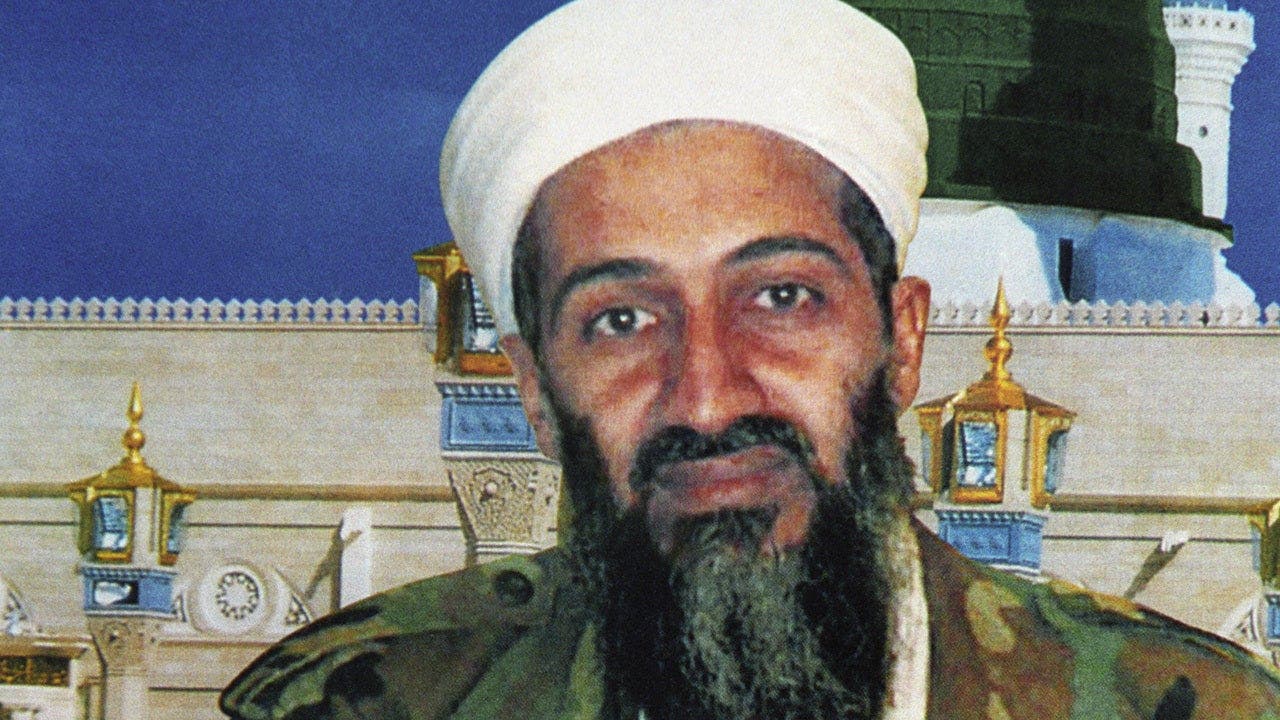
In a recent podcast appearance, a veteran of the elite SEAL Team 6 unit has shared previously unrevealed details about the high-stakes raid that resulted in the death of al-Qaeda leader Osama bin Laden in 2011. Alex West, a former operator with the Naval Special Warfare Development Group, or DEVGRU, described the intense moments of the operation during an episode of the Tier 1 podcast, hosted alongside former Delta Force operator Brent Tucker. The mission, which took place on May 2, 2011, in Abbottabad, Pakistan, marked the culmination of a decade-long manhunt following the September 11, 2001, terrorist attacks that killed nearly 3,000 people in the United States.
West's account sheds new light on the daring assault, which involved a small team of commandos flying into Pakistani airspace aboard modified stealth Black Hawk helicopters. The operation, codenamed Neptune Spear, was authorized by President Barack Obama and watched in real time from the White House Situation Room by top officials including Vice President Joe Biden and Secretary of State Hillary Clinton. According to West, the mission nearly derailed right from the start when one of the helicopters experienced a hard landing, crashing into the compound's outer wall as the team attempted to insert near the target building.
"Okay, boom the [breaching] charge goes. And then from there the rest of the guys came in," West recounted on the podcast, released on Monday. He described how, amid the chaos, another element of the team engaged in a brief gunfight while clearing adjacent structures. "One of the [SEALs]...They got in a little gunfight. Got shot in his bolt cutters and fragged his traps a little bit. Then, kind of from there, the team went in. Took out [UBL's] son. Took out the man," West said, referring to Osama bin Laden by his initials and noting the elimination of bin Laden's son, Khalid, in a stairwell confrontation before the team reached the al-Qaeda leader on the third floor.
The helicopter crash, which West himself experienced, added to the tension of the already precarious insertion. Pilots from the 160th Special Operations Aviation Regiment, known as the Night Stalkers, managed to stabilize the aircraft by pinning its tail against the wall, allowing the operators to disembark and proceed. West admitted that in the heat of the moment, he was unaware of his own injuries. "At the time, I didn't realize it. I had a couple herniated discs in my back, but so did a lot of guys from that. But my adrenaline was going. I had no idea," he explained.
Bin Laden, the Saudi-born founder of al-Qaeda, had evaded capture for nearly a decade after orchestrating the 9/11 attacks from his base in Afghanistan. By 2011, intelligence gathered by the CIA pointed to his hiding place in a spacious compound in the garrison city of Abbottabad, just miles from a Pakistani military academy. The U.S. decision to launch the raid without informing Pakistani authorities stemmed from concerns over potential leaks, as the country had long been a complicated ally in the fight against terrorism.
The compound itself was a three-story structure surrounded by 12-foot-high walls topped with barbed wire, with no phone or internet connections, fueling suspicions of its significance. U.S. officials estimated bin Laden's presence there based on years of surveillance, including the monitoring of a trusted courier known as Abu Ahmed al-Kuwaiti. On the night of the raid, two stealth helicopters carried 23 SEALs, a combat dog named Cairo, and other support personnel across the border from a staging base in Jalalabad, Afghanistan.
Once inside, the SEALs faced immediate resistance. Reports from the time indicate that al-Kuwaiti and his brother were killed in the initial breach, along with a woman caught in the crossfire. Khalid bin Laden was shot in the stairwell as he reportedly reached for a weapon. Osama bin Laden, unarmed according to official accounts, was killed in his bedroom on the top floor after being shot in the chest and head. His body was then transported back to Afghanistan for identification via DNA testing, confirming his identity with near certainty.
West's revelations come nearly 14 years after the raid, a period during which much has been documented through books, films, and official inquiries. However, his firsthand perspective as a participant adds granularity to the narrative. The podcast episode, which runs over two hours, delves into the technical aspects of the operation, including the use of breaching charges and the rapid clearing of multiple buildings within the compound.
While West's story aligns with broader accounts of the raid, some details have varied in past retellings. For instance, the official CIA summary emphasized the stealth helicopters' role in evading detection, while a 2012 book by journalist Mark Owen, a pseudonym for a raid participant, described similar chaos from the crash but focused more on the team's composure under fire. Pakistani officials, who were caught off guard by the incursion, initially denied knowledge of bin Laden's presence and protested the violation of their sovereignty, though investigations later revealed lapses in their intelligence.
The raid's success boosted U.S. morale at a time when the wars in Afghanistan and Iraq were grinding on without clear victories. President Obama announced bin Laden's death to the nation on May 1, 2011, from the East Room of the White House, declaring, "The world is safer. It is a better place because of the death of Osama bin Laden." Celebrations erupted outside the White House and at Ground Zero in New York City, symbolizing a measure of closure for 9/11 victims' families.
Yet the operation was not without controversy. Questions arose about the legality of the raid on foreign soil and the disposal of bin Laden's body at sea in the Arabian Sea to prevent his grave from becoming a shrine. Some critics, including Pakistani leaders, accused the U.S. of undermining bilateral relations, while others debated the raid's long-term impact on al-Qaeda, which fragmented but persisted through affiliates like ISIS.
West, who retired after a distinguished career, has largely stayed out of the public eye until this podcast. His comments highlight the physical and psychological toll on the operators involved. Many SEALs from the raid, including those in West's unit, suffered lasting injuries from the hard landing and subsequent activities, with some facing herniated discs and other issues as West mentioned.
Looking back, the bin Laden raid remains one of the most audacious special operations in modern history, showcasing the precision and bravery of U.S. special forces. As the 9/11 generation ages, such personal accounts serve to preserve the memory of the event and honor those who executed it. Military analysts continue to study the mission for lessons in counterterrorism, from intelligence fusion to rapid insertion tactics.
With ongoing global threats from extremist groups, the raid's legacy underscores the enduring commitment to confronting terrorism. West's podcast appearance, available on platforms like YouTube starting around the 1:40:00 mark, invites reflection on that fateful night in Abbottabad. As he and Tucker discussed, the adrenaline and stakes made it an unforgettable chapter in American military history.
For those interested in more details, the full episode provides deeper insights into the operators' preparations and the broader context of Tier 1 units. The story of Neptune Spear continues to captivate, reminding the public of the sacrifices made in the shadows to protect national security.