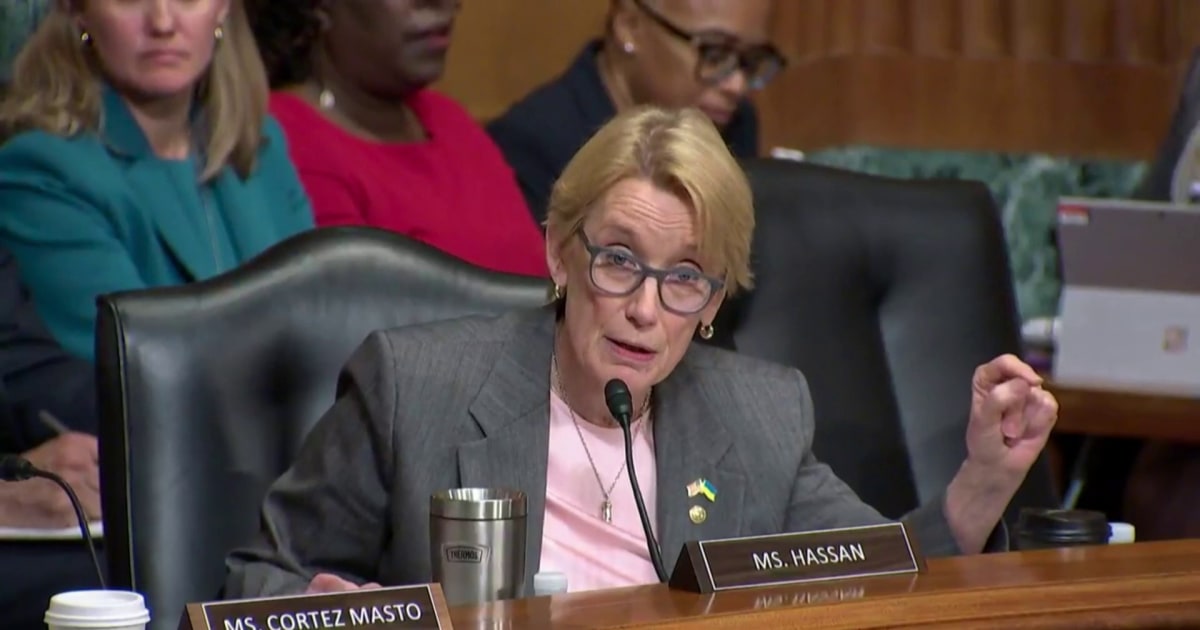
In a tense exchange during a Senate Health, Education, Labor, and Pensions Committee hearing on Thursday, Sen. Maggie Hassan, D-N.H., confronted Health and Human Services Secretary Robert F. Kennedy Jr. over what she characterized as inappropriate 'vanity projects' funded by taxpayer dollars. The confrontation centered on a series of promotional videos posted from official HHS social media accounts, which Hassan argued diverted resources from critical public health initiatives.
The hearing, held in the Dirksen Senate Office Building in Washington, D.C., was part of a broader oversight session examining the Department of Health and Human Services' budget priorities for the fiscal year 2025. Hassan, a member of the committee, used her allotted questioning time to press Kennedy on the videos, which featured the secretary discussing his personal views on environmental health and vaccine skepticism. According to Hassan's office, the videos had garnered over 500,000 views across platforms like X and YouTube since their posting in late September.
'These are not educational materials; these are vanity projects that promote your personal brand at the expense of the American people,' Hassan said, according to a transcript released by the committee. She pointed to specific clips, including one from September 25 where Kennedy appeared in a studio setting, flanked by HHS branding, to critique mainstream medical practices. The senator questioned the allocation of approximately $150,000 in production costs, citing internal HHS memos obtained by her staff.
Secretary Kennedy, appointed earlier this year following the presidential transition, defended the videos as essential outreach tools. 'These videos are about transparency and educating the public on issues that affect their health every day,' Kennedy responded, as captured in video footage from the hearing. He emphasized that the content aligned with HHS's mandate to inform citizens on wellness and prevention, drawing from his background as an environmental advocate and founder of Children's Health Defense.
The exchange highlighted ongoing tensions between Democratic lawmakers and the Kennedy-led HHS, which has faced scrutiny since its inception. Critics, including Hassan, have accused the department of shifting focus from traditional public health responses, such as pandemic preparedness, toward alternative medicine and deregulation. For instance, a report from the Government Accountability Office earlier this month flagged a 20% reduction in funding for infectious disease surveillance programs, reallocating resources to what officials described as 'holistic health initiatives.'
Supporters of Kennedy, including several Republican senators on the committee, pushed back against Hassan's line of questioning. Sen. Bill Cassidy, R-La., the committee's ranking member, interjected to note that similar video productions occurred under previous administrations. 'Every secretary uses multimedia to reach the public; this is no different,' Cassidy said, referencing a 2022 HHS campaign under the Biden administration that spent $2 million on social media ads promoting COVID-19 boosters.
Hassan's concerns were echoed by public health experts outside the hearing. Dr. Leana Wen, a former Baltimore health commissioner and CNN medical analyst, stated in an interview with The Appleton Times that such videos could undermine public trust. 'When official accounts blur the line between policy and personal opinion, it risks confusing the public on evidence-based medicine,' Wen said. She pointed to a recent poll by the Kaiser Family Foundation showing that 35% of Americans now express lower confidence in federal health guidance compared to pre-2024 levels.
Background on the controversy traces back to Kennedy's confirmation hearings in January, where he pledged to 'drain the swamp' in health policy. Since taking office on February 1, HHS has launched several high-profile campaigns, including the videos in question. According to a spokesperson for the department, the productions were overseen by the Office of the Secretary and aimed at countering what Kennedy has called 'corporate capture' of health institutions. The videos, totaling five episodes each around 10 minutes long, were produced by an internal media team at a cost of $30,000 per installment, per budget documents reviewed by congressional aides.
Democratic leaders have seized on the issue as emblematic of broader mismanagement. Sen. Hassan, in a statement released after the hearing, called for an independent audit of HHS's communications budget. 'Taxpayers deserve accountability, not self-promotion,' she wrote. Her office cited examples from the videos, such as one aired on October 2 featuring Kennedy at a New Hampshire farm, discussing pesticide impacts on child health— a topic Hassan noted ties into her state's agricultural economy but strays from federal priorities.
From the administration's perspective, the videos represent a innovative approach to engagement. HHS Deputy Secretary Dr. Mehmet Oz, who joined Kennedy in the hearing, testified that viewership metrics showed a 40% increase in website traffic following the releases. 'We're reaching demographics that traditional PSAs miss,' Oz said, attributing the strategy to Kennedy's outsider status in Washington. Oz, a former TV personality, has been instrumental in shaping the department's media presence.
The hearing also touched on related events, including a whistleblower complaint filed last week by a former HHS communications staffer. The complaint, submitted to the HHS inspector general, alleges that video content was prioritized over urgent responses to a measles outbreak in Ohio, where cases have risen to 150 since August. Officials said the outbreak, linked to declining vaccination rates, has strained local health departments. Kennedy dismissed the complaint as 'politically motivated,' according to a department press release.
Public reaction has been mixed, with social media amplifying the divide. Hashtags like #HassanVsKennedy trended on X, drawing comments from both sides. Environmental groups praised the videos for highlighting under-discussed issues, while organizations like the American Medical Association issued a statement urging a return to science-based messaging. 'Personal views should not overshadow peer-reviewed research,' AMA President Jesse Ehrenfeld said in a prepared remark.
As the hearing concluded, Chairman Bernie Sanders, I-Vt., scheduled a follow-up session for November 15 to delve deeper into HHS spending. Sanders, who has long criticized pharmaceutical influence, appeared sympathetic to Kennedy's reform efforts but stressed the need for fiscal responsibility. 'Innovation is welcome, but not at the cost of core missions,' he remarked.
The episode underscores the challenges facing the Kennedy administration amid a polarized Congress. With midterm elections approaching, Democrats are leveraging oversight hearings to highlight perceived excesses, while Republicans defend the changes as necessary disruptions. Analysts suggest that without bipartisan compromise, funding battles could delay key health programs, including expansions to the Affordable Care Act.
Looking ahead, the controversy may prompt legislative action. A bipartisan group of senators, including Hassan and Cassidy, is drafting a bill to impose stricter guidelines on federal agency social media use. If passed, it could require pre-approval for content exceeding $50,000 in costs. For now, HHS continues posting updates, with a new video scheduled for release next week on water quality—potentially reigniting the debate.
In New Hampshire, where Hassan has built her career on health policy, the issue resonates locally. The state, with its rural communities and opioid crisis history, relies heavily on federal grants. Residents interviewed by The Appleton Times expressed varied opinions: farmer John Reilly of Concord supported Kennedy's environmental focus, saying, 'He's talking about real issues affecting our kids.' Meanwhile, nurse Sarah Thompson of Manchester worried about mixed messages on vaccines, noting a dip in clinic attendance.
Ultimately, the 'vanity projects' clash reflects deeper questions about the role of government in public discourse. As Kennedy's tenure progresses, balancing advocacy with administration will remain a tightrope, with Congress poised to keep a watchful eye.