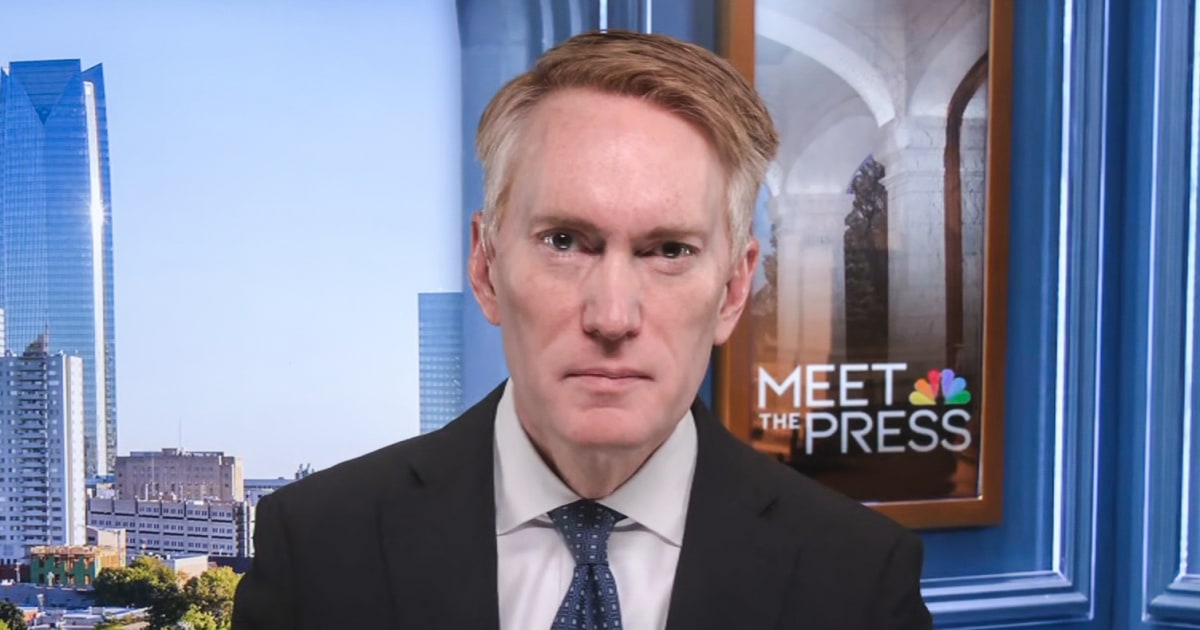
WASHINGTON — Sen. James Lankford, a Republican from Oklahoma, left the door open Sunday to supporting the deployment of U.S. troops on the ground in Iran, emphasizing that any such action would depend on clear objectives and the ability to swiftly conclude the operation.
In an interview on NBC News' Meet the Press, Lankford responded to questions from moderator Kristen Welker about whether he would back President Donald Trump sending American forces into Iran amid escalating tensions in the Middle East. "We've got to be able to know what the objectives are and what they're actually carrying out," Lankford said, underscoring the need for a defined endgame to any military engagement.
Lankford stressed the dangers of an unfinished conflict, drawing on Iran's long history of backing attacks against U.S. interests. "To be very clear on this, the worst thing that can happen is to be able to have this kind of conflict start and to not end it, to leave it undone. We've got to be able to finish this," he stated. He pointed to past Iranian support for militias and proxy groups that have targeted American personnel, including roadside bombs in Iraq and rocket attacks on U.S. bases in Syria and Iraq over the years.
When pressed on whether he was explicitly not ruling out ground troops, Lankford clarified that the nature of the deployment would be crucial. "It depends on what boots we're putting on the ground," he replied. "If this is special forces to be able to carry out a specific operation — get in, get out — that's very different than long standing occupation." This distinction highlights a broader debate within Congress about the scope of U.S. military involvement, echoing lessons from prolonged wars in Iraq and Afghanistan that stretched over two decades and cost thousands of American lives.
The senator's comments come as the U.S. bolsters its military presence in the region. According to a social media post from U.S. Central Command, thousands of additional troops are arriving in the Middle East to reinforce existing forces. NBC News reported last week that Trump had approved the deployment of more than 1,000 soldiers from the elite 82nd Airborne Division, based at Fort Liberty in North Carolina, to strategic locations including bases in Kuwait and Qatar.
These movements follow a series of U.S. airstrikes against Iranian-backed militias earlier this year, which Washington blamed for over 170 attacks on American troops since October 2023. The deployments are part of a broader strategy to deter further aggression, officials said, though exact numbers and timelines remain classified for operational security.
Behind the scenes, Trump is reportedly considering more direct options involving ground forces. According to NBC News reporting, the president has weighed scenarios such as securing the Strait of Hormuz — a vital chokepoint for global oil shipments through which about 20% of the world's crude passes — retrieving Iran's stockpile of highly enriched uranium to curb its nuclear program, or even seizing Iranian oil facilities to cut off funding for the regime and force concessions in ongoing nuclear talks.
Trump addressed the troop issue earlier this month during a rally in Pennsylvania, insisting he was "not putting troops anywhere." However, he added a caveat: if such a decision were made, "I would not tell reporters." This remark, delivered on October 5 to a crowd in Butler, reflects the administration's reluctance to telegraph military plans amid heightened risks of escalation.
Lankford also addressed the question of congressional oversight, hedging on whether Trump would need approval from lawmakers to send troops into Iran. "It is contingent on how the troops are used," he said. For a "long standing war that's happening, go back again to what happened in Iraq or in Afghanistan, yes," Lankford explained, referring to the 2002 and 2001 authorizations for use of military force that underpinned those conflicts. But for shorter missions "to protect Americans and to be able to make sure that we're in there for a season and we're stopping and getting out, that's very, very different. So again, this is all contingent."
This stance aligns with actions by Senate Republicans, who earlier this year blocked multiple war powers resolutions introduced by Democrats to curb Trump's authority for strikes against Iran without explicit congressional consent. In February, for instance, the Senate voted 55-45 along party lines to table a measure led by Sen. Tim Kaine of Virginia, effectively preserving executive flexibility in foreign policy.
On the other side of the globe, Iranian officials issued stark warnings against any U.S. incursion. Iran's parliament speaker, Mohammad Bagher Ghalibaf, declared Sunday that the country stands ready to repel a ground assault. "We are waiting for American soldiers to enter on the ground so they can set them ablaze and punish their regional partners forever," Ghalibaf said in a statement broadcast on state media, vowing retaliation not just against U.S. forces but also allies like Israel and Saudi Arabia.
The rhetoric underscores the high stakes, with Iran having enriched uranium to near-weapons-grade levels at facilities like Natanz and Fordow, according to the International Atomic Energy Agency's latest report from September. U.S. intelligence assessments, declassified portions of which were shared with Congress last month, indicate Tehran could produce enough fissile material for a nuclear bomb in weeks if it chose to sprint toward a weapon.
Broader context reveals a tense diplomatic landscape. Trump pulled the U.S. out of the 2015 nuclear deal with Iran in 2018, imposing "maximum pressure" sanctions that have slashed Tehran's oil exports by over 90% from pre-sanction levels. Indirect talks mediated by Oman have stalled, with the latest round in April yielding no progress on curbing Iran's ballistic missile program, which includes hypersonic weapons tested as recently as July.
Experts and lawmakers from both parties have expressed concerns about the risks of ground involvement. Sen. Lindsey Graham, R-S.C., a Trump ally, has advocated for regime change in Iran but stopped short of endorsing boots on the ground. Meanwhile, House Speaker Mike Johnson, R-La., told reporters Friday that any major escalation would require briefings for key committees, though he deferred to the president's judgment on immediate threats.
As tensions simmer, the implications for U.S. policy could reshape alliances in the region. Securing the Strait of Hormuz might involve coordination with Gulf states, but it risks drawing in naval forces from China and Russia, which have increased patrols there. Domestically, public opinion remains wary; a recent Pew Research Center poll from October showed 62% of Americans opposing additional troop deployments to the Middle East, citing fatigue from past wars.
Looking ahead, Lankford's interview signals that Republican support for limited ground actions could provide Trump with political cover, but it also invites scrutiny from war-weary voters ahead of the 2024 election cycle. Congressional leaders have scheduled closed-door briefings with Pentagon officials for next week to discuss Iran's latest proxy activities, including a drone attack on a U.S. outpost in Jordan that killed three soldiers in January. Whether these discussions lead to authorization debates or further restraint remains to be seen, as the administration navigates the fine line between deterrence and direct confrontation.