WASHINGTON — The death of Iran's Supreme Leader Ayatollah Ali Khamenei in a sweeping U.S.-Israeli military operation has plunged the Islamic Republic into uncertainty, with U.S. officials cautioning that the path to new leadership remains murky and fraught with internal power struggles.
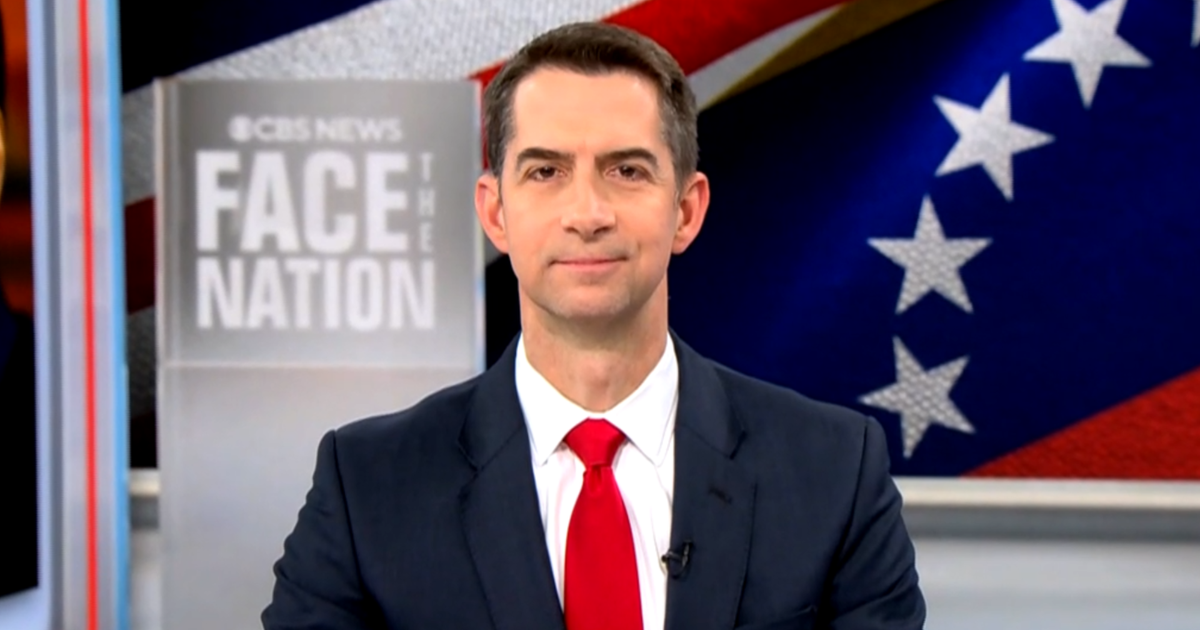
Sen. Tom Cotton, chairman of the Senate Intelligence Committee, addressed the volatile situation on Sunday during an appearance on CBS's Face the Nation with Margaret Brennan. Khamenei, who had led Iran since 1989 and was only the second person to hold the supreme leader position, was killed at age 86, according to President Trump. The operation, which began Saturday and extended into Sunday, targeted key Iranian sites and resulted in significant casualties on both sides.
Iranian state media reported at least 200 people killed within the country from the strikes. In retaliation, Iran launched attacks on Israel and its allies across the Middle East, killing six people in Israel and one in Abu Dhabi, while wounding dozens more, according to initial reports from regional authorities.
The Israel Defense Forces confirmed in a Saturday press conference that seven high-ranking Iranian officials and commanders perished in the operation, including Ali Shamkhani, a close adviser to Khamenei. President Trump announced Khamenei's death on Saturday, framing it as a pivotal blow to the Iranian regime.
Cotton emphasized the complexity of Iran's succession process during his interview. "I don't think anyone can give you a simple answer," he said. "There's probably a lot of jockeying inside of Iran right now; they have a very consultative, deliberative process to replace the supreme leader. There's a reason why he didn't want to have a clear succession plan in place."
This lack of a predefined heir has historically been a deliberate strategy by Khamenei to maintain control and prevent factional infighting from destabilizing his rule. The supreme leader's role, enshrined in Iran's 1979 constitution, grants sweeping authority over the military, judiciary, and foreign policy, making the position the linchpin of the theocratic government.
Reflecting on potential outcomes, Cotton referenced earlier comments from Secretary of State Marco Rubio, who in January had said, "I don't think anyone can give you a simple answer as to what happens next in Iran if the Supreme Leader and the regime were to fall, other than the hope that there would be some ability to have somebody within their systems that you could work towards a similar transition."
Cotton agreed with Rubio's assessment, adding a note of optimism drawn from recent U.S. interventions elsewhere. He expressed hope for a transition akin to the situation in Venezuela, where Delcy Rodriguez was sworn in as president shortly after the U.S. captured then-President Nicolas Maduro. While details of that analogy remain debated among analysts, Cotton used it to underscore the possibility of rapid regime change facilitated by external pressure.
Looking ahead, Cotton outlined the U.S. strategy as one of sustained aerial and naval pressure rather than boots on the ground. "The president has no plan for any kind of large-scale, ground force inside of Iran," he told Brennan, directly addressing concerns raised by Trump's Saturday remarks about potential American casualties in the ongoing operation.
Despite this, Cotton acknowledged risks inherent in an prolonged campaign. "One risk of an extended air and naval campaign is that an aircraft could be shot down, and the president would never leave a pilot behind," he said. "So no doubt we have combat search and rescue assets in the region that are prepared to go in and extract any downed pilot."
The senator also signaled an aggressive posture toward Iran's remaining power structure. "Cotton said the U.S. will continue to strike Iran's military capabilities, and we're going to continue to hit the senior leadership, the ayatollahs," according to the interview transcript.
When pressed on who might emerge as the next leader, Cotton pivoted away from institutional figures, instead pointing to broader societal forces. He advocated for leadership to arise from the "opposition," which he described as "the 90 million Iranians who have suffered under the brutal Islamic Republic Revolutionary regime for the last 47 years." This framing highlights long-simmering domestic discontent, including widespread protests in recent years against economic hardship and social restrictions under the regime.
The operation's roots trace back to escalating tensions in the region. Iran has faced international isolation over its nuclear program and support for proxy militias in Yemen, Syria, and Lebanon. The U.S. and Israel have cited these activities, along with Iran's ballistic missile advancements, as justifications for preemptive actions. Saturday's strikes reportedly focused on command centers and nuclear-related facilities, though exact targets remain classified.
International reactions have been swift and divided. Allies like Saudi Arabia and the United Arab Emirates expressed support for curbing Iranian influence, while European nations urged de-escalation to prevent a wider conflict. The United Nations Security Council scheduled an emergency session for Monday to discuss the strikes and their humanitarian fallout.
In Tehran, Iranian officials have vowed defiance, with state television broadcasting images of mass funerals for the deceased and calls for unity against foreign aggression. Unconfirmed reports suggest interim leadership may fall to the Assembly of Experts, a clerical body tasked with selecting the supreme leader, though internal divisions could prolong the vacuum.
As the dust settles from the initial strikes, the broader implications for Middle East stability loom large. Oil prices surged over 5% on global markets Sunday amid fears of disrupted shipping in the Strait of Hormuz, through which 20% of the world's oil passes. Analysts warn that prolonged uncertainty in Iran could exacerbate refugee flows and empower extremist groups in neighboring Iraq and Afghanistan.
U.S. lawmakers from both parties have voiced support for the operation but called for congressional briefings on its scope. House Speaker Mike Johnson praised the precision of the strikes, while Senate Minority Leader Chuck Schumer emphasized the need for diplomatic off-ramps to avoid all-out war.
For the Iranian people, Khamenei's death marks the end of an era defined by isolation and repression. Pro-democracy activists abroad, many exiled since the 1979 revolution, see an opening for change, though they caution that military intervention alone won't dismantle the regime's entrenched security apparatus.
What comes next remains anyone's guess, as Cotton put it. The U.S. commitment to targeting Iran's leadership suggests the operation is far from over, potentially reshaping alliances and power dynamics across the region for years to come.