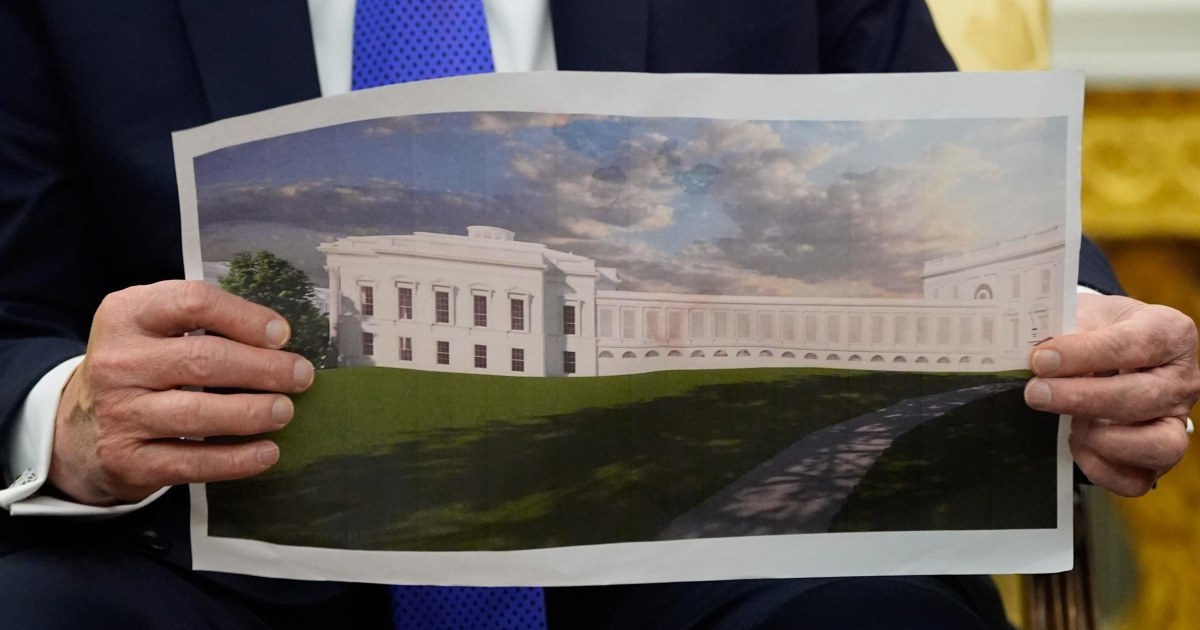
The Senate parliamentarian has ruled that a Republican budget bill cannot include $1 billion in funding for security upgrades tied to President Donald Trump’s proposed White House ballroom project, dealing a setback to GOP efforts to advance the measure through reconciliation procedures.
Elizabeth MacDonough, the Senate parliamentarian, informed Senate offices on Saturday that the provision as drafted improperly funds activities outside the jurisdiction of the Judiciary Committee. “A project as complex and large in scale as Trump’s proposed ballroom necessarily involves the coordination of many government agencies which span the jurisdiction of many Senate committees,” MacDonough wrote. “As drafted, the provision inappropriately funds activities outside the jurisdiction of the Judiciary Committee.”
The ruling means the funding would face a 60-vote threshold rather than advancing with a simple majority, a significant hurdle in the narrowly divided Senate. Budget reconciliation allows certain fiscal measures to bypass the filibuster, but the Byrd Rule restricts provisions that are not directly related to spending or revenue.
Republicans had already begun revising the language before the formal decision, according to a GOP leadership aide. A spokesperson for Senate Judiciary Committee Republicans said conversations and revisions are continuing. It remains unclear whether a rewritten version can satisfy the parliamentarian while staying within the committees authorized by the budget resolution, which limits the measure to the Judiciary and Homeland Security panels.
Democratic critics were quick to condemn the proposal. Senate Budget Committee Ranking Member Jeff Merkley of Oregon said in a statement that “the American people shouldn’t spend a single dime on Trump’s gold-plated ballroom boondoggle.” Merkley added that Democrats are prepared to challenge any revised language and accused Republicans of wasting national resources on “a mission of chaos and corruption.”
Republican leaders sought to minimize the impact. Ryan Wrasse, spokesman for Senate Majority Leader John Thune, posted on X that “Redraft. Refine. Resubmit. None of this is abnormal during a Byrd process.” Senate Budget Committee Chairman Lindsey Graham of South Carolina did not immediately respond to requests for comment.
The funding request had already drawn skepticism from some Senate Republicans. A memo obtained by NBC News outlined the proposed breakdown: $220 million to harden the White House complex, $180 million for a visitors screening facility, $175 million for training, and another $175 million to enhance security for Secret Service protectees.
Sen. Roger Marshall of Kansas said after a briefing that he still had questions and remained undecided. Sen. Rand Paul of Kentucky and Sen. Susan Collins of Maine both indicated the project should rely on private funds, consistent with Trump’s earlier public statements that the ballroom would cost no government money.
Trump had previously described the ballroom as a $400 million privately funded endeavor. Comcast Corp., the parent company of NBCUniversal, was among the corporate donors mentioned in earlier reports. The White House has maintained that the requested taxpayer funds would cover only “security adjustments and upgrades” associated with the larger project.
The ballroom initiative has been a point of contention since its announcement, with supporters arguing it would enhance the White House’s capacity for official events and critics viewing it as an unnecessary expense amid broader fiscal debates. The parliamentarian’s decision adds another layer of procedural difficulty for Republicans seeking to include it in must-pass legislation.
Officials said further revisions could be submitted for review, but if the project is deemed to fall outside the two authorized committees, Republicans would likely need to drop the funding or attempt to overrule the parliamentarian, a move that would require 60 votes.
The episode highlights ongoing tensions over the use of reconciliation procedures and the limits imposed by Senate rules on what can be included in budget-related legislation. As negotiations continue, the fate of the ballroom funding remains tied to whether a compliant version can be crafted before final votes on the broader measure.