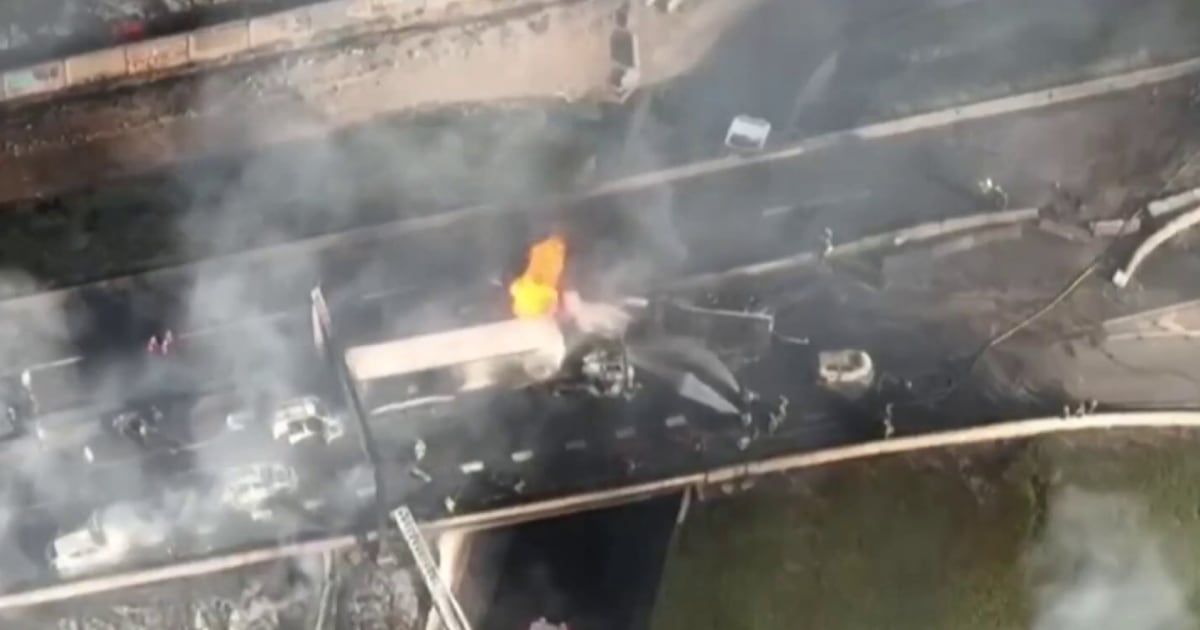
SANTIAGO, Chile — A tragic accident unfolded on a busy highway in Santiago early Wednesday morning when a truck carrying liquefied gas overturned and exploded, claiming the lives of several people and injuring others, according to reports from NBC News.
The incident occurred on a major thoroughfare leading into the Chilean capital, where the vehicle, loaded with highly flammable liquefied petroleum gas, lost control for reasons that remain under investigation. Eyewitnesses described a massive fireball erupting from the wreckage, sending plumes of black smoke billowing into the sky and forcing the closure of multiple lanes of traffic.
Emergency responders rushed to the scene shortly after the explosion, which happened around 8 a.m. local time. According to initial accounts, at least five individuals perished in the blast, though officials have not yet released an exact casualty figure pending identification of the victims. Dozens more were treated for burns, shrapnel wounds, and smoke inhalation at nearby hospitals.
NBC News correspondent George Solis, reporting from the site, detailed the chaos in his on-the-ground coverage. "The truck flipped over suddenly, and then there was this enormous explosion that shook the entire area," Solis said, quoting a local driver who had been trailing the vehicle. "It was like something out of a movie—flames everywhere, and people screaming."
Chilean authorities, including the national emergency services agency, confirmed the truck was en route from a gas distribution facility on the outskirts of Santiago to a residential district in the city center. The liquefied gas, commonly used for heating and cooking in Chilean homes, posed an immediate risk of secondary explosions, prompting evacuations of nearby buildings and businesses.
Investigators from the Chilean Traffic Safety Board arrived within hours to examine the wreckage. Preliminary findings suggest the driver may have suffered a mechanical failure or lost control due to high speeds on a curved section of the road, but no official cause has been determined. "We are conducting a thorough probe to understand what led to this devastating event," said a spokesperson for the board, emphasizing the need for public cooperation in gathering witness statements.
The explosion's impact rippled through Santiago's morning commute, snarling traffic for miles and delaying public transportation. Schools in the vicinity were temporarily closed, and air quality alerts were issued due to the release of hazardous fumes. Residents living along the highway reported feeling the blast from their homes, with some windows shattering from the shockwave.
This incident marks the latest in a series of transportation mishaps involving hazardous materials in Chile. Just two years ago, a similar tanker truck collision in the northern Atacama region resulted in three deaths and widespread environmental damage from spilled chemicals. Transportation experts have long criticized the country's aging road infrastructure and lax enforcement of safety protocols for commercial vehicles.
In response to the explosion, Chile's Ministry of Transport announced an immediate review of all liquefied gas transport routes in the Santiago metropolitan area. "Safety is our top priority, and we will implement stricter inspections to prevent such tragedies," Minister of Transport Juan Carlos Muñoz stated in a press briefing. He added that the government plans to allocate additional funds for upgrading highway barriers and driver training programs.
Local advocacy groups, such as the Chilean Road Safety Alliance, expressed outrage over the recurring nature of these accidents. "How many more lives must be lost before we see real changes?" asked alliance director Maria Gonzalez in an interview with local media. She pointed to statistics showing that hazardous material spills have increased by 20 percent over the past five years, attributing the rise to booming demand for natural gas amid Chile's economic growth.
International observers, including the United Nations' road safety division, have monitored Chile's progress in aligning with global standards for dangerous goods transport. A 2022 UN report praised Chile for adopting new tracking technologies for trucks but noted gaps in rural enforcement. The Santiago explosion, occurring in a densely populated urban zone, underscores the urgency of addressing these issues.
As cleanup efforts continue, families of the victims are gathering at a makeshift memorial near the crash site, placing flowers and candles in remembrance. One victim's relative, speaking anonymously to reporters, shared her grief: "He was just going to work, like any other day. This shouldn't have happened." Community leaders have called for a moment of silence across the city at noon on Thursday to honor those lost.
Economically, the blast has disrupted gas supplies to parts of Santiago, leading to temporary shortages at distribution points. Utility companies are rerouting deliveries, but experts warn of potential price hikes in the coming weeks. The incident also highlights Chile's heavy reliance on liquefied gas, which accounts for over 40 percent of household energy needs in the country.
Looking ahead, prosecutors have opened an inquiry to determine if negligence played a role, with possible charges against the trucking company pending forensic analysis. The driver, who survived with serious injuries, remains hospitalized and unable to provide a statement, according to medical officials.
In the broader context of Latin American infrastructure challenges, this event serves as a stark reminder of the vulnerabilities in transporting volatile substances through urban corridors. As Chile pushes toward its goal of carbon neutrality by 2050, balancing industrial expansion with safety measures will be crucial. For now, Santiago mourns its dead while authorities work to ensure such a catastrophe does not repeat.