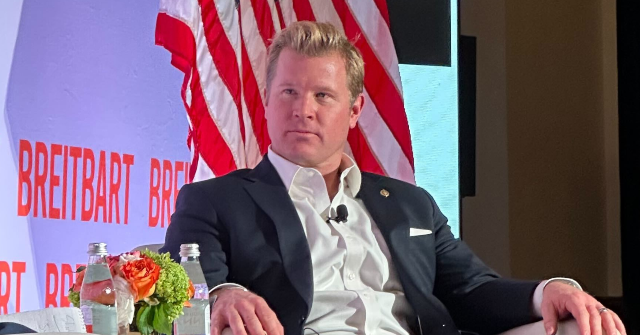
WASHINGTON — In a recent appearance on Fox News, Sen. Tim Sheehy, a Republican from Montana, addressed ongoing U.S. military operations in Iran, asserting that American forces have achieved significant air superiority but face persistent challenges from portable missile systems. Speaking on Friday's edition of the "Ingraham Angle," Sheehy pushed back against critics who question the extent of U.S. control over Iranian airspace, emphasizing that while major air defenses have been neutralized, complete dominance remains elusive due to mobile and concealable threats.
The discussion came amid heightened tensions in the region, where U.S. forces have been engaged in airstrikes and operations against Iranian targets since early 2026. Reports indicate that these actions stem from a broader escalation following alleged Iranian attacks on U.S. allies and interests in the Middle East. Sheehy's comments highlight the complexities of modern warfare, where advanced technology meets asymmetric tactics employed by Iranian forces.
Host Laura Ingraham opened the segment by referencing administration claims of "near complete air superiority, almost total air superiority, across Iran" and the assertion that "we had knocked out all of their defenses." She then turned to Sheehy, asking, "What do you say to those skeptics, critics, malcontents, whatever you want to call them?" Her question underscored the divide between official statements and on-the-ground realities, as reported by various outlets covering the conflict.
Sheehy responded directly, stating, "Of course, it’s accurate to say we’ve largely debilitated their ability to control their airspace. Their air defenses have largely been destroyed." He acknowledged, however, the limitations imposed by smaller-scale weapons. "Of course, there are still MANPADS, which are literally shoulder-carried missile systems that ground troops can hide in trucks, they can hide in homes and caves and pop out and shoot them. There are vehicle-based systems that will always evade the ability for us to detect and destroy all of them," Sheehy explained.
MANPADS, or Man-Portable Air-Defense Systems, refer to lightweight, portable missiles designed for infantry use, capable of targeting low-flying aircraft. These systems, widely proliferated among militaries and non-state actors, have been a persistent concern in conflicts from Afghanistan to Syria. In the Iranian theater, their deployment by ground forces complicates U.S. aerial operations, particularly for helicopters and close air support missions.
Sheehy's remarks build on a series of updates from the Pentagon, which have described progressive gains in the air campaign. According to defense officials, U.S. and allied strikes since March 2026 have targeted over 200 Iranian radar installations and surface-to-air missile sites, significantly degrading Tehran's integrated air defense network. Yet, independent analysts, citing satellite imagery and open-source intelligence, have noted that some mobile launchers remain operational, echoing Sheehy's assessment.
To put the current situation in perspective, Sheehy compared it to historical precedents. "We lost far more aircraft during the same time period during the first Gulf War," he said, adding, "I think it’s accurate to say we’ve largely established air superiority." During Operation Desert Storm in 1991, the U.S.-led coalition lost 38 fixed-wing aircraft to enemy fire over a similar timeframe, a stark contrast to the relatively low loss rates reported in the current Iran operation, where confirmed U.S. aircraft losses stand at fewer than a dozen as of late March 2026.
The senator's appearance on April 3, 2026, broadcast from Fox News Channel studios in New York, reflects growing congressional scrutiny of the administration's handling of the Iran conflict. Sheehy, a former Navy SEAL and businessman who entered the Senate in 2025, has been vocal on national security issues, often advocating for robust military engagement. His district in Montana, home to significant Air Force bases like Malmstrom, gives him a direct stake in aerial operations.
Critics of the administration's claims, including some Democratic lawmakers, have pointed to incidents where U.S. drones were downed by Iranian shoulder-fired missiles near the Strait of Hormuz. One such event on March 28, 2026, involved a MQ-9 Reaper reportedly struck by a MANPADS variant, according to Pentagon briefings. These episodes fuel skepticism about the narrative of total air dominance, aligning with Ingraham's line of questioning.
On the other side, administration officials maintain that air superiority is a matter of degrees. A White House spokesperson, speaking on condition of anonymity, told reporters last week that "we have neutralized the majority of Iran's fixed air defense infrastructure, enabling freedom of maneuver for our forces." This view contrasts with Sheehy's more nuanced take, which admits to ongoing vulnerabilities without diminishing overall progress.
The broader context of U.S.-Iran relations traces back decades, intensified by the 1979 Islamic Revolution, the Iran-Iraq War, and more recent nuclear negotiations. The current escalation reportedly began with Iranian-backed militia attacks on U.S. positions in Iraq and Syria in January 2026, prompting retaliatory strikes that expanded into Iranian territory. International observers, including the United Nations, have called for de-escalation, warning of risks to global energy supplies given Iran's role in OPEC.
Military experts emphasize that achieving air superiority in a contested environment like Iran requires not just destroying fixed assets but also countering mobile threats through intelligence and ground operations. "It's a cat-and-mouse game," said retired Gen. Mark Milley in a separate interview with CNN on April 2, 2026. "We've come a long way, but until we secure the ground, the skies won't be fully ours." Milley's comments provide an additional layer to the debate, highlighting the interplay between air and land campaigns.
As U.S. forces prepare for potential ground engagements, Sheehy's warnings about undetectable missile systems carry weight for troop safety. Reports from the front lines describe Iranian irregulars dispersing into urban areas of cities like Tehran and Isfahan, using civilian cover to deploy vehicle-mounted launchers. This tactic mirrors strategies seen in urban warfare zones elsewhere, complicating rules of engagement and increasing the risk of collateral damage.
Looking ahead, the path to resolution remains uncertain. Diplomatic channels, involving mediators from Qatar and Oman, have seen sporadic talks, but Iranian Supreme Leader Ali Khamenei has vowed resistance "until the last breath," according to state media on April 1, 2026. For the U.S., sustaining air operations will be crucial, but Sheehy's testimony suggests that full victory may demand more than aerial might alone.
In Congress, Sheehy's statements have sparked calls for briefings. Senate Armed Services Committee Chair Jack Reed (D-RI) announced on April 4, 2026, that lawmakers would seek updated assessments from Joint Chiefs Chairman Gen. Charles Q. Brown Jr. This could lead to adjustments in strategy, potentially involving more special operations to hunt down mobile threats. As the conflict enters its fourth month, the balance between optimism and caution, as articulated by figures like Sheehy, will shape public and policy perceptions alike.
The implications extend beyond the battlefield. With oil prices fluctuating amid disruptions in the Persian Gulf, economists warn of inflationary pressures in the U.S. Meanwhile, alliances are tested: NATO partners have provided logistical support, while Russia and China have supplied Iran with defensive technologies, per intelligence reports. Sheehy's measured optimism offers a glimpse into the calculated risks American leaders are navigating in this high-stakes endeavor.