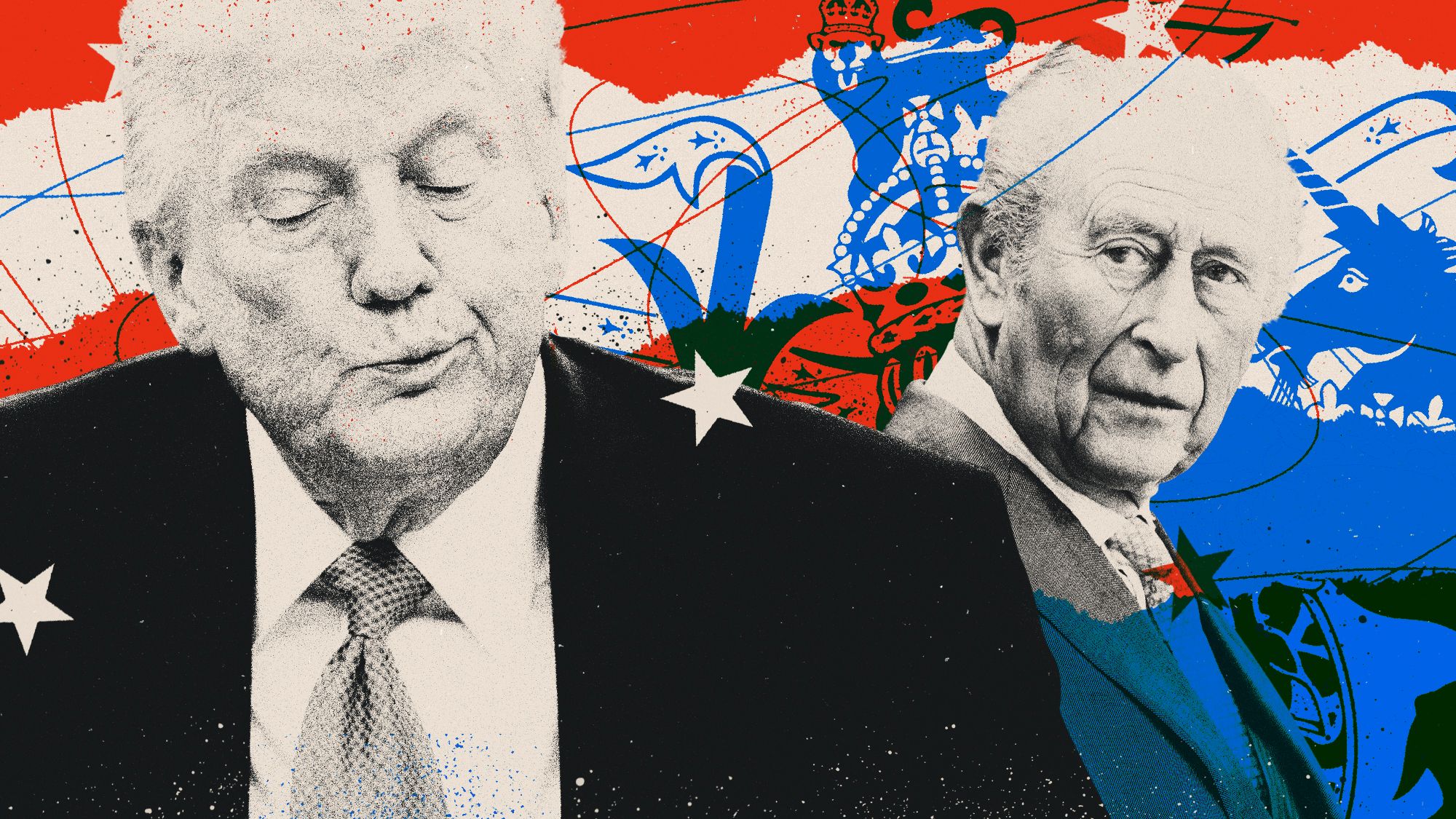
LONDON — As tensions escalate in the Middle East with ongoing U.S. military actions against Iran, growing voices in Britain are urging a postponement or cancellation of King Charles III's planned state visit to the United States. The trip, slated for April to commemorate the 250th anniversary of American independence, was intended to mend strained relations between the two nations but now risks becoming a diplomatic flashpoint amid the conflict and U.S. President Donald Trump's pointed criticisms of British Prime Minister Keir Starmer.
Buckingham Palace has been preparing for the monarch and Queen Camilla to travel to Washington and New York, marking the first such visit by a British sovereign in nearly two decades. The itinerary was meant to symbolize renewed ties following years of friction, including Brexit-related disputes and differing approaches to global issues. However, the intensifying violence has prompted sharp debate over whether proceeding would embarrass the royals or inadvertently bolster Trump's image.
Labour MP Emily Thornberry, chair of the House of Commons Foreign Affairs Committee, voiced concerns on BBC Radio 4's "Today" programme, stating it may be "safer to delay it." She added, "It would be going ahead against a backdrop of a war and that, I think, is quite difficult. The last thing that we want to do is to have their majesties embarrassed." Thornberry's comments reflect broader unease in political circles about the optics of a royal endorsement during a period of U.S.-led hostilities that some in the U.K. view as legally questionable.
Peter Westmacott, a former British ambassador to the United States and ex-deputy private secretary to King Charles, echoed these sentiments in an interview with The Times. "While the war is continuing," he said, the visit is "problematic." Westmacott highlighted the U.K. government's initial assessment that the U.S. strikes on Iran were "clearly illegal," emphasizing a "duty to protect the monarchy in a situation like this" and to "reflect public opinion in this country." He questioned how the state visit might be perceived, warning that the King could appear to be "endorsing" the actions of the U.S. president.
Public sentiment appears to align with these expert views. A YouGov poll conducted last week among 12,002 British adults found that 46 percent believe the visit should definitely be cancelled. Liberal Democrats leader Ed Davey has argued that allowing it to proceed would deliver a "huge diplomatic coup" to Trump, potentially legitimizing his administration's foreign policy at a sensitive time.
Yet, not all commentators advocate for outright cancellation. Westmacott suggested postponement as a prudent alternative, describing it as "a statesmanlike way of managing the issue" that avoids offending the "thin-skinned" Trump while safeguarding the "special relationship" between the U.K. and U.S. He noted in a CNN interview that Downing Street would not want to subject the monarch to Trump's "frequent rants against Britain" nor risk "angering the president" by pulling the plug entirely.
Critics like Alex Hannaford, writing in The Independent, have been more forceful, labeling a state visit as "nothing but a show of political appeasement" toward an administration exhibiting "authoritarian instincts." Hannaford argued it would be "betraying the very values of democracy" that the 250th anniversary of U.S. independence is meant to celebrate. He also pointed to the timing's complications for the royal family, citing Prince Andrew's arrest last month, which "reignited the Epstein scandal," and the potential for "awkward questions" from victims' lawyers and advocacy groups during the visit.
In The Guardian, columnist Simon Jenkins acknowledged the "powerful" case for cancelling, noting that Trump would certainly "exploit a royal visit" for personal gain. However, he cautioned that skipping the trip might seem "prompted by domestic politics" and deliver "a severe blow to Anglo-American relations." Jenkins advocated elevating the visit "well above the level of current events" to honor the enduring links between Britons and Americans since independence. He described a state visit as "a bonding of nations," not merely governments.
The decision ultimately rests with the U.K. government, as official royal travel requires ministerial approval and advice. Downing Street has so far refused to comment, a stance that The Guardian's Jenkins interpreted as "an understandable indecision." He speculated that leaving the question open could even exert pressure on Trump for an early ceasefire in the Middle East conflict.
Trump himself has expressed enthusiasm for the visit. Speaking to reporters yesterday while hosting Irish Taoiseach Micheál Martin at the White House, the president said Charles would be visiting "very shortly" and added, "I do look forward to seeing the King." This comes amid Trump's ongoing barbs at Starmer, including criticisms over U.K. foreign policy stances that have further strained bilateral ties.
The backdrop to these discussions includes the U.S.'s recent escalation of attacks on Iran, which began in response to perceived provocations but have drawn international condemnation. The U.K., a close ally, initially supported limited actions but has since distanced itself, with officials privately questioning their legality under international law. This divergence underscores the delicate balance Britain must strike in maintaining the transatlantic alliance while addressing domestic calls for a more independent posture.
Historical context adds layers to the debate. The last state visit by a British monarch to the U.S. was Queen Elizabeth II's in 2007, a trip that focused on shared cultural and economic bonds without the overlay of active warfare. Today's circumstances, with the Israel-Iran tensions spilling over into broader regional instability, present a stark contrast. Advocacy groups monitoring human rights issues, particularly those tied to the Epstein case, have already signaled intentions to raise concerns if the royals proceed, potentially turning the anniversary celebrations into a media circus.
As preparations continue at Buckingham Palace, the government's calculus involves weighing diplomatic fallout against security risks. Westmacott suggested there could come "a moment when the government decides that the risks of going ahead are greater than the risk of causing offence." For now, the April timeline remains tentative, with no formal announcement issued.
The implications extend beyond immediate optics. Postponing or cancelling could signal a cooling in U.K.-U.S. relations at a pivotal moment, potentially affecting trade negotiations and NATO coordination. Conversely, proceeding might reinforce perceptions of British deference to American leadership, alienating anti-war factions at home. With public opinion polls showing strong opposition and political leaders divided, the coming weeks will likely see intensified lobbying on all sides.
Ultimately, the fate of King Charles's visit hinges on the trajectory of the Middle East conflict and the evolving political landscape in both nations. As Jenkins noted, all could depend on "how long the war continues." For a monarchy that has long navigated global upheavals with quiet diplomacy, this episode tests the boundaries of tradition in an era of heightened geopolitical volatility.