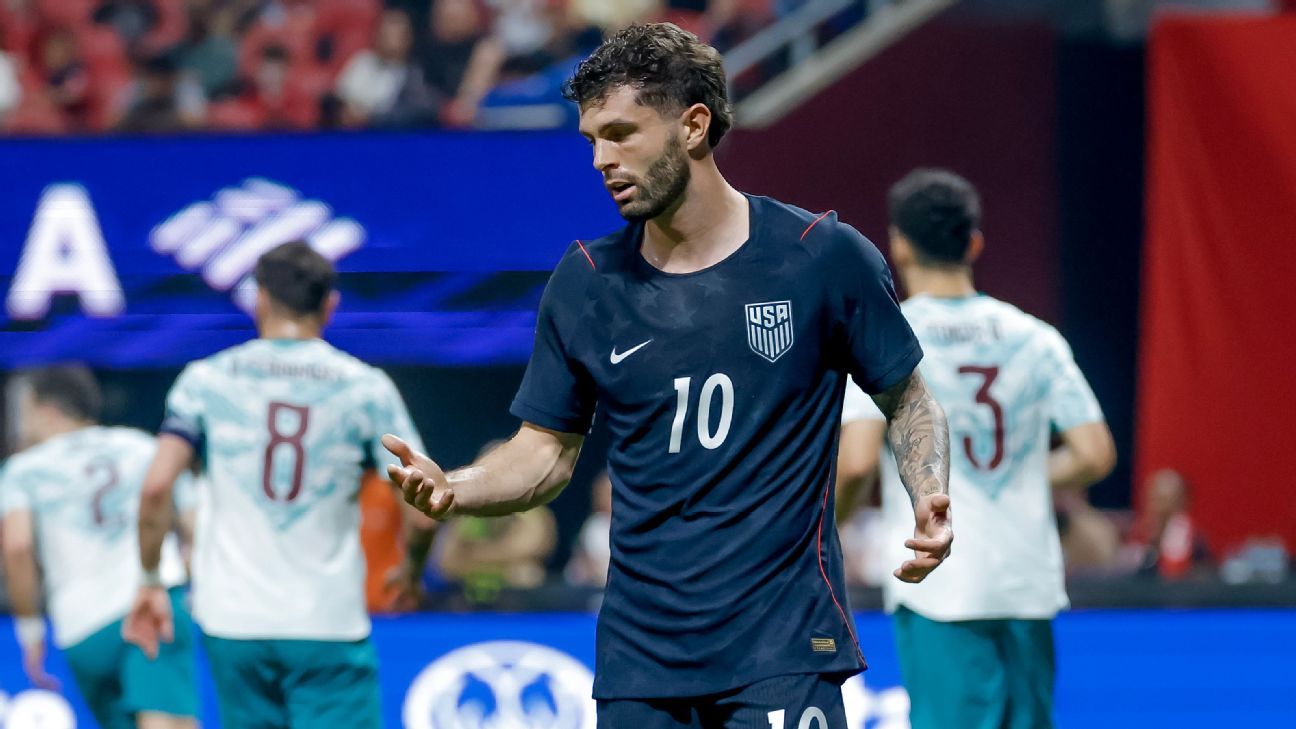
ATLANTA — The United States men's national team suffered a 2-0 defeat to Portugal on Tuesday night at Mercedes-Benz Stadium, extending a tough March international window that included a combined 7-2 loss tally against two European powerhouses. The match highlighted ongoing concerns about star forward Christian Pulisic's scoring drought, now stretching to eight consecutive national team appearances without a goal, his longest such streak in his career.
Head coach Mauricio Pochettino had hinted at tactical adjustments prior to the game to boost Pulisic's confidence and get him closer to the net. "Maybe we help a little bit to [get him] a little bit more closer to the goal," Pochettino said on Monday, speaking literally about positioning the AC Milan attacker as a center forward alongside familiar teammates Weston McKennie and Tim Weah.
Pulisic started up top and was heavily involved early, receiving more passes than any other U.S. attacker in the first half and engaging in seven ground duels, the most on the team. However, he won just one of those duels and, despite forcing a couple of saves from Portugal goalkeeper José Sá, finished the night scoreless. His frustration boiled over with a couple of fouls leading to a yellow card before halftime, after which he was substituted at the break.
"We were able to create chances, which if I finish chances, which I know I'm going to, then things are going to be a bit different," Pulisic reflected post-match, acknowledging the opportunities but lamenting his inability to convert them.
The first half showcased a competitive U.S. side, outshooting Portugal 8-3 and generating 0.45 expected goals (xG) to the visitors' 0.26, with more touches inside the penalty area. Yet, a 37th-minute turnover by McKennie sparked Portugal's opener, as Vitinha, Bruno Fernandes, and Francisco Trincão combined for the goal, underscoring defensive lapses that have plagued the Americans.
Neither squad fielded its full first-choice lineup, with several U.S. players sidelined by minor injuries. Substitutions in the second half exposed the talent gap, as Portugal coach Roberto Martinez introduced high-caliber reinforcements like Nuno Mendes of Paris Saint-Germain, Matheus Nunes of Manchester City, João Félix of Al Nassr, and Francisco Conceição of Juventus.
Mendes, regarded as one of the world's top left backs, immediately pressured U.S. right back Alex Freeman, leading to a corner from which Félix scored Portugal's second goal in the 59th minute, assisted again by Fernandes. At that juncture, the contest was all but decided, allowing Portugal to control possession and showcase their depth.
This loss followed a 5-1 thrashing by Belgium earlier in the week, both matches scheduled as stern tests ahead of the 2026 World Cup, which the U.S. will co-host. Pochettino, in his early days with the team, used the window to evaluate 24 players, many vying for roster spots amid injuries to key starters.
Patrick Agyemang of Derby County emerged as a bright spot against Belgium with a late goal but was subdued versus Portugal. Tanner Tessmann of Lyon and Max Arfsten of Columbus Crew also saw action, providing Pochettino with impressions on fringe players.
Pulisic's form remains the dominant narrative. The 27-year-old has now gone 14 matches without scoring for club and country, his longest drought since 2022. At AC Milan, where he plays a pivotal role, the team sits second in Serie A and will look to him for contributions as they chase the title.
"Physically I feel really good, feel really sharp and I'm doing a lot of good things," Pulisic insisted after the game. "I have to help my team to create assists and score goals and create chances. Obviously when I don't do that it's frustrating, but I feel like I'm close and I feel good things are coming."
Martinez, Portugal's coach, downplayed the significance of March friendlies earlier in the week, calling team assessments at this stage "worthless." His perspective aligns with the experimental nature of the window, where results often take a backseat to player evaluations, though the lopsided scores will undoubtedly shape perceptions heading into summer preparations.
The U.S. faces a challenging Group D in the World Cup, including Türkiye, which analysts like ESPN's Mark Ogden have flagged as the stiffest test. Australia's inclusion, with young talents like Nestory Irankunda, adds unpredictability, but Pulisic's role as a creative force will be crucial for advancing.
Player ratings from the match painted a grim picture for Pulisic, who earned a 3/10 from observers, reflecting his limited impact despite the tactical support. Teammates like McKennie bore some blame for the turnover leading to the first goal, but the collective effort showed promise in possession before fading.
As the U.S. squad disperses, Pochettino will analyze footage from both games to refine strategies. With at least 18 months since Pulisic's last international goal by his next call-up, addressing this slump could define the team's attacking identity. For now, the focus shifts to club duties, with Milan and other European leagues resuming amid the international break.
The broader implications of these defeats loom large in a World Cup cycle where expectations run high for the host nation. While the results sting, they offer valuable lessons in depth and resilience against elite opposition, setting the stage for a pivotal summer of tuning up for the global stage.