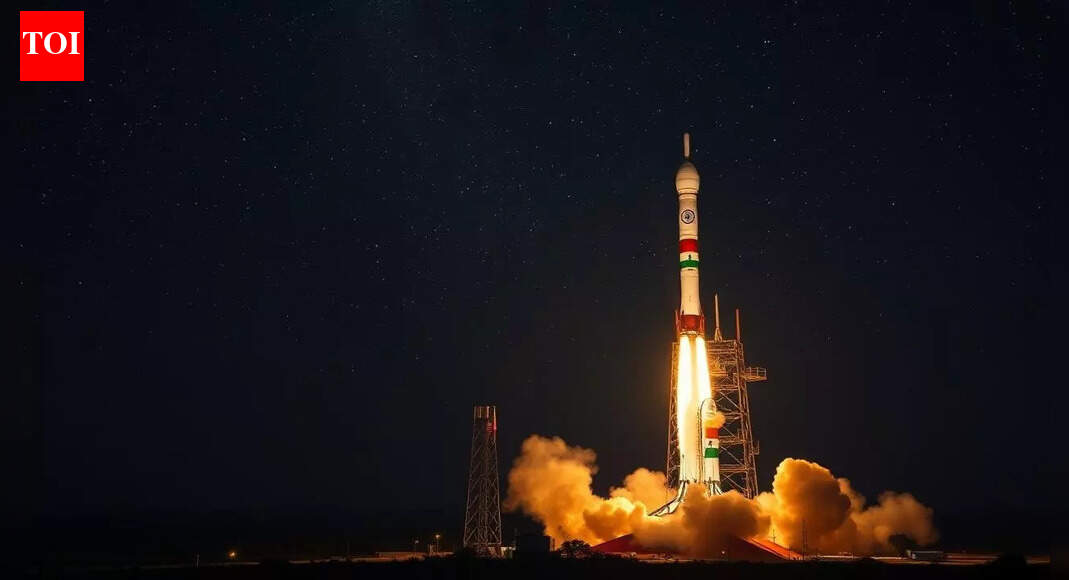
BENGALURU, India — The Satcom Industry Association-India (SIA-India), a key advocacy group for the country's burgeoning satellite communications sector, has urged the government to triple the national space budget as part of a broader push to bolster India's position in the global space economy. Speaking at a recent industry forum in Bengaluru, SIA-India representatives highlighted the need for increased funding to support innovation, infrastructure development, and international competitiveness in space technologies.
The call comes amid India's rapid advancements in space exploration, including the successful Chandrayaan-3 lunar mission in August 2023 and the upcoming Gaganyaan human spaceflight program slated for 2025. According to SIA-India, the current space budget allocation, which stood at approximately 13,000 crore rupees (about $1.55 billion) for the fiscal year 2023-24, falls short of the ambitions outlined in the government's space policy reforms. "We need a threefold increase to at least 39,000 crore rupees to match the scale of investments by leading spacefaring nations like the United States and China," said Anil Bhasin, president of SIA-India, during the association's annual conference on October 15, 2024.
SIA-India's recommendations extend beyond budget hikes. The group is advocating for incentives to promote hybrid manufacturing models, which combine domestic production with international collaborations to reduce costs and accelerate technology transfer. This approach, they argue, would enable Indian firms to integrate global supply chains while building local capabilities. "Hybrid manufacturing can bridge the gap between our indigenous strengths and the sophisticated requirements of satellite deployment," Bhasin added, emphasizing the potential for job creation in sectors like electronics and aerospace engineering.
The push for policy changes is rooted in the evolving landscape of commercial space activities. India's space sector has seen a surge in private participation since the liberalization of the industry in 2020, with startups like Skyroot Aerospace and Agnikul Cosmos launching rockets and satellites. However, industry experts point to regulatory hurdles and insufficient funding as barriers to growth. A report cited by SIA-India estimates that the global space economy could reach $1 trillion by 2040, with satellite communications alone projected to contribute $150 billion annually.
Government officials have acknowledged the industry's pleas but have not committed to specific increases. Union Minister of State for Space Jitendra Singh, in a statement to Parliament last month, noted that the Department of Space's budget has grown by 15% year-over-year, but he stressed the need for fiscal prudence amid competing priorities like defense and infrastructure. "The space program is a national pride, and we are investing strategically," Singh said, without elaborating on future allocations.
SIA-India's advocacy also includes calls for streamlined spectrum allocation for satellite services and tax breaks for research and development in space tech. The association represents over 20 major players in the satcom space, including global giants like Intelsat and Hughes Communications, alongside Indian entities such as Tata Communications and Bharti Airtel. Their members have invested billions in ground infrastructure and satellite capacity to meet rising demand for broadband in remote areas.
Contextually, India's space ambitions are intertwined with its digital inclusion goals. With over 1.4 billion people, many in underserved rural regions, satellite communications offer a vital lifeline for internet access, telemedicine, and disaster management. The recent launch of the GSAT-20 satellite, weighing 4,700 kg and equipped with Ka-band transponders, underscores the technical prowess but also highlights funding gaps. "Without adequate budget support, we risk losing ground to competitors who are pouring resources into reusable launch vehicles and mega-constellations," warned SP Bhat, director general of SIA-India, in an interview with The Appleton Times.
Critics within the industry, however, question the feasibility of a threefold budget jump. Economists at the Observer Research Foundation argue that such an increase would strain public finances, especially with India's GDP growth projected at 6.8% for 2024. "While space is important, it must compete with health and education spending," said one analyst, who requested anonymity due to ongoing policy discussions. SIA-India counters that every rupee invested in space yields multiplier effects, citing NASA's economic impact studies where returns exceed 7:1.
Looking back, the Indian Space Research Organisation (ISRO) has operated on a shoestring budget compared to peers, achieving milestones like the Mars Orbiter Mission in 2014 for just $74 million. Yet, as commercial ventures proliferate, the need for public-private synergy grows. The Indian National Space Promotion and Authorisation Centre (IN-SPACe), established in 2020, aims to facilitate this, but SIA-India seeks more incentives like priority landing rights for private launches at Sriharikota.
International perspectives add another layer. The U.S. Federal Communications Commission recently approved Starlink's operations in India, pending security clearances, intensifying competition. SIA-India warns that without policy boosts, foreign players could dominate the market. "India must foster a level playing field to nurture homegrown champions," Bhasin stated, referencing the success of OneWeb's partnerships with local telecoms.
On the manufacturing front, hybrid incentives could involve subsidies for joint ventures, similar to those in the semiconductor sector under the India Semiconductor Mission. SIA-India proposes a dedicated fund of 5,000 crore rupees to support R&D in satellite payloads and ground stations. This aligns with the Atmanirbhar Bharat initiative, aiming for self-reliance in critical technologies.
As the Union Budget for 2025-26 approaches in February, SIA-India plans to engage lawmakers through white papers and stakeholder meetings. The association's efforts echo broader calls from the Confederation of Indian Industry, which estimates the space sector could generate 100,000 jobs by 2030 with supportive policies.
The implications of these recommendations are far-reaching. A robust space budget could propel India toward its vision of becoming a top-three global space power by 2030, enhancing national security through indigenous navigation systems like NavIC and fostering innovation in AI-driven satellite analytics. However, implementation will depend on balancing economic realities with strategic imperatives.
For now, SIA-India's voice adds to the chorus of optimism surrounding India's space journey. From the humid launch pads of Sriharikota to the boardrooms of Bengaluru, stakeholders await decisive action. As Bhasin put it, "The stars are within reach, but we need the fuel to get there."
In related developments, ISRO announced on October 20, 2024, the successful testing of a semi-cryogenic engine, a step toward heavier lift capabilities that could benefit commercial satcom launches.