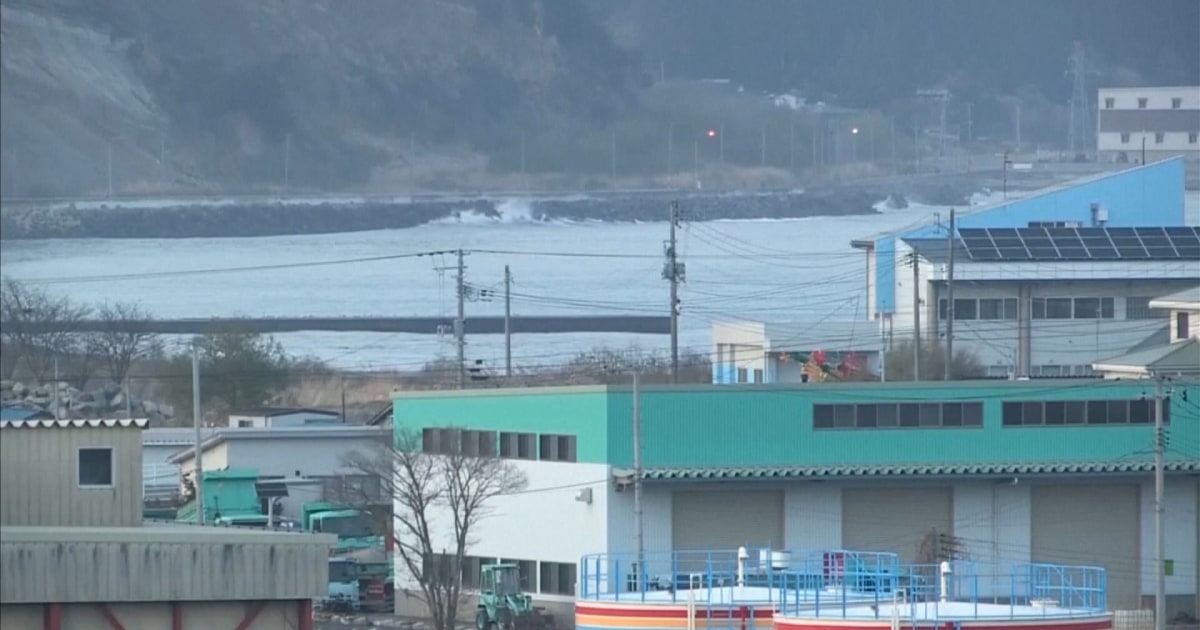
OFUNATO, Japan — Sirens pierced the air in the coastal town of Ofunato on Thursday as a powerful 7.7-magnitude earthquake struck off Japan's northeastern coast, prompting authorities to issue a tsunami warning for the region. The quake, which rattled the area around 2:30 p.m. local time, sent residents scrambling for higher ground amid fears of incoming waves. According to the Japan Meteorological Agency, the epicenter was located approximately 60 miles east of Ofunato in the Pacific Ocean, at a depth of about 20 miles, making it a shallow event capable of generating significant seismic activity.
Emergency sirens blared throughout Ofunato and neighboring communities, accompanied by loudspeaker announcements urging people to evacuate coastal areas immediately. Witnesses in the town described the sudden shaking as intense, with buildings swaying and shelves toppling in homes and stores. "It felt like the ground was ripping apart," said one local resident, Hiroshi Tanaka, who was at a market when the quake hit. "The alarms started right away, and everyone just ran."
The tsunami warning, issued minutes after the initial tremors, covered a wide swath of Japan's Pacific coastline, from Iwate Prefecture southward to Fukushima. Officials from the Japan Meteorological Agency reported that waves of up to 3 meters (about 10 feet) could reach shorelines within hours, though initial assessments suggested the threat might be less severe than in past disasters. "We are monitoring the situation closely and advise all residents to follow evacuation orders," stated agency spokesperson Yuko Sato in a televised briefing.
This earthquake comes at a time when Japan, situated on the volatile Ring of the Fire, continues to grapple with its seismic vulnerabilities. The country experiences thousands of quakes annually, but events of this magnitude are rarer and often trigger widespread alerts. The 7.7 reading places it among the stronger tremors recorded in recent years, comparable to the 7.3 quake that struck off Fukushima in 2022, which caused minor damage but no major tsunami.
In Ofunato, a fishing port town with a population of around 35,000, the immediate response focused on orderly evacuations to designated shelters on higher ground. Local government officials reported no immediate casualties from the quake itself, but power outages affected parts of the town, complicating communications. "Our priority is safety; we've activated all emergency protocols," said Ofunato Mayor Kenji Kikuchi, who urged calm amid the chaos.
Broader context reveals Japan's ongoing efforts to bolster tsunami defenses following the devastating 2011 Tohoku earthquake and tsunami, which claimed over 15,000 lives and led to the Fukushima nuclear disaster. Since then, seawalls have been reinforced along vulnerable coasts, including in Iwate Prefecture where Ofunato is located. Engineers from the Ministry of Land, Infrastructure, Transport and Tourism noted that recent upgrades, including higher barriers and early warning systems, have improved preparedness. "These measures have saved lives in previous events," said expert Dr. Akira Nakamura from Tokyo University, emphasizing the role of technology in mitigating risks.
However, not all perspectives align on the effectiveness of current infrastructure. Some environmental groups have criticized the heavy reliance on concrete barriers, arguing they disrupt marine ecosystems. "While seawalls provide protection, we need a balanced approach that considers long-term ecological impacts," said representative Mika Hayashi of the Japan Coastal Conservation Network. Officials counter that such structures are essential given the frequency of threats, with the government investing over $30 billion in post-2011 fortifications.
As the day progressed, aftershocks continued to jolt the region, with magnitudes reaching up to 5.5, according to the U.S. Geological Survey, which corroborated the initial 7.7 reading. These secondary quakes heightened anxiety among evacuees huddled in schools and community centers. Reports from nearby Miyagi Prefecture indicated similar disruptions, with trains halted and highways closed for inspections. "The shaking hasn't stopped; it's terrifying," recounted a teacher from a local elementary school, who helped shepherd students to safety.
International attention quickly turned to Japan, with allies like the United States offering assistance through its network of bases in the region. The U.S. Embassy in Tokyo issued advisories for American citizens to heed local warnings, while the Pacific Tsunami Warning Center in Hawaii monitored for any trans-Pacific effects. Fortunately, no distant tsunamis were anticipated, but the event underscored the global interconnectedness of seismic risks in the Pacific basin.
Economically, the quake's timing during peak fishing season could impact Ofunato's vital industry, which supplies much of Japan's seafood. Preliminary assessments from the Fisheries Agency suggested potential damage to ports and vessels, though full surveys were pending. "Our boats are tied down, but waves could still cause problems," noted fisherman Taro Yamamoto, who joined the evacuation with his family.
Health officials prepared for possible injuries from falls or debris during the quake, setting up field clinics in safer areas. The Red Cross and other aid organizations mobilized supplies, drawing on experience from past disasters. "We're ready to support however needed," said a spokesperson for the Japanese Red Cross, highlighting the nation's robust disaster response framework.
Looking ahead, seismologists warn that the aftershock sequence could persist for days or weeks, with a heightened risk of further strong quakes. The Japan Meteorological Agency planned to maintain the tsunami advisory until waves subsided, expected by evening. Residents were advised to avoid returning home until officially cleared, a precaution rooted in lessons from 2011 when delayed evacuations proved fatal.
This event also reignites discussions on nuclear safety, given Japan's 33 operational reactors. The quake's proximity to Fukushima prompted inspections at the crippled plant, where officials reported no anomalies. "All systems are stable," assured the Nuclear Regulation Authority, though anti-nuclear activists called for renewed scrutiny. "Events like this remind us why we must phase out atomic power," said protester group leader Naomi Ikeda.
In the broader scope, Japan's government faces the challenge of balancing rapid recovery with prevention investments. Prime Minister Fumio Kishida, addressing the nation, pledged full support to affected areas. "We stand together in times of crisis," he said, echoing sentiments from past leaders. Aid packages, including temporary housing and financial assistance, were announced to aid rebuilding efforts.
As night fell over Ofunato, the sirens had quieted, but the tension lingered. With the tsunami threat receding—waves peaked at under a meter, per agency updates—the focus shifted to assessing damage and reassuring a shaken populace. This quake, while not catastrophic, serves as a stark reminder of nature's power in one of the world's most earthquake-prone nations, prompting renewed calls for resilience and preparedness.