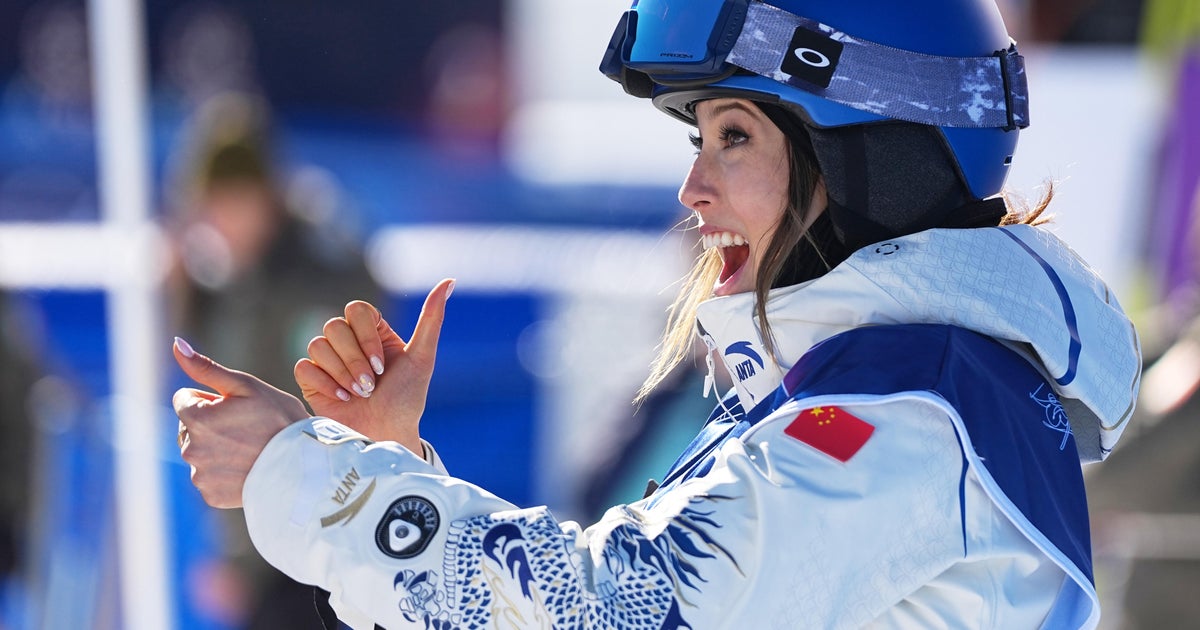
In the crisp air of the Italian Alps, Eileen Gu turned heads not just with her daring ski tricks but with a ski suit that blended cultural heritage, personal flair, and high-tech whimsy during the Milano Cortina 2026 Winter Olympics. The 22-year-old freestyle skier, competing for China despite her American birth, qualified for the women's slopestyle final on Saturday in Livigno, a remote venue hours from the host cities of Milan and Cortina d'Ampezzo. Gu's outfit, designed in collaboration with a fellow Stanford student and sponsored by Chinese sportswear brand Anta, featured intricate details that paid homage to her roots and her journey in the sport.
Gu, who burst onto the global stage at the 2022 Beijing Winter Olympics where she secured two gold medals and a silver in freeski events, has long been known for her dual life as an elite athlete and a fashion model. She has graced runways and magazine covers, making her eye-catching attire at these games a natural extension of her persona. After completing her qualifying runs, Gu eagerly shared the inspirations behind her ensemble, starting with an enthusiastic declaration: "Oh my gosh, I've been waiting for this moment, fit check!"
The suit's bone white base, reminiscent of traditional Chinese ceramics—playfully referred to as "China"—served as a canvas for blue graphics and subtle golden accents. A fierce Chinese-style dragon motif adorned the sleeve, positioned below another dragon patch and a bold logo bearing her name. Nearby, her name appeared in graffiti-like scrawled lettering under a flap, concealed by a white bib that maintained the suit's sleek aesthetic. Gu explained the dragon's significance, tying it to her past triumphs: "Of course, I had to bring in the dragon element, which was relevant at the last Olympics as well. It brought me strength, it brought me courage, it served me well, so I wanted to keep that."
Beyond the cultural nods, the suit incorporated playful and personal elements that reflected Gu's multifaceted personality. A standout feature was a built-in thermometer that shifts colors with temperature changes, evoking childhood memories. "I was obsessed with mood rings when I was little," Gu said. "Like, you know, you put them on and they change color with temperature. And so it's a color-changing thermometer." This quirky addition highlighted her blend of whimsy and innovation, fitting for a skier who entered Stanford University a year early after excelling on the SAT.
Adding to the suit's nerdy charm was a tiny compass embedded in the design, catering to Gu's intellectual side. "I just wanted a little modular element for my little nerd brain to nerd out on," she noted. "But in case you get lost, I can tell you which way is north." These details underscored the suit's personalization, making it more than functional gear—it was a statement of identity for an athlete navigating complex national affiliations and global fame.
The suit also evoked the essence of freeskiing itself, with cloud patterns on the lower sections symbolizing the sensation of flight. Pointing to this feature, Gu remarked: "I have clouds down here to represent the feeling of flying, which I love so much about freeskiing." This artistic touch connected directly to the sport's demands, where skiers like Gu perform acrobatic maneuvers over rails and jumps, judged on execution, difficulty, and creativity.
Gu's path to the final was not without challenge. As the reigning silver medalist in slopestyle from Beijing, she faced intense pressure after a fall on the first rail during her opening run, which derailed her start. Undeterred, she delivered a strong second run, scoring enough to advance and finish just behind her top rival. The qualification round saw the top 12 skiers progress, including Britain's Kirsty Muir, who posted the third-best score, American Avery Krumme in fourth, and Italy's Maria Gasslitter, who rounded out the field and delighted the home crowd.
Slopestyle, a highlight of the freeskiing discipline, involves navigating a course of rails, jumps, and features while executing tricks that showcase amplitude, style, and technical precision. The event in Livigno, nestled in the Lombardy region of the Italian Alps, provided a picturesque yet demanding backdrop, with its high elevation and variable snow conditions testing competitors' adaptability. Organizers chose the site for its world-class terrain parks, though its distance from the main Olympic hubs—about a four-hour drive from Milan—meant athletes and fans relied on shuttles and helicopters for access.
Gu's decision to represent China, where her mother hails from, has been a point of discussion since her Beijing success, where she became a national hero amid geopolitical tensions. Born in San Francisco to a Chinese immigrant mother and an American father, Gu switched allegiances in 2019, citing opportunities in China and a desire to honor her heritage. Her Beijing medals—gold in big air and halfpipe, silver in slopestyle—propelled her to stardom, but also drew scrutiny from some in the U.S. sports community. At Milano Cortina, she continues to bridge worlds, with her suit serving as a visual manifesto of that duality.
The collaboration on the suit with a Stanford peer highlights Gu's academic pursuits amid her athletic career. Enrolled in human biology at the prestigious California university, she balances rigorous coursework with training regimens that span continents. Anta, her sponsor since 2020, has invested heavily in her image, blending sport and style to appeal to younger audiences in China and beyond. The company's role in outfitting her for these Olympics underscores the growing commercialization of Olympic attire, where functionality meets fashion.
While Gu's qualification steals the spotlight, the broader women's slopestyle field reflects the event's international flavor. Muir, 20, from Scotland, has been a rising star since her debut in Beijing, where she competed in multiple events. Krumme, an American making her Olympic mark, represents the next generation of U.S. freeskiers following veterans like Gus Kenworthy. Gasslitter's inclusion adds a local boost; the Italian skier, training in the Dolomites, benefits from the proximity and passionate support in Livigno.
The Milano Cortina Games, the first Winter Olympics in Italy since 2006 in Turin, emphasize sustainability and regional integration, with events spread across northern Italy to showcase its alpine heritage. Freeski and snowboarding competitions in Livigno align with this vision, drawing on the area's legacy as a training hub for Olympians. Weather forecasts for the finals predict clear skies but sub-zero temperatures, potentially influencing strategies as skiers like Gu fine-tune their runs.
Looking ahead, the women's slopestyle final promises high-stakes action, with Gu positioned as a favorite despite her qualifying hiccup. Her ability to rebound from the early fall demonstrates the mental fortitude that has defined her career. As she prepares, the focus remains on the tricks—360s, switches, and grabs—that will decide the medals. Men's qualifying follows later Saturday, setting the stage for more aerial drama in the Alps.
Gu's story extends beyond the slopes; her influence in fashion and social media amplifies the Olympics' reach. With millions of followers, she uses platforms to promote inclusivity and perseverance, themes echoed in her suit's design. As the games progress, her performance could further cement her as a transcendent figure in winter sports, blending athletic prowess with cultural storytelling.
In a sport where innovation drives progress, Gu's personalized gear symbolizes the evolving face of the Olympics—more diverse, more expressive, and deeply personal. Whether the dragon brings her luck again remains to be seen, but her qualification ensures she'll have another chance to soar, both literally and figuratively, under the Italian sun.