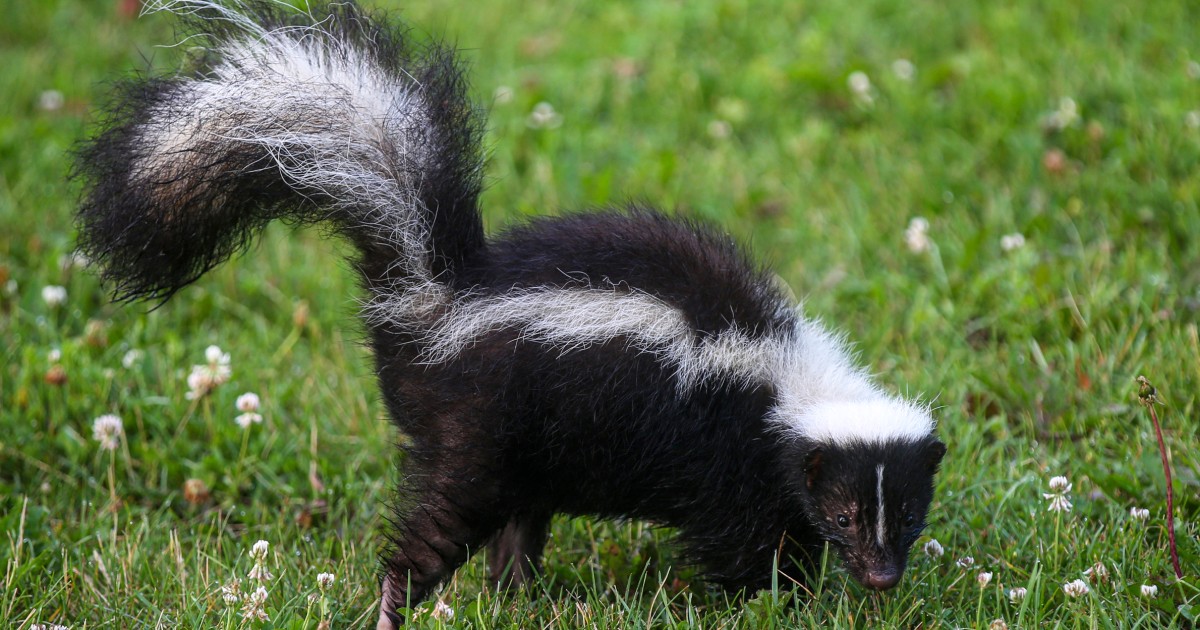
BOISE, Idaho — A seemingly minor encounter with a skunk on a rural Idaho property has triggered a tragic and extraordinarily rare chain of events, resulting in the deaths of two men from rabies — one the original victim and the other a kidney transplant recipient in Michigan, according to federal health officials.
The Centers for Disease Control and Prevention detailed the incident in a report released last week, describing it as the fourth known case of transplant-transmitted rabies in the United States since 1978. The sequence began in late October 2024, when an Idaho man, whose identity has not been publicly released, was scratched by a skunk while holding a kitten in an outbuilding on his rural property.
Investigators believe the skunk was rabid, infected earlier by a silver-haired bat, a species known to carry the virus. "Investigation suggested a likely three-step transmission chain in which a rabid silver-haired bat infected a skunk, which infected the donor and led to infection of the kidney recipient," the CDC stated in its report.
About six weeks after the scratch, the Idaho man began exhibiting severe symptoms, including confusion, difficulty swallowing and walking, and hallucinations. He died shortly thereafter, in early December 2024. Unbeknownst to medical teams at the time, his death was caused by rabies, a viral disease that is almost always fatal once symptoms appear.
Following his death, the man's organs were harvested for donation. In mid-December 2024, a 57-year-old man from Michigan received a left kidney transplant from the Idaho donor at a hospital in Ohio. The recipient, who has not been named, appeared to recover initially but died approximately six weeks later, in late January 2025.
Post-mortem testing confirmed the presence of the rabies virus in the Michigan man's saliva, nuchal skin, and brain tissue samples, according to the CDC. This marked the deadly transmission through the donated organ, an event so uncommon that it prompted a nationwide alert among transplant centers and public health agencies.
The revelation came to light through new interviews with the Idaho donor's family, which uncovered details not captured in the initial Donor Risk Assessment Interview (DRAI) questionnaire. Family members recounted how the skunk approached the man as he cradled the kitten, leading to the scratch that initiated the infection. "New interviews with the Idaho donor's family revealed 'details not included in the DRAI questionnaire,'" the CDC report noted, highlighting the importance of thorough post-donation inquiries.
In addition to the kidney, the donor's corneas were harvested and transplanted to three patients — one each in California, Idaho, and New Mexico — between late December 2024 and early January 2025. As the investigation unfolded, these recipients underwent precautionary removal of the corneal grafts to mitigate any risk of infection. A fourth corneal graft, intended for a patient in Missouri, was ultimately canceled.
Officials reported that all three cornea recipients remained asymptomatic as of the latest updates, with no signs of rabies infection. The CDC emphasized that while the risk was low, swift action prevented potential further spread.
Rabies, caused by the lyssavirus, is typically transmitted through the bite of an infected animal, though scratches from rabid creatures can also convey the virus if saliva is involved. In the United States, bats are the most common source of human rabies cases, accounting for the majority of the roughly one to three infections reported annually. Skunks, along with raccoons and foxes, are also significant wildlife carriers, particularly in rural areas like the Idaho countryside where the incident occurred.
This case underscores the challenges in screening organ donors for rabies, a disease that can have an incubation period of weeks to months, often without early symptoms. The CDC's report points out that standard donor questionnaires may miss subtle exposures, especially in rural settings where wildlife interactions are common. "The man died about six weeks later after he became 'confused, had difficulty swallowing and walking' and 'experienced hallucinations,'" the agency detailed, illustrating the rapid progression once the virus reaches the central nervous system.
Public health experts have long warned about the rarity but severity of transplant-transmitted infections. The previous three U.S. cases since 1978 involved organs or tissues from donors exposed to bats, including a 1990s incident where corneas from a rabid donor led to infections in recipients. In each instance, heightened awareness led to improved protocols, such as enhanced questioning about animal exposures and rapid testing capabilities.
Dr. Susan Gerber, a medical epidemiologist with the CDC, was quoted in related coverage emphasizing the need for vigilance. While not directly from the report, experts like Gerber have previously stated in similar contexts that "rabies is preventable with prompt post-exposure prophylaxis, but once symptomatic, it's nearly 100 percent fatal." This case, officials say, will likely inform updates to organ donation guidelines.
The Michigan recipient's family has not issued public statements, but the incident has drawn attention to the risks and rewards of organ transplantation. Each year, more than 40,000 transplants occur in the U.S., saving countless lives, yet events like this highlight the unseen dangers. The United Network for Organ Sharing (UNOS), which oversees the national transplant system, confirmed that no other organs from the Idaho donor were transplanted beyond the kidney and corneas.
In Idaho, where skunk rabies has been documented in recent years, state wildlife officials are ramping up surveillance. The Idaho Department of Fish and Game reported several rabid skunks in the region during 2024, though specific locations near the donor's property were not disclosed to protect privacy. "A skunk approached the donor as he held a kitten in an outbuilding on his rural property," the CDC recounted, painting a picture of an ordinary moment turned deadly.
Broadly, this tragedy serves as a stark reminder of rabies' persistence in wildlife populations despite vaccination efforts for domestic animals. The World Health Organization estimates that rabies causes 59,000 human deaths globally each year, mostly in areas with limited access to vaccines. In the U.S., human cases are rare due to widespread animal vaccination and post-exposure treatments, but wildlife remains a reservoir.
Looking ahead, the CDC plans to incorporate lessons from this case into training for transplant professionals. Officials are also reaching out to contacts of both deceased men to ensure no secondary exposures occurred. As of now, no additional infections have been linked to the incident.
The story of the Idaho skunk scratch reverberates beyond the two lives lost, prompting a reevaluation of how we balance the urgency of organ donation with the need for exhaustive health histories. In a nation where waiting lists for transplants stretch into the thousands, such events, though infrequent, carry profound implications for policy and public awareness.
Federal investigators continue to monitor the situation, with the CDC report serving as a call to action for anyone experiencing potential animal exposures to seek immediate medical advice. Rabies, preventable yet unforgiving, claims victims in the most unexpected ways, as this cross-country saga illustrates.