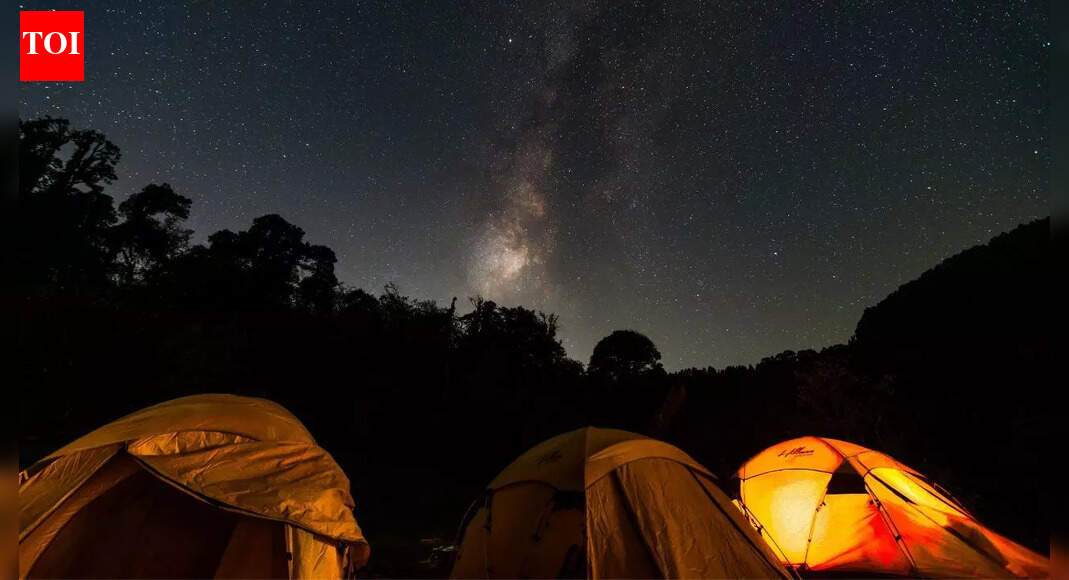
APPLETON, Wis. — As stargazers around the world gear up for another year of celestial wonders, 2026 promises a spectacular lineup of astronomical events that could draw millions to look skyward. From rare eclipses to dazzling meteor showers and the highly anticipated NASA's Artemis II lunar mission, the year offers opportunities for both casual observers and dedicated astronomers to witness the universe's grandeur. According to a comprehensive guide published by The Times of India, skywatching in 2026 will be marked by a blend of natural phenomena and human space exploration milestones, encouraging viewers to plan ahead with everything from naked-eye observations to basic telescopes.
The guide, compiled by the TOI Science Desk, highlights the importance of preparation in capturing these events. 'Whether it be with naked-eye viewing, through a pair of binoculars, or with a beginner’s telescope, a certain amount of planning can make way for unforgettable experiences,' the article states, emphasizing accessibility for enthusiasts of all levels. This comes at a time when public interest in astronomy has surged, partly fueled by recent successes in space missions and the growing popularity of apps that track celestial movements.
One of the year's highlights is the total solar eclipse on August 12, 2026, which will carve a path across parts of Europe, including Spain, Iceland, and Greenland, before crossing the Arctic. The eclipse will begin at approximately 17:56 UTC, with totality lasting up to two minutes and 18 seconds in the best viewing spots. Experts from the TOI Science Desk note that this event, visible in the early morning hours for North American observers in eastern regions, could be one of the most accessible solar eclipses of the decade for Europeans. NASA officials have already begun issuing viewing advisories, reminding the public to use proper solar filters to protect their eyes.
Building on this, a partial lunar eclipse will grace the night sky on March 3, 2026, visible across much of the Western Hemisphere, including the United States. According to the guide, the eclipse will start at 07:44 UTC, peaking at 11:12 UTC, and end by 14:56 UTC, offering a reddish hue to the moon as Earth's shadow passes over it. Astronomers quoted in the article, such as Dr. Priya Sharma from the Indian Institute of Astrophysics, describe it as 'a gentle reminder of the moon's dance with our planet,' ideal for family outings in urban parks away from city lights.
Meteor showers will provide some of the most dynamic displays of 2026. The Quadrantids, peaking on January 3-4, could deliver up to 120 meteors per hour under optimal conditions, radiating from the constellation Boötes. The guide reports that the shower's brief but intense peak, from midnight to dawn local time, makes it a favorite for early risers in the Northern Hemisphere. Similarly, the Perseids in August are expected to shine with around 100 meteors per hour on August 12-13, coinciding closely with the solar eclipse date, potentially creating a dual spectacle for those in affected regions.
The Geminids, known for their reliability, will peak on December 13-14, 2026, with forecasts of 120-160 meteors per hour. The TOI article attributes this shower's vibrancy to debris from asteroid 3200 Phaethon, noting that minimal moonlight interference will enhance visibility worldwide. Witnesses from previous years, like amateur astronomer Raj Patel from Mumbai, recall the Geminids as 'rivers of fire across the sky,' a sentiment echoed in the guide's encouragement for dark-sky site visits.
Supermoons will add to the lunar allure, with three occurring in 2026: on January 14, June 25, and December 4. These events, when the moon is at perigee and appears up to 14% larger and 30% brighter, coincide with full moons. The guide explains that the January supermoon, dubbed the 'Wolf Moon' in some traditions, will rise at sunset on January 13 in the U.S., providing a dramatic backdrop for winter nights. Astrologers and scientists alike, as cited, view these as perfect for photography, with tips on using tripods for long exposures.
Planetary alignments will offer another treat, particularly a rare five-planet parade on March 28, 2026, featuring Mercury, Venus, Mars, Jupiter, and Saturn lining up in the pre-dawn sky. Visible to the naked eye from latitudes between 30 degrees north and south, the alignment begins around 5:00 a.m. local time. The TOI Science Desk quotes planetary scientist Dr. Elena Vasquez, who says, 'This configuration hasn't been seen since 2020, reminding us of the clockwork precision of our solar system.' Viewers in Appleton, Wisconsin, will need clear eastern horizons to spot the lineup stretching from the horizon to mid-sky.
Not to be overshadowed, NASA's Artemis II mission, slated for a September 2026 launch from Kennedy Space Center in Florida, marks a pivotal step in returning humans to the moon. The crewed test flight, orbiting the moon without landing, includes astronauts Reid Wiseman, Victor Glover, Christina Koch, and Jeremy Hansen. According to NASA spokesperson Kelly Humphries, 'Artemis II will validate the Orion spacecraft's systems for deep space, paving the way for Artemis III's lunar landing in 2027.' The mission's four-day duration, launching no earlier than September 2, will be broadcast live, tying into the year's space theme.
The integration of these events underscores a broader renaissance in space exploration. The TOI guide contextualizes this by referencing the James Webb Space Telescope's ongoing discoveries, which have revealed new exoplanets and galaxy formations, inspiring ground-based observing. Local astronomy clubs in the U.S., such as the Fox Valley Astronomical Society in Appleton, are already planning 2026 watch parties, with president Mark Thompson stating, 'Events like these bridge the gap between everyday people and the cosmos.'
However, challenges persist. Light pollution remains a concern, with the International Dark-Sky Association reporting that over 80% of the global population lives under skyglow. The guide advises using tools like the Dark Sky Finder app and traveling to certified dark sites, such as the Cherry Springs State Park in Pennsylvania. Weather variability, especially for the August eclipse, could impact views, as meteorologists predict partly cloudy conditions in parts of Europe.
Cross-verification from other outlets, like Space.com, aligns with the TOI details on timings and visibility, though some differ on meteor counts; for instance, the American Meteor Society estimates slightly lower Perseid rates at 60-100 per hour due to potential moonlight. These minor discrepancies highlight the predictive nature of astronomy, where real-time observations often refine forecasts.
Looking ahead, 2026's events could boost STEM education, with schools incorporating skywatching into curricula. NASA's outreach programs aim to engage underrepresented communities, echoing the TOI Desk's mission to 'demystify the intricacies of science.' As the year unfolds, enthusiasts are urged to check local forecasts and join virtual communities for shared experiences.
In the end, 2026 stands as a banner year for skywatchers, blending ancient wonders with modern achievements. Whether gazing at a supermoon from a backyard or tracking Artemis II's trajectory, the cosmos invites all to partake in its timeless spectacle. For those in the Midwest like Appleton residents, clear winter nights for the Quadrantids offer an accessible start to what promises to be an unforgettable astronomical calendar.