The Dutch Eredivisie match between NAC Breda and Fortuna Sittard on April 12 turned shocking when former Tottenham Hotspur and Germany midfielder Lewis Holtby suffered a deep gash on his left shin, ending his season and igniting a heated debate over the shrinking size of soccer shin guards. Holtby, 35, rolled in agony after a challenge from an opposition defender, his wound so severe that it required immediate medical attention and sidelined him for the remainder of the campaign. The incident, captured in graphic detail on social media by ESPN Deportes, has spotlighted a growing trend among professional players to favor tiny, lightweight shin pads—sometimes no larger than a cellphone—over traditional, more protective models.
Coaches and teammates at Breda quickly pointed fingers at Holtby's choice of protection. "I think it's ridiculous that the referee [Jeroen Manschot] says something about it," Breda coach Carl Hoefkens said after the game. "In the tunnel, it was said [by Manschot] that Holtby should just wear shin guards, or better shin guards. The officials also check the shin guards before the match, so it's their responsibility as well." Defender Denis Odoi echoed the sentiment, commenting on Holtby's "small shin guards" and adding, "You're never too old to learn," when asked if players might return to wearing "normal" shin guards.
ESPN NL analyst and former Ajax and PSV Eindhoven winger Kenneth Perez was even more outspoken in his criticism. "They [players] are now wearing those tiny things, or basically toilet paper, just to have something there," Perez said. "I have absolutely no sympathy for injuries that result from that. As a club, you can simply say: We require our players to wear proper shin guards." Perez's remarks highlight a generational divide in the sport, where younger athletes prioritize speed and comfort over bulkier protection that older players swear by.
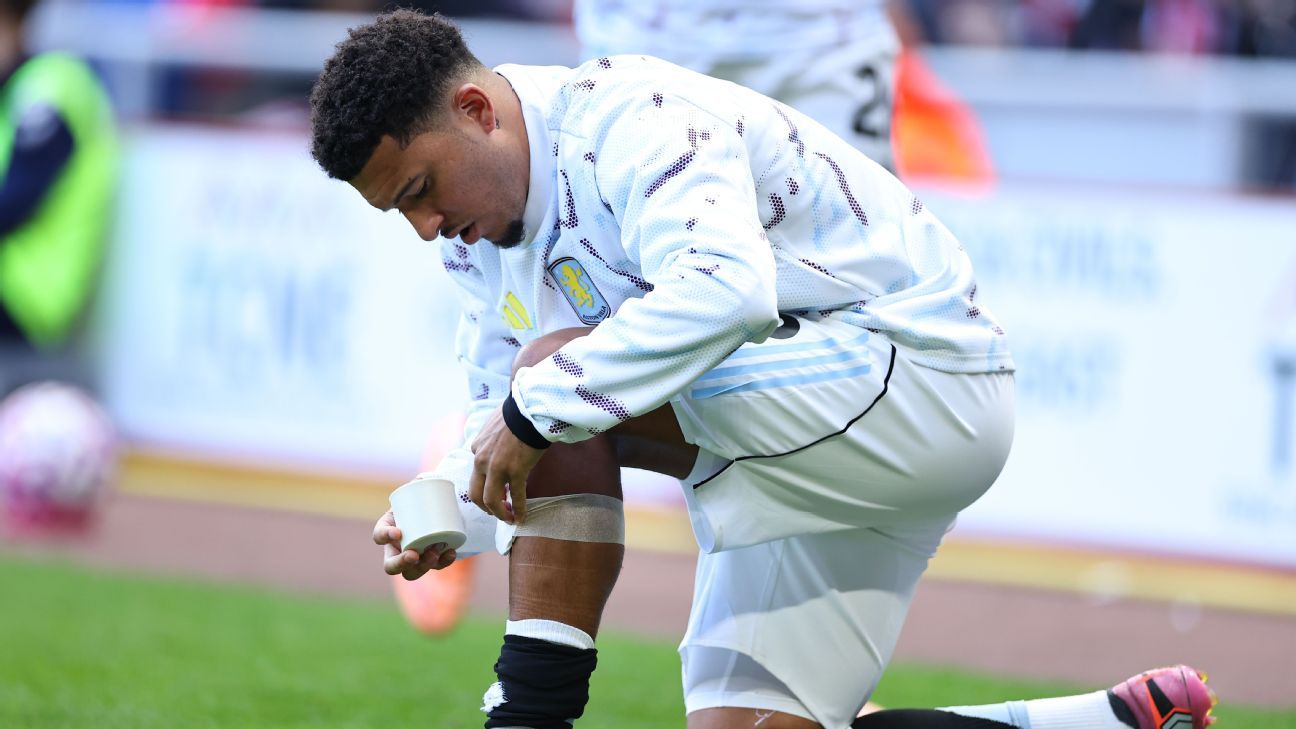
Across Europe's top leagues, the trend is evident. In the Premier League, Everton's Jack Grealish and Southampton's Tyler Dibling often roll their socks down to their ankles, revealing minuscule shin guards underneath. Burnley's Marcus Edwards was spotted in February during a match against West Ham with pads half the size of a cellphone. Arsenal's Bukayo Saka has openly endorsed the smaller variety, stating this season, "I'm a fan of them; I don't like big shin pads."
Not all players share Saka's preference. Liverpool's Virgil van Dijk advocates for caution, warning, "If you get kicked on your shin and your shin pad is that size of an AirPod, then obviously that's a big problem." Brighton forward Danny Welbeck faces teasing from his younger teammates for his larger, old-school guards. "They say to me 'Your shinnies are massive,' but you need a bit more safety, you know?" Welbeck said. Fulham's Alex Iwobi, however, aligns with the modern approach, explaining, "I just don't like having something heavy on my shin."
The debate has even permeated casual discussions among former stars. On his podcast, "That Peter Crouch Podcast," ex-England and Liverpool forward Peter Crouch champions the cause under the banner "Make Shin Pads Great Again." Fulham midfielder Harry Wilson revealed this season that some teammates improvise by "cut[ting] up the sponge you get from the physio and us[ing] that." Such anecdotes underscore how players are increasingly treating shin guards as an afterthought, opting for foam scraps or fabric sleeves over rigid shells.
This shift traces back to evolving game dynamics and rule changes. Soccer has become less physical, with fewer aggressive tackles, allowing players to shed weight for better sprinting. A pivotal moment came in July 2024, when the International Football Association Board (IFAB) amended Law 4 of the game's rules. Previously, referees bore the responsibility for ensuring adequate shin protection; now, it's squarely on the players. The law requires only that guards be "covered entirely by the socks, are made of suitable material (rubber, plastic or similar substances) and provide a reasonable degree of protection," with no minimum size specified.
David Elleray, IFAB's technical director and a former Premier League referee, explained the rationale to ESPN. "The reason we changed the Law was because it is impossible to legislate and say a shin pad must be a certain size," Elleray said. "So two years ago, we put the responsibility on the players that they should wear something which they believe protects them." He noted legal pressures played a role: referees faced lawsuits if injured players claimed inadequate checks. "The challenge we had was partly legal. If we left the responsibility with the referees and the referees said, 'Okay, that shin guard is okay,' then the player got injured, the player might decide to take action."
Yet Elleray admitted the change hasn't fostered responsibility. "We [IFAB] had hoped, or expected, that they would take a responsible attitude to it, but there was one recently [Marcus Edwards] that was almost like a sticking plaster," he said. "The pressure needs to go on the individual players, the coaches and the clubs to make sure their players are protected because it's impossible to legislate for." Pierluigi Collina, former top referee and now chair of FIFA's referees' committee, urged mindfulness. "At the end of the day, the shin pad rule is for their own safety," Collina told ESPN. "So they should care of what is really safe for them."
Sources at the Professional Footballers' Association (PFA) have told ESPN that "primary decisions around safety are taken by players in consultation with their club and medical teams" and that players ultimately "feel comfortable with different shapes and sizes of shin pads." There is certainly no drive within the game to force players to re-think the protection being offered by their shin pads.
Despite the outcry over Holtby's injury, such severe shin gashes remain rare. Modern soccer sees more muscle tears and ligament damage to ankles and knees than broken bones from impacts. Proponents of small guards argue the game's reduced physicality justifies the change. For instance, Newcastle's Alexander Isak fractured his leg in December after a challenge from Tottenham's Micky van de Ven while wearing small—but not tiny—guards. Experts question whether larger pads would have helped in such cases.
Historically, shin guards were far more substantial. In the early 2000s, the Umbro Armadillo, worn by Michael Owen and Alan Shearer, featured a large plastic shell with ankle protectors. Brazil's Ronaldo donned Nike's bulkier T90 model. Today's preferences lean toward lightweight options, fueling innovations like the Joga shin pads developed by brothers Ethan Chislett of Kaizer Chiefs and Zack Chislett of UAE's Palm City.
The Joga line includes the Shinpad Sleeve, a soft, cellphone-sized pad in a fabric sleeve used by Chelsea's João Pedro, and the Breathe pads worn by Grealish, measuring just 6 centimeters by 10 centimeters (2 inches by 4 inches). "We were the first ones to make a mini shin pad that you could buy," Zack Chislett told ESPN. He and his brother noticed players scavenging physio supplies and filled the gap. "I was playing nonleague at the time, my brother Ethan was playing for AFC Wimbledon, and we noticed that pads were getting smaller and smaller, but there was no-one giving players an option to buy them."
Chislett attributes the demand to training habits and game evolution. "When you're training the whole week without shin pads and you then put the big pad on, sometimes with ankle pads, on a Saturday, it doesn't feel natural like when you're training," he said. "Some players will feel better with the big shin pad, but a lot of the younger, more attacking players don't feel that way and they don't want to feel as restricted when they go on the pitch. And the game has changed, 100%. The tackles aren't coming in like they used to, it isn't as aggressive or as physical. I'm 23, and players of my generation just don't want to wear big shin pads—it would be like wearing old, heavy leather boots. It just isn't going to happen."
Veterans like Welbeck and van Dijk find themselves at odds with rising stars such as Saka, Iwobi, Grealish, and João Pedro, who dominate the trend toward minimalism. Holtby's misfortune, while attention-grabbing, may not immediately reverse course. As the World Cup approaches this summer, a high-profile injury linked to inadequate protection could amplify calls for stricter FIFA guidelines. For now, players continue to prioritize freedom of movement and speed, potentially at the cost of their shins.