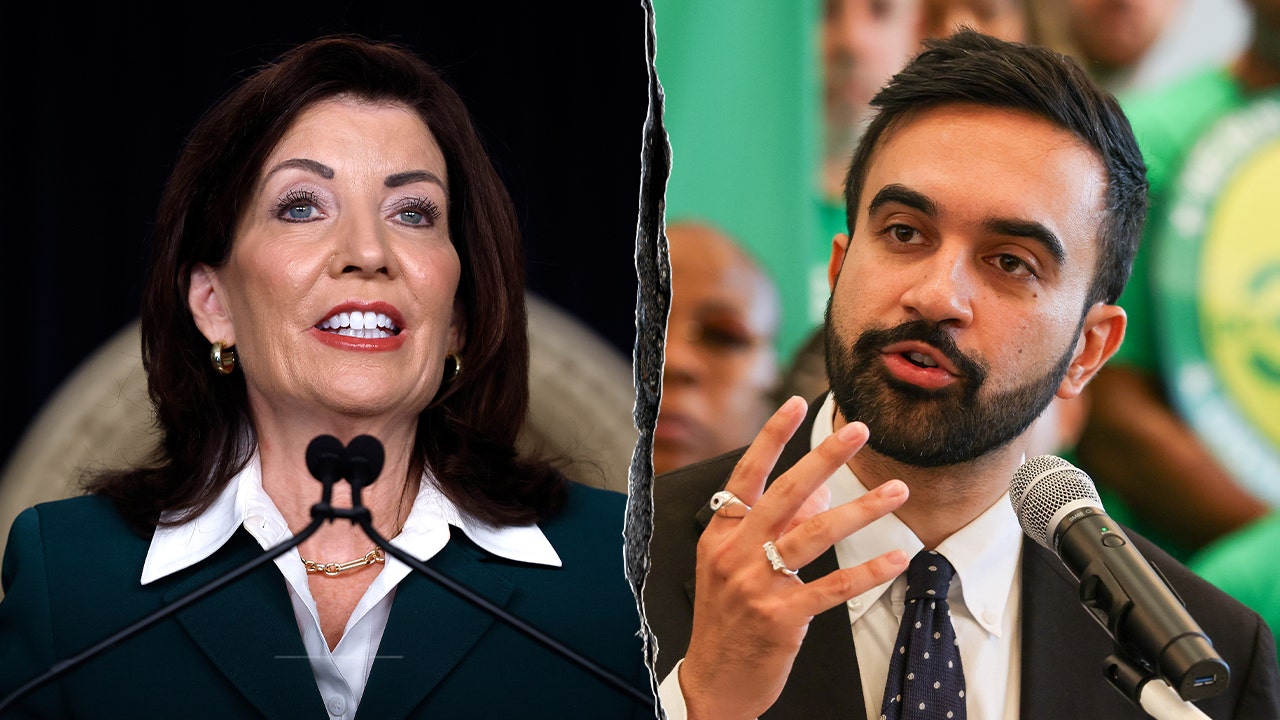
New York City Mayor Zohran Mamdani, a self-described democratic socialist, has reignited a heated debate over tax policy by renewing his push to increase taxes on the wealthy and corporations, a proposal that has drawn sharp opposition from Governor Kathy Hochul. The clash, which unfolded publicly this week, centers on Mamdani's efforts to avert what he describes as a looming fiscal crisis without burdening working- and middle-class residents. On Tuesday, February 17, 2026, Mamdani issued an ultimatum to Hochul during a news conference in front of a painting of Alexander Hamilton, vowing to raise property taxes by nearly 10 percent if state approval for his preferred income tax hikes does not materialize.
Mamdani's stance comes amid preparations for the city's 2027 budget, which he proposed on the same day and which totals a staggering $127 billion to serve New York City's 8.4 million residents. For context, that figure exceeds double the $53.2 billion budget for the entire state of Pennsylvania, home to 13 million people. "What we are hoping for, what we will spend every day looking towards, is working with Albany to increase taxes on the wealthiest and the most profitable corporations such that a fiscal crisis is not resolved on the backs of working and middle-class New Yorkers," Mamdani said, emphasizing his goal of protecting lower-income groups from potential cuts or tax burdens.
Governor Hochul, a Democrat with her own progressive leanings, has firmly rejected the income tax increase on high earners, according to reports from state officials. The proposal requires approval from Albany because New York City cannot unilaterally raise income taxes without state consent. Without that backing, Mamdani has warned that he would pivot to alternative measures, including the threatened property tax hike, which could affect a broader swath of homeowners and businesses across the five boroughs.
The internal Democratic Party tensions have caught the attention of national commentators, with Wall Street Journal editor-at-large Gerry Baker weighing in critically during an appearance on Fox News' "America Reports" on Wednesday. Baker described Mamdani's approach as "socialism in action," adding, "This is the Democratic Party in action and the rest of the country's watching." He argued that the mayor's plan, if enacted, would lead to dire consequences for the city's economy and population.
Baker highlighted the power dynamics at play, noting that Mamdani lacks the authority to implement income tax changes independently. "He doesn't have the option to raise income taxes without approval from the governor," Baker said. "So, he's going to try and do it in other ways, raising property taxes." This observation underscores the mayor's limited leverage in negotiations with state leaders, potentially forcing compromises or escalations in the coming weeks.
Critics like Baker have also scrutinized the sheer scale of Mamdani's proposed budget, questioning its justification in a city already grappling with high costs of living. "They will say, ‘New York City is more, it’s expensive. Everything costs more here, labor is significantly more, wages are higher. So, it's understandable that New York costs will be a little bit higher.’ But there's no justification for that," Baker remarked, pointing to comparisons with other states as evidence of fiscal overreach.
Mamdani's broader policy agenda includes controversial measures on housing and public safety that have fueled additional backlash. A recent report detailed how small landlords in New York City are "at their breaking point" under the mayor's housing policies, which aim to expand affordable units but have been accused of imposing undue regulatory burdens. Separately, Mamdani has proposed cutting the New York Police Department budget and canceling plans to hire 5,000 new officers, moves he frames as reallocating resources toward community-based alternatives but which opponents say could exacerbate crime concerns in a city still recovering from pandemic-era challenges.
In another initiative tied to his vision for the city, Mamdani has floated ideas to transform public transit, including free bus services, though details on funding and implementation remain sparse. These proposals are part of what he calls a "socialist dream" to shake up transportation for New Yorkers, but they have raised eyebrows among fiscal conservatives who worry about the cumulative strain on the city's finances.
Baker expressed skepticism about the protective intent behind Mamdani's tax strategy, asserting that it would inevitably impact middle-class residents. "The plan he has will hit, not just the rich as they keep claiming, but huge numbers of middle-class taxpayers," he said. This perspective contrasts with Mamdani's assurances, highlighting a key point of contention: whether the revenue gains from taxing the top earners would sufficiently shield lower brackets from spillover effects.
The debate also touches on New York City's demographic trends, with Baker predicting accelerated population loss if taxes rise further. "The idea that that's going to be good for the city, that it's going be good to tax people even more than they are already, is madness," he stated. "It means more people will leave the city than already have. There's been a steady outflow over many years." Data from recent censuses supports this view, showing net migration losses for the city even as it remains a global economic hub, with the Empire State Building and midtown Manhattan skyline serving as enduring symbols of its vitality amid ongoing challenges.
While Mamdani positions his policies as essential for equity in a city of stark income disparities, Hochul's resistance reflects broader concerns within the Democratic establishment about alienating moderate voters and businesses. Baker speculated on the intraparty dynamics, saying, "We're gonna see on whether Kathy Hochul, who wants her own kind of form of sort of limited socialism… whether her limited form is able to trump Zohran Mamdani’s extremism." Hochul's office has not issued a detailed public response to the ultimatum as of Wednesday evening, but sources close to the governor indicate ongoing discussions in Albany to address the city's budget shortfall without endorsing the mayor's full agenda.
The standoff arrives at a precarious moment for New York, where inflation, housing shortages, and post-pandemic recovery efforts continue to test municipal resources. Mamdani's election as mayor in 2025 marked a shift toward more progressive leadership, building on the legacy of figures like Alexandria Ocasio-Cortez in nearby Queens. Yet, his confrontational style with state officials risks stalling key initiatives, including transit upgrades and police reforms that have divided public opinion.
Looking ahead, the outcome of these negotiations could set precedents for urban fiscal policy nationwide, particularly in blue states facing similar budget pressures. If Mamdani prevails on even partial tax increases, it might embolden similar efforts in cities like Los Angeles or Chicago. Conversely, a Hochul veto or compromise could reinforce limits on local autonomy, prompting legal challenges or ballot measures from progressive activists.
As the sun sets over midtown Manhattan, the skyline—capped by the iconic Empire State Building—stands as a reminder of New York's resilience. But with stakes this high, residents and business leaders alike are watching closely to see whether collaboration or conflict will define the path forward for the nation's largest city.