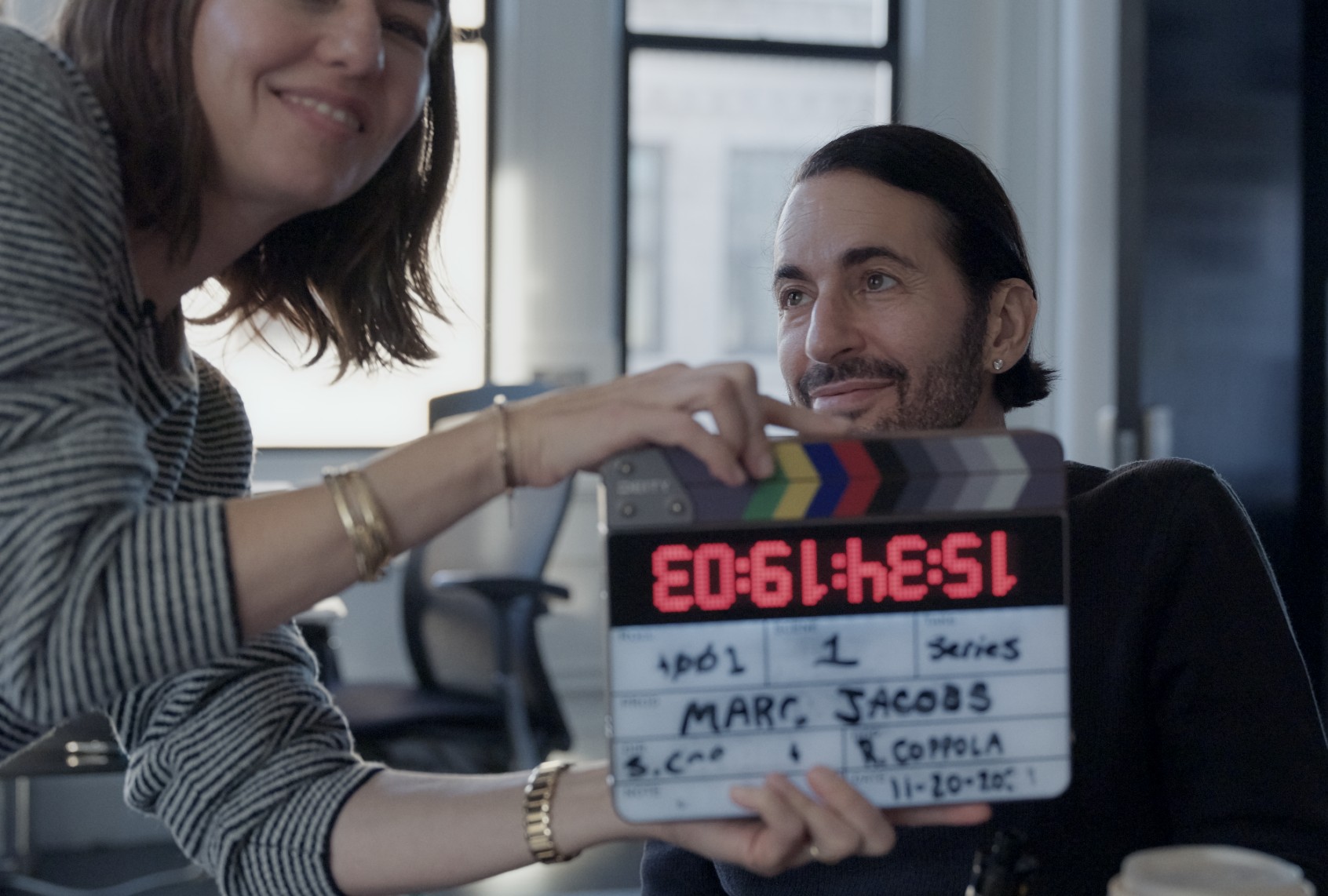
In the ever-evolving world of fashion documentaries, Sofia Coppola's latest project, "Marc by Sofia," offers an intimate glimpse into the creative mind of designer Marc Jacobs. Premiering to critical acclaim, the 87-minute film, distributed by A24, explores Jacobs' enduring influence on style, particularly through the lens of his Spring 2024 ready-to-wear collection. Coppola, a longtime friend and collaborator of Jacobs, directed the documentary, which blends behind-the-scenes footage from his New York studio with archival material that harks back to their shared roots in the 1990s indie scene.
The film opens with Jacobs and his brand's creative director, Joseph Carter, in a candid discussion amid the chaos of preparation for the Spring 2024 show. Slumped in folding chairs, the duo reflects on stacking wigs and experimenting with oversized shapes to complement the collection's voluminous garments. Coppola, behind the camera, probes whether they're aiming for a serious aesthetic or something more eccentric, aligning with Jacobs' reputation for boundary-pushing designs. "We're leaning towards entertainment," Jacobs responds, a wry smile appearing as he adds, "And joy." This moment captures the essence of the documentary: a celebration of whimsy and self-expression that has defined Jacobs' career.
Jacobs' journey in fashion is well-documented in the film, starting from his early days at Perry Ellis after a standout showcase at the Parsons School of Design's end-of-term fashion show. In the early 1990s, his grunge-inspired collection for Perry Ellis—featuring flannel, knits, and leather—redefined accessible luxury, coinciding with the Seattle grunge music scene's peak. The designs allowed consumers to integrate high-end pieces into everyday wardrobes without overhauling their closets entirely. However, the collection drew mixed reactions; New York Times critic Bernadine Morris described it as looking "as if it were put together with the eyes closed in a very dark room."
Following the grunge show's controversy, Jacobs parted ways with Perry Ellis, a departure long rumored to be a firing. In "Marc by Sofia," Coppola gently challenges this narrative during an interview with Jacobs. He clarifies that it's not entirely accurate but admits to enjoying the story's perpetuation, even spinning it himself at times. "Whether Jacobs would’ve told this critical detail to another filmmaker is anyone’s guess," notes the film's intimate dynamic, which allows for such revelations delivered with casual charm, like a "charming secret disclosed in passing while in line for the club."
Coppola's own path intersects seamlessly with Jacobs' in the documentary. As the daughter of filmmaker Francis Ford Coppola, she carved her niche in the 1990s through modeling, photography, and her debut feature, "The Virgin Suicides." By then, Jacobs had ascended to creative director at Louis Vuitton, revitalizing the heritage brand with youthful infusions like his iconic graffiti monogram collaborations with artists such as Haruki Murakami and Pharrell Williams. Together, they shaped the turn-of-the-century indie aesthetic, making them inseparable figures in cultural discussions of that era.
What sets "Marc by Sofia" apart from traditional fashion documentaries is its brevity and personal bias. Clocking in under 90 minutes, it eschews exhaustive historical analysis or expert talking heads in favor of a swift, mood-driven portrait. Coppola's familiarity with Jacobs—rooted in their mutual disdain for trends and love for New York's gritty glamour—infuses the film with an undisguised affection that might alienate outsiders. Yet, this insider perspective is its strength, pulling from precise references, licensed songs, and clips that immerse viewers in the 1990s whimsy without overt explanation.
The documentary alternates between the Spring 2024 show's development at the New York Armory and reflective conversations between Coppola and Jacobs. In one segment, Jacobs recounts anecdotes from his past, including his grandmother's habit of planning lunches around department store visits and inspirations drawn from Bob Fosse films. Archival footage animates these stories, creating a collage-like experience that feels like "a moodboard colliding with a fashion archivist’s YouTube video essay." Coppola's assured direction ensures the film's rambling structure never feels lazy, scoring key moments—like Jacobs' Louis Vuitton graffiti era—with electro-grime tracks that linger in the viewer's mind.
While the behind-the-scenes sequences of assembling the Spring 2024 collection—marked by oversized, textural garments and cartoonish accessories—are visually striking, the film's most engaging parts are the unscripted chats. Jacobs whirls through tales of mischief, from his Perry Ellis days to future visions, embodying the "sartorial insouciance" that positioned him as a modern Christian Dior for women seeking cool, trend-averse style. The collection itself, displayed under Robert Therrien’s larger-than-life sculptures, features self-professed "clown shoes," big hair, and garments that prioritize entertainment over convention.
Critics have praised the film's punk rock ethos, echoing Jacobs' grunge-driven beginnings. Published on March 27, 2026, a Salon review by Coleman Spilde highlights how Coppola "brings her respectable, confident disregard for the outsider’s opinion to the documentary format," resulting in a piece that's "proud but not pretentious." Spilde, a former fashion student and admirer of both artists, calls it an "ideal punk rock companion to Jacobs’ grunge-driven ethos," noting its heartwarming ode to individuality despite occasional esotericism.
The narrative around Jacobs' Perry Ellis exit remains a point of intrigue. While press accounts from the 1990s proliferated the firing story, Jacobs' on-camera clarification in the film adds nuance, suggesting the tale's appeal lies in its rebellious flair. This moment underscores the documentary's focus: not a definitive biography, but a subjective lens on why Jacobs' work resonates. As Coppola films him, the designer appears more relaxed than in years, attributing it to the trust built over decades of collaboration.
Beyond personal stories, "Marc by Sofia" touches on broader fashion evolution. Jacobs' early rejection of millennium-era conformity—offering frisky, unpredictable designs for high- and low-end customers—contrasted with the industry's trend-chasing. His Perry Ellis grunge line, though not a commercial smash, proved visionary, influencing street style and proving designer garments could be malleable. The film's swift pacing skims these highlights, building to the Spring 2024 runway where viewers form their own reactions to the joyful spectacle.
As fashion documentaries go, this one stands out for its accessibility despite intimacy. Spilde observes that while many such films falter on access or intersection of history and artistry, "Marc by Sofia" sidesteps these pitfalls through Coppola's insider status. It serves as a crash course in fashion's possibilities, inviting audiences—fashion novices included—to appreciate the emotions evoked by Jacobs' oversized visions under the Armory's lights.
Looking ahead, the film's release coincides with renewed interest in 1990s nostalgia, amplified by A24's distribution. Coppola, known for films like "Lost in Translation," expands her oeuvre into nonfiction, potentially inspiring more celebrity-driven fashion tales. Jacobs, meanwhile, continues to helm his namesake brand, with the Spring 2024 show exemplifying his commitment to spectacle. "Marc by Sofia" not only chronicles this but reminds viewers of the joy in defying norms, a theme as timeless as the designer's legacy.
In an industry often accused of haughtiness, the documentary's modesty shines. Jacobs and Coppola emerge not as aloof icons but as playful artists cobbled together by individuality. As one leaves the theater—or streams the film—with new playlist additions and fresh perspectives on style, it's clear: entertainment and joy remain at fashion's core.