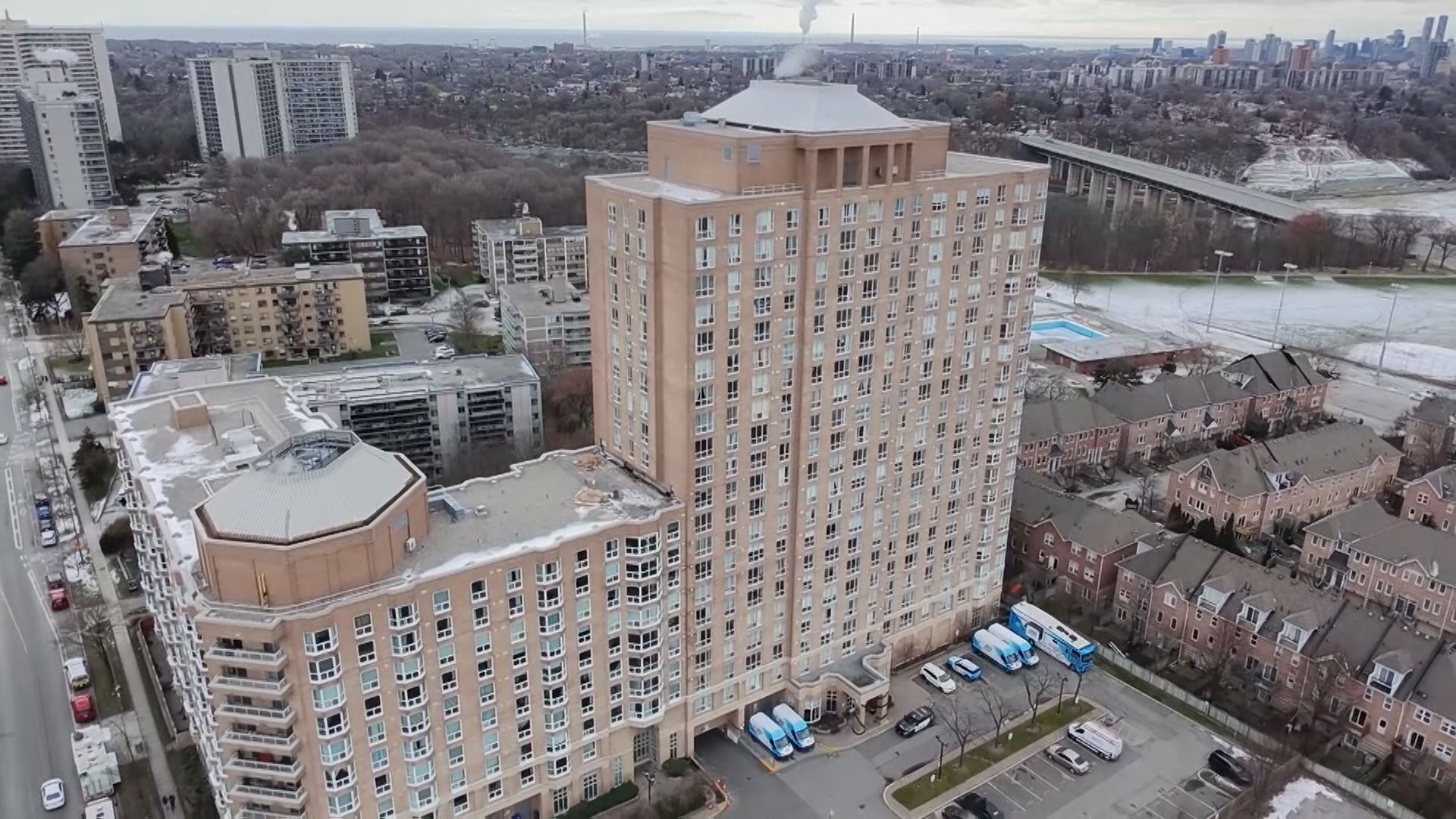
TORONTO — After more than five weeks of displacement, some residents of a high-rise apartment building in Toronto's Thorncliffe Park neighborhood are finally returning home following a devastating five-alarm fire that tore through the structures on November 27, 2025. The blaze, which originated in the parking garage of 11 Thorncliffe Park Drive and spread into the narrow space between the walls of the adjacent buildings, forced over 400 people from their homes at 11 Thorncliffe Park Drive and 21 Overlea Boulevard. High levels of carbon monoxide detected in the aftermath prompted a full evacuation, leaving families to spend the holidays in local hotels.
The fire, described by Toronto Fire Chief Jim Jessop as “unprecedented and extremely challenging,” proved exceptionally difficult to combat. According to officials, the flames had infiltrated a confined gap between the buildings—measuring just 25 to 50 millimeters wide—filled with compressed wood material that burned slowly and resisted direct access by firefighters. It wasn't until December 15 that crews fully extinguished the inferno, more than two weeks after it began. The cause remains under investigation, though investigators believe it started in the building's underground parking area before climbing upward through the structure.
For the affected residents, the news of a phased return came as a relief just after the new year. A memo from building management, distributed to tenants, announced that re-occupancy at 11 Thorncliffe Park Drive could begin Sunday evening and continue into Monday morning. Kamal Gogna, Toronto's Chief Building Official and Executive Director of the Toronto Building division, confirmed to CityNews that the city approved the move based on rapid assessments from third-party firms. Within hours of receiving those reports on Sunday, officials greenlit all units for reoccupation except for 16 along the shared wall with the neighboring building, where remediation work is ongoing.
Renovation crews have been working around the clock on the site, addressing smoke damage, carbon monoxide hazards, and structural concerns. One resident from 11 Thorncliffe Park Drive, who spoke on condition of anonymity to CityNews, expressed mixed emotions about the ordeal. “Something that no one has said is that this building has always been extremely prudently kept up and very well run,” she said. “We still of course don’t even know the cause, and I think management has done the best job for us while we were out.” Her words highlight the frustration felt by many in the community, who praised the building's upkeep despite the tragedy.
Thorncliffe Park, a densely populated enclave in east Toronto known for its large South Asian and Middle Eastern immigrant communities, has long been a hub for affordable housing amid the city's soaring real estate prices. The two affected buildings, part of a larger complex managed by a private firm, house hundreds of families in a neighborhood where high-rises dominate the skyline. The fire not only disrupted daily life but also strained local resources, as displaced residents relied on temporary hotel accommodations provided by the property management and supported by city emergency services.
The evacuation on November 27 unfolded in the late afternoon, with sirens blaring as firefighters battled the growing blaze. Witnesses reported thick smoke billowing from the lower levels, and the alarm escalated quickly to five alarms, drawing dozens of crews to the scene. High carbon monoxide readings, a silent but deadly byproduct of the fire, necessitated the shutdown of both buildings to prevent health risks. Families grabbed what they could in the chaos—some with pets in tow, others leaving behind valuables—and were shuttled to nearby shelters and hotels.
Over the ensuing weeks, the slow-burning nature of the fire in the interstitial space between the walls complicated efforts. Fire Chief Jessop explained during a press briefing at the time that the narrow gap made it impossible for hoses or tools to reach the flames directly, forcing crews to rely on ventilation and indirect suppression methods. “The space between the walls was only between 25 and 50 millimetres,” Jessop said, underscoring the engineering challenges of older multi-unit buildings in the area. This type of construction, common in mid-20th-century Toronto developments, has come under scrutiny in recent years for fire safety vulnerabilities.
As investigations continue, preliminary findings point to an electrical issue in the parking garage as a possible ignition source, though no official determination has been made. Toronto Fire Services has not released further details, citing the ongoing probe. Meanwhile, insurance claims and liability questions loom large for residents, many of whom are now facing the task of reclaiming and restoring their apartments after prolonged absence.
For those in 21 Overlea Boulevard, the wait persists. Unlike their neighbors, residents there have not received an official re-occupancy date, as assessments reveal more extensive damage along the shared wall. One tenant from that building, speaking to CityNews amid the sounds of ongoing repairs, voiced cautious optimism. “We’re hopeful we’ll be back home by next week,” he said, though he acknowledged the uncertainty hanging over the community. The disparity in timelines has sparked some tension among the displaced, with calls for clearer communication from management.
The holiday season amplified the hardship for many families. With Christmas and New Year's falling during the displacement, residents like the anonymous woman from 11 Thorncliffe Park Drive described makeshift celebrations in hotel rooms. “It’s a shame that this happened in this building,” she added, reflecting on the loss of normalcy. Community support groups in Thorncliffe Park stepped in, organizing food drives and virtual gatherings to maintain morale, but the emotional toll was evident.
City officials, including Gogna, emphasized that safety remains paramount. The third-party assessments involved air quality tests, structural integrity checks, and remediation plans to ensure no lingering hazards. “The City of Toronto confirmed all units, except for 16 along the shared wall, could be reoccupied,” Gogna told reporters, highlighting the swift action post-evaluation. This phased approach allows for monitoring as families return, with follow-up inspections scheduled.
Beyond the immediate crisis, the incident has reignited discussions about fire safety in Toronto's aging apartment stock. Thorncliffe Park, home to over 20,000 residents in a compact area, features numerous similar buildings constructed in the 1960s and 1970s. Advocacy groups have long pushed for retrofits, including better firewalls and sprinkler systems, especially in immigrant-heavy neighborhoods where language barriers can complicate emergency responses.
As renovation crews continue their work, the site at 11 Thorncliffe Park Drive buzzes with activity—workers in hazmat suits clearing debris, electricians rewiring affected areas, and cleaners tackling soot-covered interiors. For returning residents, the process involves inventorying damages and coordinating with insurers. Management has promised compensation for relocation costs, but details vary by case, according to tenant reports.
Looking ahead, the full return to normalcy could take months. While 11 Thorncliffe Park Drive sees its first wave of residents this week, those in the 16 restricted units may wait longer, and 21 Overlea Boulevard's timeline remains fluid. Fire officials plan to release a final report on the cause once the investigation concludes, potentially informing new building codes. In the meantime, the community rallies, with local leaders organizing town halls to address concerns and support recovery efforts.
This fire, though contained, serves as a stark reminder of urban vulnerabilities in one of Canada's largest cities. As families unpack in their reclaimed homes, the scars of the blaze—both visible and invisible—will linger, but so will the resilience of Thorncliffe Park's tight-knit residents.