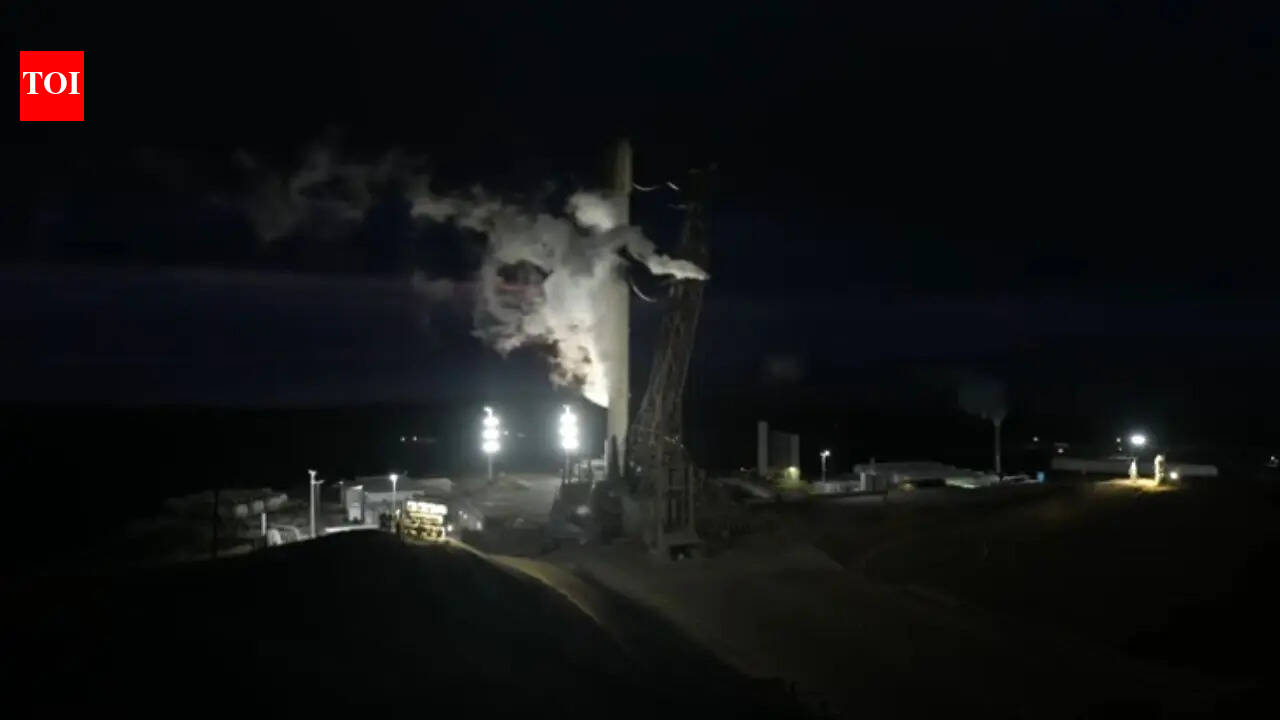
SAN DIEGO — A spectacular launch of a SpaceX Falcon 9 rocket lit up the night skies over Southern California on April 6, 2026, captivating onlookers from San Diego to the surrounding regions as it deployed 25 new Starlink satellites into low-Earth orbit.
The mission, part of SpaceX's ongoing effort to expand its global broadband internet constellation, lifted off from Vandenberg Space Force Base on the central California coast around 9:15 p.m. local time, according to reports from the Times of India Science Desk. The rocket's bright plume was visible for miles, drawing crowds to beaches and hilltops in San Diego, where residents described the sight as mesmerizing.
"It was like watching a shooting star in reverse," said Maria Gonzalez, a San Diego teacher who viewed the launch from La Jolla Cove. "The whole sky glowed orange, and you could see the stages separating clearly." Gonzalez's account echoes similar eyewitness reports shared on social media, where videos of the ascent quickly amassed thousands of views.
SpaceX confirmed the successful deployment of the satellites approximately 65 minutes after liftoff, with the first stage booster landing on a droneship in the Pacific Ocean. This marked the 15th flight for this particular booster, highlighting the company's reusable rocket technology that has revolutionized the space industry since its debut in 2010.
The Starlink project, initiated by Elon Musk's SpaceX in 2015, aims to provide high-speed internet access to underserved areas worldwide. With over 6,000 satellites already in orbit as of early 2026, the addition of these 25 brings the total closer to the planned 12,000-satellite network. According to SpaceX, the service now covers more than 100 countries, serving millions of users from rural farms in the Midwest to remote villages in Africa.
This launch comes amid heightened activity at Vandenberg, which has become a key site for polar orbit missions due to its westward-facing pads that minimize debris risks over populated areas. The base, located about 160 miles north of San Diego, has hosted dozens of Falcon 9 flights in recent years, including national security payloads for the U.S. Space Force.
While the mission proceeded flawlessly, it wasn't without its share of anticipation. Weather conditions were ideal, with clear skies and light winds, as forecasted by the National Weather Service. SpaceX had scrubbed an earlier attempt on April 4 due to a minor technical issue with the rocket's fueling system, according to company statements released via their official website.
Experts in the aerospace field praised the operation's precision. "SpaceX continues to set the bar for reliability in commercial spaceflight," noted Dr. Emily Chen, a professor of aerospace engineering at the University of California, San Diego. "Deploying 25 satellites on a single ride-share mission like this demonstrates the maturity of their Starlink production line." Chen's comments align with industry analyses that credit SpaceX's vertical integration—from satellite manufacturing to launch operations—for keeping costs low and cadence high.
Not all perspectives on Starlink's expansion are uniformly positive. Environmental groups have raised concerns about the growing satellite megaconstellation's impact on astronomy and light pollution. The International Astronomical Union reported in a 2025 study that Starlink satellites have increased sky brightness by up to 10% in certain wavelengths, complicating observations for ground-based telescopes.
"While providing internet is commendable, the unchecked proliferation of satellites poses real threats to our view of the cosmos," said Roberto Salazar, director of the Dark Sky Initiative, a nonprofit advocating for reduced light pollution. Salazar's group has called for international regulations, though SpaceX maintains that their satellites are designed with minimal reflectivity and that mitigations like visors on newer models address these issues.
On the economic front, the launch underscores SpaceX's dominant position in the launch market. In 2025 alone, the company conducted over 100 Falcon 9 missions, capturing more than 80% of the global commercial orbital launch share, per data from BryceTech, a space industry consultancy. This monopoly has drawn scrutiny from competitors like Blue Origin and Rocket Lab, who argue for more level playing fields in government contracts.
The visibility of the launch in San Diego also highlights the growing public interest in space exploration along the West Coast. Local tourism boards reported a spike in inquiries about viewing sites following the event, with spots like Torrey Pines State Natural Reserve becoming impromptu watch parties. "Events like this bring science to life for our community," said San Diego Mayor Todd Gloria in a statement to local media. "It's a reminder of California's pivotal role in the new space age."
Looking ahead, SpaceX has a packed manifest for 2026, including further Starlink deployments, crewed missions to the International Space Station via Crew Dragon, and preparations for the first Starship orbital test flights from Starbase in Texas. The company aims to launch up to 150 missions this year, a pace that could further solidify its lead in the commercial space sector.
Broader implications of the Starlink network extend to global connectivity challenges. In regions like Appleton, Wisconsin—home to The Appleton Times—rural broadband gaps persist, and initiatives like Starlink have begun bridging them. A 2025 Federal Communications Commission report noted that satellite internet adoption in underserved U.S. counties rose 40% after Starlink's expansion, though critics point to high subscription costs as a barrier for low-income households.
As the Falcon 9's contrail faded into the night sky, it left behind not just satellites, but a symbol of humanity's accelerating reach into space. For residents of San Diego and beyond, the launch served as a thrilling spectacle, while for SpaceX, it was another step toward a connected planet. With no reported anomalies and all satellites communicating with ground control, the mission's success paves the way for the next chapter in orbital internet innovation.