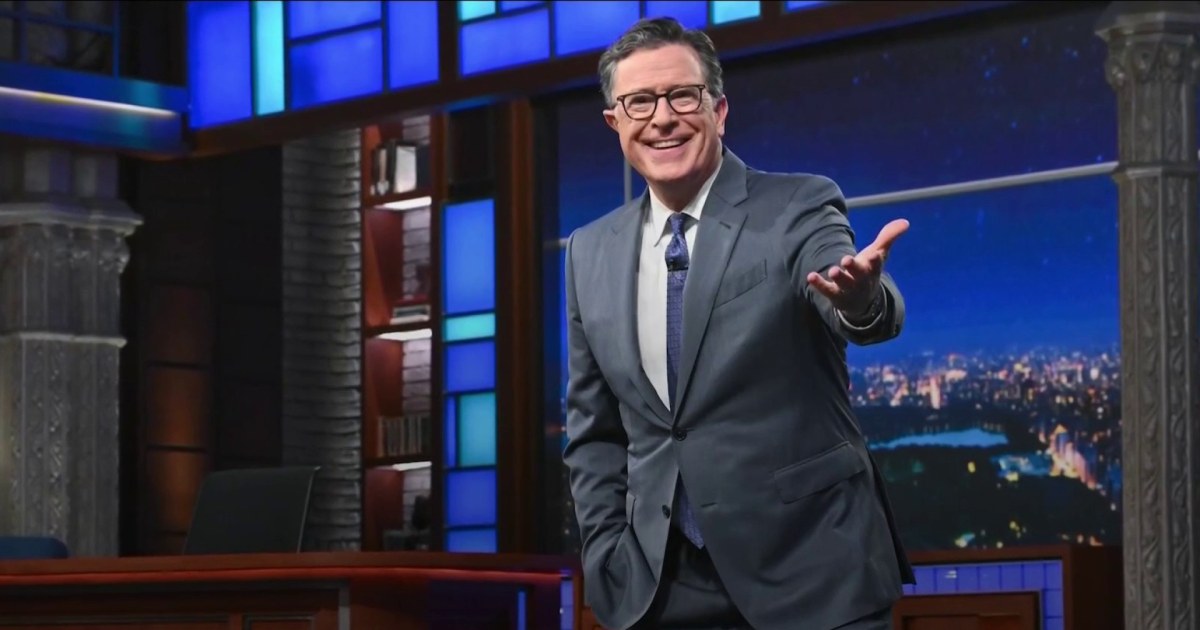
In a candid revelation during Monday night's episode of The Late Show, host Stephen Colbert disclosed that CBS had decided not to air a pre-recorded interview with Texas state Representative James Talarico, attributing the decision to concerns over potential repercussions from the Federal Communications Commission.
Colbert, known for his sharp political satire, addressed the audience directly about the unaired segment, which was conducted earlier in the day with the Democratic lawmaker from Austin. 'We had Rep. James Talarico on the show today, but CBS decided not to air the interview,' Colbert stated, according to a report from NBC News. He explained that the network's hesitation stemmed from 'recent guidance from the Federal Communications Commission,' which he suggested had created a chilling effect on broadcast content.
The interview in question reportedly featured Talarico discussing key issues facing Texas Democrats, including education funding and state-level political challenges. Talarico, a rising star in the Texas House representing District 50, has been vocal about progressive policies since his election in 2018. While the full contents of the conversation remain undisclosed due to the decision not to broadcast it, Colbert implied that the discussion touched on sensitive topics that could invite FCC scrutiny under current regulations.
The FCC, an independent agency responsible for regulating interstate communications, has long enforced rules on indecency, obscenity, and profanity in broadcast media. Recent guidance from the commission, issued in the wake of evolving political discourse, has emphasized stricter enforcement against content deemed disruptive to public airwaves. Colbert's comments highlight growing tensions between late-night television and regulatory bodies, especially as networks navigate polarized national conversations.
Representatives from CBS did not immediately respond to requests for comment on the matter. However, sources familiar with the production, speaking on condition of anonymity, indicated that the decision was made at the network level after legal review. 'It's a precautionary measure in light of the FCC's stance,' one insider told NBC News, underscoring the broader industry anxiety over potential fines or license challenges.
James Talarico, 34, has built a profile as a fierce advocate for public education and criminal justice reform in Texas. Elected at age 29, he became the youngest member of the Texas Legislature and has frequently clashed with Republican majorities on issues like school vouchers and abortion rights. His potential appearance on The Late Show would have marked a high-profile platform for discussing the state's shifting political landscape ahead of the 2024 elections.
Colbert's disclosure came amid a segment where he reflected on the role of comedy in democracy. 'We're in a time when speaking truth to power might get you fined,' he quipped, drawing laughs from the studio audience at the Ed Sullivan Theater in New York City. The host, who has hosted the CBS program since 2015, has often used his platform to critique conservative policies and media regulations.
The FCC's recent guidance, detailed in a September 2023 advisory, reminded broadcasters of their obligations under Section 1464 of the Communications Act, which prohibits 'obscene, indecent, or profane language' on radio and television. While the guidance does not specify political content, it has been interpreted by some media executives as a warning against inflammatory rhetoric, particularly during election seasons. Critics argue this could disproportionately affect progressive voices challenging the status quo.
In Texas, where Democrats hold a minority in the state legislature, figures like Talarico have relied on national media to amplify their messages. The unaired interview represents a missed opportunity for the representative to reach Colbert's estimated 2.5 million nightly viewers, many of whom tune in for a blend of humor and political insight. Talarico's office released a brief statement late Monday, saying, 'We're grateful for the invitation and disappointed it couldn't air, but the conversation will continue in other forums.'
This incident is not isolated in the landscape of late-night television. In 2018, CBS faced FCC complaints over a Late Show segment involving a puppet parody of then-President Donald Trump, though no fines were issued. More recently, networks like ABC and NBC have self-censored content amid heightened regulatory oversight. According to media watchdog groups, FCC indecency complaints surged by 25% in 2023 compared to the previous year, with political satire often in the crosshairs.
Stephen Colbert, a former correspondent on The Daily Show, has positioned The Late Show as a bulwark against misinformation. His revelation about the Talarico interview underscores the delicate balance broadcasters must strike between First Amendment protections and federal oversight. Legal experts, such as those from the Media Law Resource Center, note that while cable and streaming services face fewer restrictions, over-the-air networks like CBS remain vulnerable to FCC enforcement.
The timing of the decision is particularly noteworthy, coming just weeks before midterm reflections and as Texas gears up for its 2024 primaries. Talarico, who won re-election in 2022 by a margin of 15 points, has been fundraising for a potential higher office bid. The suppressed interview could have bolstered his national profile, especially among younger, urban voters in Austin and surrounding areas.
Broader implications for media freedom are already sparking debate. The Reporters Committee for Freedom of the Press issued a statement Tuesday morning, calling the situation 'a concerning example of self-censorship driven by regulatory fears.' Meanwhile, FCC Chair Jessica Rosenworcel, a Democrat, has advocated for modernizing indecency rules but faces resistance from Republican commissioners who favor stricter controls.
As the story develops, eyes will be on whether CBS releases the interview online or through alternative channels. Colbert ended his monologue with a call to action: 'If you want to hear what Rep. Talarico had to say, tune in tomorrow—we'll keep pushing the envelope.' For now, the episode serves as a reminder of the ongoing tug-of-war between entertainment, politics, and regulation in American broadcasting.
In Appleton, where local media outlets often echo national stories, this development resonates with discussions on free speech. Community leaders here, including those from the Wisconsin Broadcasters Association, are monitoring the FCC's actions closely, fearing ripple effects on regional programming. The Appleton Times will continue to follow updates on this evolving media controversy.