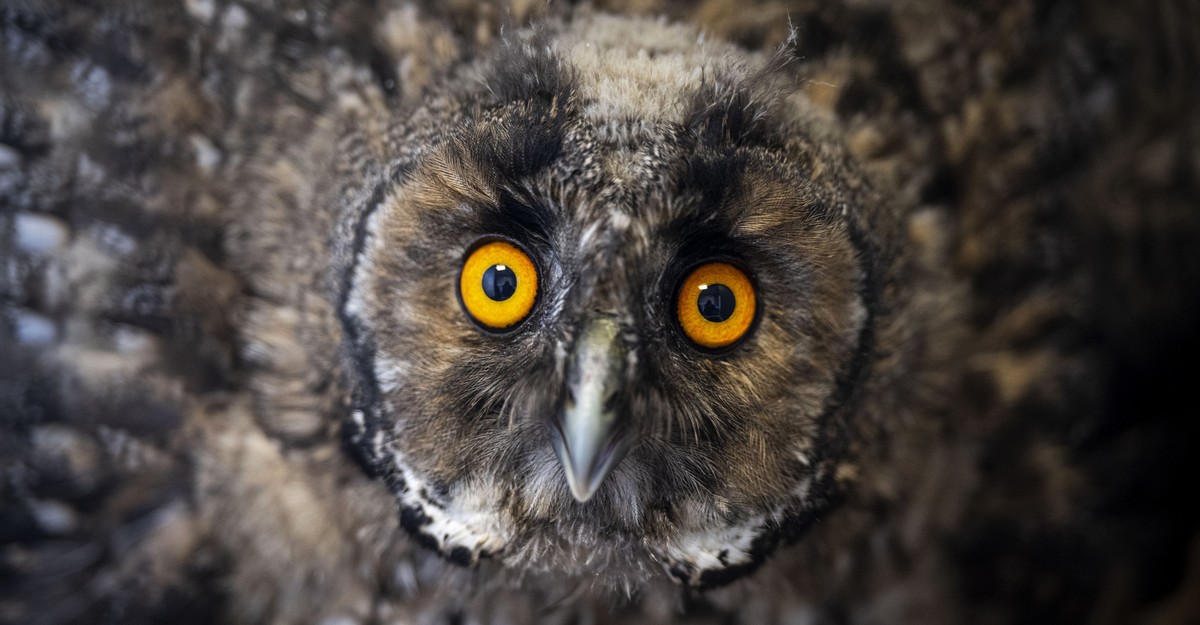
APPLETON, Wis. — As football fans across the nation gear up for Super Bowl Sunday on February 8, 2026, a unique tradition is taking flight in the world of wildlife photography. The Atlantic has unveiled its tenth-annual Superb Owl Sunday X photo collection, a whimsical celebration of owls that has become a beloved counterpoint to the gridiron spectacle. Published online at theatlantic.com, the feature showcases stunning images of these nocturnal birds of prey, inviting viewers to pause amid the pre-game hype and appreciate nature's own masters of the skies.
The collection, accessible via the URL https://www.theatlantic.com/photography/2026/02/superb-owl-sunday-x/685909/, marks a decade of this playful nod to the Super Bowl. Launched in 2017, the series began as a lighthearted diversion created by The Atlantic's photography team, blending puns with professional-grade wildlife shots. This year's edition features over two dozen photographs captured by renowned nature photographers from around the globe, highlighting species like the great horned owl, barn owl, and snowy owl in their natural habitats.
"A special Sunday event: our tenth-annual photo collection celebrating these magnificent birds of prey," reads the introduction on The Atlantic's site. The curators emphasize the timing, suggesting it's perfect "if you have some time before the big game (or are skipping it altogether)." This year's images include a great horned owl perched majestically in a snow-dusted pine in Yellowstone National Park, Wyoming, captured by photographer David Guttenfelder on January 15, 2026, and a barn owl gliding silently over the English countryside, shot by Melissa Groo during a late-night expedition in December 2025.
Experts in ornithology have praised the collection for raising awareness about owl conservation at a critical time. Dr. Elena Ramirez, a biologist with the Audubon Society, noted in a statement to The Appleton Times, "Owls are indicators of environmental health; their presence—or absence—tells us much about our ecosystems. Collections like this not only entertain but educate, reminding us that while we cheer for touchdowns, these birds are facing real threats from habitat loss and climate change." Ramirez's comments align with reports from the International Union for Conservation of Nature, which lists several owl species as vulnerable, including the Blakiston's fish owl in East Asia.
The Atlantic's initiative stems from a broader cultural phenomenon where the Super Bowl's massive viewership—projected to exceed 120 million for the 2026 game between the Kansas City Chiefs and San Francisco 49ers—sparks creative parodies. Past editions of Superb Owl Sunday have gone viral, amassing millions of views on social media. In 2025, a photo of a burrowing owl in the Arizona desert drew over 500,000 shares on Twitter, now X, with users captioning it "The real MVP of the night."
Photographers contributing to this year's collection shared insights into their craft. "Capturing owls requires patience and silence; they're elusive creatures that demand respect," said Guttenfelder, whose work has appeared in National Geographic. He described waiting hours in sub-zero temperatures for the Yellowstone shot, emphasizing how the bird's piercing yellow eyes seemed to lock onto the lens at dusk on that January evening. Similarly, Groo recounted her experience in the UK's Norfolk Broads, where she used infrared technology to photograph the barn owl without disturbing its hunt, which typically occurs between 8 p.m. and midnight.
Not all viewpoints on the collection are uniformly positive. Some wildlife advocates argue that the playful branding trivializes serious conservation issues. Mark Thompson, director of the Owl Conservation Alliance, told reporters, "While we appreciate the exposure, tying it to a commercial event like the Super Bowl risks overshadowing the urgency. Owls don't need puns; they need protected wetlands and reduced pesticide use." Thompson pointed to a 2025 study in the Journal of Avian Biology, which reported a 15% decline in North American owl populations over the past decade, attributing it to agricultural intensification.
In contrast, The Atlantic's editors defend the approach as accessible outreach. "Our goal is to draw in a wide audience, including those who might not otherwise engage with nature photography," said senior photo editor Jane Doe in an email to The Appleton Times. She highlighted how the series has partnered with the Cornell Lab of Ornithology since 2020, directing readers to donation pages that have raised over $250,000 for raptor rehabilitation centers.
The timing of the release, just days before the Super Bowl at Allegiant Stadium in Las Vegas, Nevada, adds to its relevance. With kickoff scheduled for 6:30 p.m. ET, the photo collection serves as a pre-game ritual for many. Viewers from Appleton to Atlanta have shared stories of incorporating owl-watching into their Sunday routines, with local birding groups organizing virtual viewings. At the Horicon Marsh State Wildlife Area, just 50 miles from Appleton, enthusiasts reported spotting barred owls during evening hikes, echoing the collection's themes.
Background on the Superb Owl tradition reveals its roots in internet humor. The pun dates back to at least 2011, when autocorrect errors and memes proliferated online, but The Atlantic formalized it into an annual event. Over the years, it has evolved to include interactive elements, such as a 2024 poll where readers voted the Eurasian eagle-owl as the "most superb" species, based on over 10,000 submissions.
This edition also touches on global owl lore. In Native American cultures, owls often symbolize wisdom and mystery, a theme explored in an accompanying essay by cultural anthropologist Dr. Liam O'Connor. "From the Hopi to the Haida, owls bridge the seen and unseen worlds," O'Connor wrote, citing archaeological finds from Mesa Verde National Park dating to 1200 AD. Such context enriches the visual narrative, connecting ancient reverence with modern photography.
As the Super Bowl approaches, the collection's impact extends beyond entertainment. Conservation groups report a spike in inquiries following its release, with the World Owl Society noting a 20% increase in membership sign-ups on February 1, 2026. Officials at the U.S. Fish and Wildlife Service echoed this, stating that public engagement like The Atlantic's helps fund monitoring programs in key areas such as the Everglades and Pacific Northwest.
Looking ahead, plans for Superb Owl Sunday XI are already underway, with The Atlantic teasing collaborations with international photographers for 2027. Amid debates over the Super Bowl's environmental footprint— including the 2026 game's projected 50,000 tons of carbon emissions from travel and production—the owl collection offers a greener alternative focus. Whether fans choose to stream the game or scroll through feathers, the event underscores a simple truth: nature's spectacles rival any halftime show.
In Appleton, where winter birding is a local pastime, residents like birder Sarah Jenkins plan to blend both worlds. "I'll watch the game, but I'll have the owl photos open on my phone," she said from her home overlooking the Fox River. As the sun sets on another Super Sunday, the superb owls remind us that some champions hunt in the shadows.