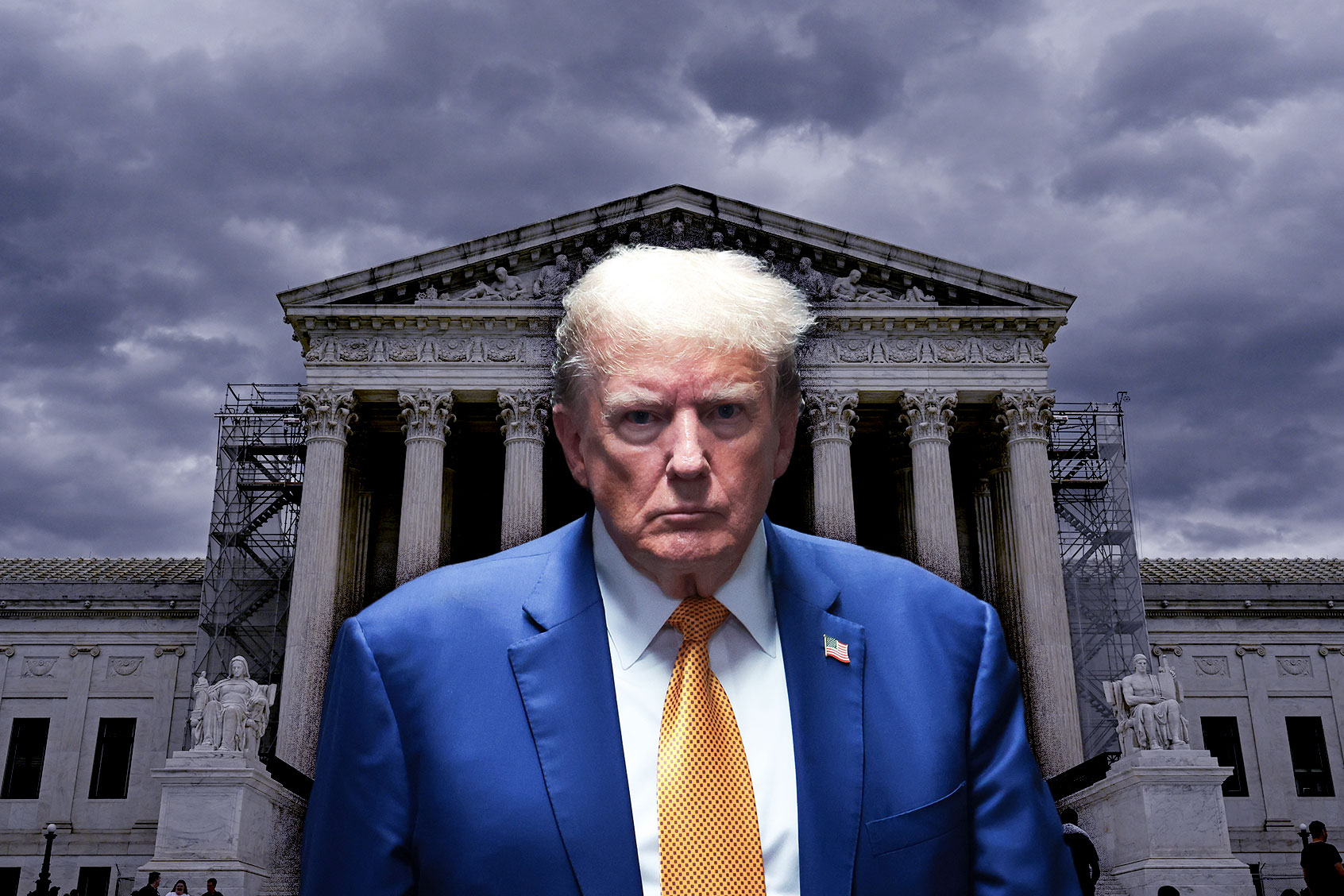
In a surprising 6-3 decision issued on Friday, the U.S. Supreme Court struck down several tariffs imposed by President Donald Trump, ruling that the International Emergency Economic Powers Act (IEEPA) does not grant the president authority to enact such measures without congressional approval. The case, which challenged tariffs on imports from Canada, Mexico, and China, highlighted deep divisions within the court and drew an immediate, fiery rebuke from the White House. Chief Justice John Roberts authored the majority opinion, joined by liberal Justices Sonia Sotomayor, Elena Kagan, and Ketanji Brown Jackson, as well as conservative Justices Neil Gorsuch and Amy Coney Barrett.
The ruling came in response to a lawsuit filed by small businesses Learning Resources and Hand2mind, which argued that Trump's "reciprocal or drug trafficking tariffs" exceeded the scope of IEEPA. The administration had defended the tariffs by claiming they addressed a "public health crisis" caused by the influx of drugs from the targeted countries. According to the court's decision, however, the statute does not authorize the president to "regulate…importation" through tariffs in this manner.
Roberts emphasized the constitutional foundation of the ruling, citing the first clause of Article 1, Section 8 of the U.S. Constitution, which states that "The Congress shall have the power to lay and collect Taxes, Duties, Imposts and Excises." He wrote that tariffs are essentially taxes and that only Congress holds the authority to impose them, describing this as the "one great power upon which the whole national fabric is based." The chief justice also invoked the court's "major questions doctrine," which requires explicit congressional delegation for executive actions on issues of vast economic and political significance. No such delegation existed under IEEPA, Roberts concluded.
In a pointed observation, Roberts noted that "No president has invoked the statute to impose any tariffs — let alone tariffs of this magnitude and scope" prior to Trump. He affirmed the judiciary's role in interpreting the law, stating allegiance to the Constitution. Justice Gorsuch, in a concurring opinion, underscored the constitutional stakes by posing a rhetorical question: "If the president’s argument was given credence, then what do we make of the Constitution’s text?"
The dissenting justices—Samuel Alito, Brett Kavanaugh, and Clarence Thomas—argued in favor of broader presidential authority. Justice Thomas, in his dissent, referenced historical precedents, stating that "the power to impose duties…originated as a ‘prerogative right of the [British] King,’" suggesting it should similarly be a presidential prerogative. Kavanaugh went further, offering what he described as a potential workaround, predicting that the decision "is not likely to greatly restrict Presidential tariff authority going forward." The dissenters' positions aligned with previous uses of the major questions doctrine to support executive actions during Trump's administration.
President Trump reacted swiftly and harshly to the ruling, calling it a "disgrace" during remarks to reporters shortly after its release. He denounced the justices in the majority as not "smart" and accused them of being influenced by foreign interests. "I couldn’t care less" if they attend his State of the Union address scheduled for Tuesday, Trump said, adding in an authoritarian tone, "We have a right to do what we want to do."
In a post on Truth Social, Trump offered his interpretation of the decision, claiming that although "they did not mean to do so, the Supreme Court’s decision today made a President’s ability to both regulate Trade, and impose TARIFFS, more powerful and crystal clear, rather than less." He asserted that "Based on longstanding Law and Hundreds of Victories to the contrary, the Supreme Court did not overrule TARIFFS, they merely overruled a particular use of IEEPA TARIFFS." Trump further stated that "In order to protect our Country, a President can actually charge more TARIFFS than I was charging in the past under the various other TARIFF authorities, which have also been confirmed, and fully allowed."
Defying the court's decision, the president announced a new round of tariffs: a 10% levy on all imports, set to take effect on February 24. He cited authority under the 1974 Trade Act for this move. Trump told reporters, "Other alternatives will now be used to replace the ones that the court incorrectly rejected. We have alternatives, great alternatives. Could be more money. We’ll take in more money. and we’ll be a lot stronger for it." He criticized the court for taking months to issue what he called a "totally defective" decision.
Trump's affinity for tariffs dates back to his campaigns and first term, where he frequently praised them as a tool for economic leverage. He has often described the word "tariff" as "a beautiful word" and invoked President William McKinley, who used tariffs to generate revenue before the introduction of the federal income tax. Despite Trump's repeated assertions that Americans do not pay for tariffs—claiming foreign exporters absorb the costs—the court's ruling clarified that such measures function as taxes on U.S. importers and consumers.
The decision marks a departure from the court's recent pattern of 6-3 rulings favoring conservative positions, particularly those aligned with Trump's agenda. In this instance, the alignment shifted, with two conservative justices joining the liberal bloc to form the majority. Legal observers noted that this split reveals underlying tensions within the conservative majority on issues of executive power.
Broader context for the case stems from Trump's ongoing trade policies, which have targeted countries accused of unfair practices or contributing to issues like drug trafficking. The challenged tariffs were part of a larger strategy to address opioid flows from Mexico and fentanyl precursors from China, as well as other drug-related concerns from Canada. Small businesses like the plaintiffs have reported increased costs and supply chain disruptions due to these measures, prompting the legal challenge.
Experts on trade law have mixed views on the ruling's long-term impact. While the decision limits the use of IEEPA for tariffs, it leaves open other statutory avenues, as Kavanaugh suggested in his dissent. Trump's announcement of new tariffs under the 1974 Trade Act illustrates this flexibility, potentially escalating trade tensions with major partners.
The ruling occurs amid heightened political polarization, with the State of the Union address looming on Tuesday. Trump's invitation—or lack thereof—to certain justices underscores personal animosities. As the administration explores "great alternatives," businesses and consumers brace for potential economic ripple effects from the impending 10% universal tariff.
Looking ahead, the decision could prompt congressional action on trade authority, though partisan divides make swift legislation unlikely. For now, it reaffirms the separation of powers, ensuring that major economic decisions like tariffs remain a congressional prerogative unless explicitly delegated. The court's message, through Roberts, is clear: the Constitution's text must guide interpretations of executive power.
This skirmish over tariffs reflects ongoing debates about the balance between presidential authority and democratic checks. As Trump pushes forward with alternative measures, the nation watches to see how the court and Congress respond in future challenges.