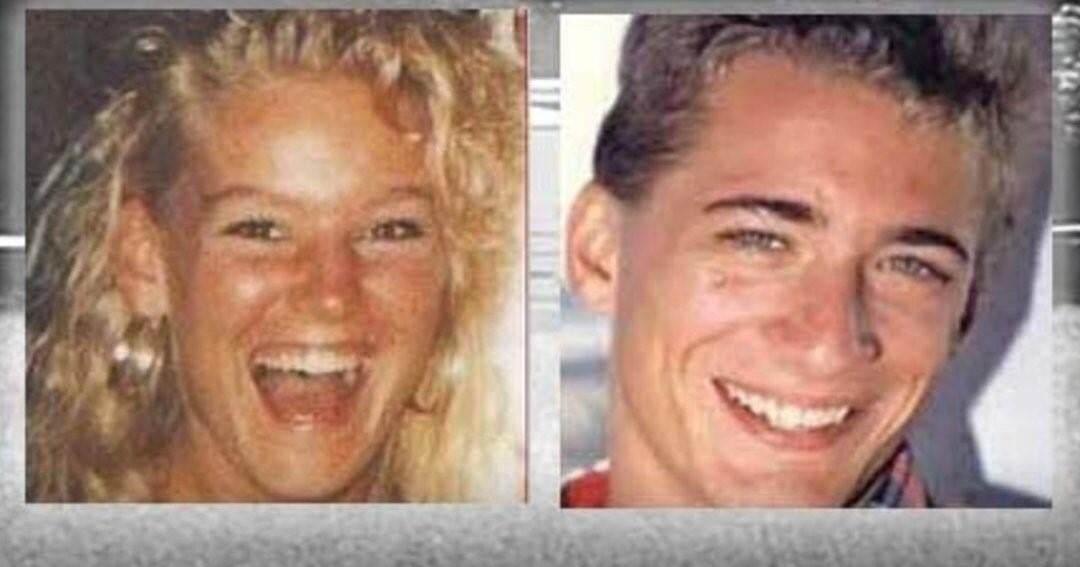
HOUSTON — After nearly 36 years of haunting Houston's collective memory, authorities have arrested a suspect in one of the city's most notorious cold cases: the brutal murders of a young couple in a secluded spot known as Lovers' Lane. Floyd William Parrott, 64, was taken into custody in Lincoln, Nebraska, on Wednesday, facing capital murder charges in the deaths of Cheryl Henry, 22, and her boyfriend Andy Atkinson, 21. The breakthrough came through a combination of a recent tip and advanced DNA technology that linked Parrott to evidence from the crime scene, according to Houston police.
The bodies of Henry and Atkinson were discovered on August 23, 1990, in a remote, wooded area off Enclave Parkway on the city's northwest side. At the time, the location was a popular but isolated spot for young couples seeking privacy, earning it the moniker Lovers' Lane among locals. A security guard on routine patrol that morning noticed a white Honda Civic parked motionless for an unusually long time and approached the vehicle. What he found set off a chain of events that would grip the city and remain unsolved for decades.
According to police reports, the guard first spotted an unresponsive woman lying nearby. Houston officers who responded to the scene searched the surrounding woods and discovered Henry, unclothed and suffering from severe injuries to her neck. Investigators determined she had been sexually assaulted, with her throat cut in a violent attack. Her identification was found in a purse nearby, along with a blue dress that her family confirmed she had worn the previous evening. Just a short distance away, Atkinson's body was found tied to a tree, his hands bound behind his back with rope. Another length of rope was wrapped around his body, the tree, and across his neck, indicating he had been strangled, police said in an affidavit cited by local CBS affiliate KHOU.
The couple had been out the night before, enjoying a date at Bayou Mama's nightclub in Houston. Friends and family last saw them alive as they left the venue, heading to the secluded area for some time alone. The savage nature of the killings—combining sexual assault, stabbing, and strangulation—shocked the community and drew widespread media attention. For years, the case symbolized the dangers lurking in even the most romantic settings, with Houston residents and law enforcement haunted by the lack of closure.
Despite exhaustive efforts, the investigation stalled early on. Houston police collected DNA samples from potential suspects and followed hundreds of leads over the decades, but no arrests were made. The case file gathered dust amid a backlog of cold cases in a city known for its high violent crime rates in the 1980s and 1990s. Detectives revisited the evidence periodically, but technological limitations at the time prevented matches that might have cracked it sooner.
That changed in late 2025, when a tip pointed investigators toward Parrott as a possible suspect. A detective reviewing old files came across a 1996 report from a separate sexual assault case in which Parrott had been named. DNA evidence from that incident had recently been uploaded to CODIS, the FBI's Combined DNA Index System. The database quickly flagged a match: the male DNA from the 1996 case aligned with samples collected during Henry's autopsy after her death, according to the affidavit obtained by KHOU.
This connection propelled the case forward. Earlier this month, Parrott was formally identified as the prime suspect in the murders. Authorities tracked him to Lincoln, Nebraska, where he was arrested without incident on Wednesday. He is currently awaiting extradition to Harris County Jail in Houston, where he will face the capital murder charges that could carry the death penalty if convicted.
Harris County District Attorney Sean Teare hailed the arrest as a long-overdue victory for justice. In a statement, Teare said, "One of Houston's most haunting and infamous cold cases has weighed on the Henry and Atkinson families, as well as our community for more than three decades." He added, "Our prosecutors, working with the HPD and FBI, have pursued this investigation with relentless and dogged determination. They have worked hundreds of leads, facing dead ends and plenty of frustration. But, they never gave up on Cheryl and Andy."
The Henry and Atkinson families have endured unimaginable pain since 1990. Cheryl's relatives described her as a vibrant young woman with dreams of starting a family, while Andy was remembered as a kind-hearted aspiring musician. In the years following the murders, they held vigils and lobbied for renewed attention to the case, often speaking out in local media about the void left by the unsolved killings. While details of their reaction to Parrott's arrest remain private, Teare's office indicated that updates would be provided as the families are consulted.
Parrott's background adds layers to the story. Now 64, he was in his late 20s at the time of the murders, living in the Houston area. The 1996 sexual assault allegation against him was never prosecuted due to insufficient evidence at the time, but the preserved DNA proved pivotal decades later. Authorities have not released information on whether Parrott has prior convictions or if he confessed during questioning, citing the ongoing investigation.
The use of CODIS in this case underscores the evolving role of forensic science in solving cold cases. Since its establishment in 1998, the database has helped clear thousands of violent crimes nationwide, including several high-profile Houston murders from the same era. Experts note that improved uploading protocols and genetic genealogy techniques have accelerated matches, breathing new life into investigations once thought impossible to resolve.
Yet, challenges remain. Parrott's defense team, once appointed, may challenge the DNA evidence or timeline, arguing potential contamination or chain-of-custody issues from the 1990s. Prosecutors, however, appear confident, with Teare emphasizing the "dogged determination" of the team. The case will likely head to trial in Harris County, where capital murder proceedings can span months or years, drawing intense scrutiny from true crime enthusiasts and the public alike.
Beyond the legal battle, the Lovers' Lane murders have left a lasting mark on Houston's cultural landscape. The area off Enclave Parkway, once a lovers' paradise, is now developed into suburban neighborhoods, but the site's dark history lingers in local lore. Annual remembrances by the victims' families have kept the story alive, pressuring authorities to never forget. This arrest offers a measure of hope that other cold cases might follow suit, as DNA databases continue to expand.
As Parrott awaits transfer, Houston police continue to investigate potential links to other unsolved crimes from the period. Whether this was an isolated act of violence or part of a pattern remains unclear, but officials said they are exploring all angles. For the community, the news brings a bittersweet resolution to a tragedy that defined an era of fear and uncertainty in the city.
In the end, the story of Cheryl Henry and Andy Atkinson serves as a reminder of both human cruelty and the persistence of justice. Nearly 36 years after their lives were cut short on a summer night, their case has finally moved from the shadows into the courtroom, where answers—and accountability—may at last be found.