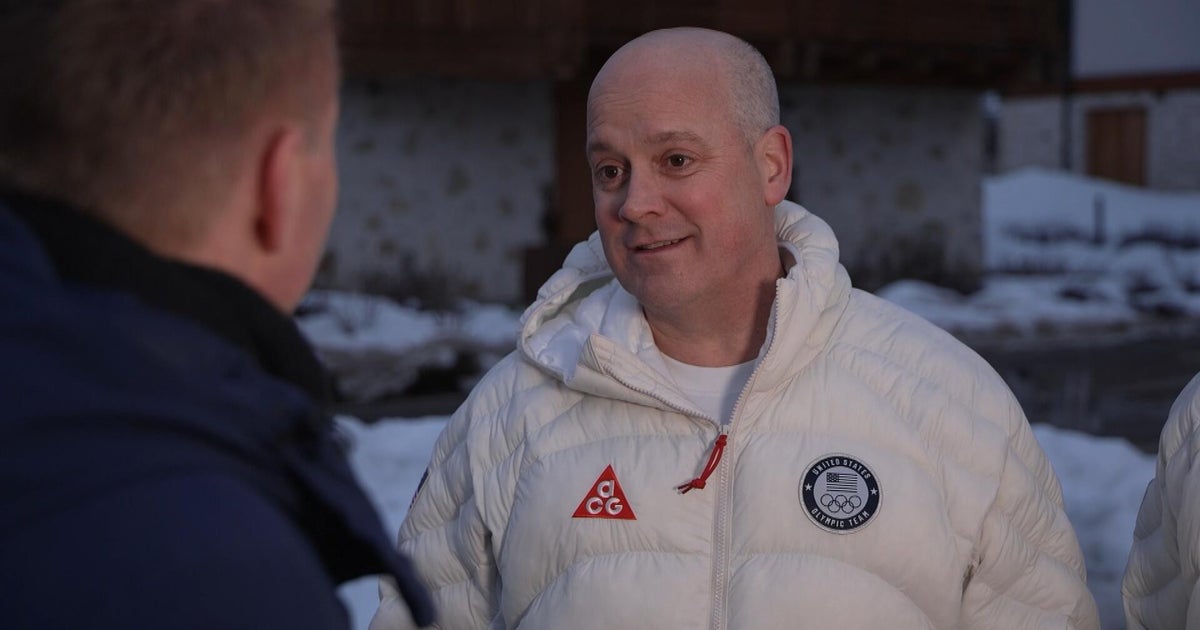
In the snowy peaks of Cortina, Italy, where the 2026 Winter Olympics are underway, Team USA curler Rich Ruohonen is making history as the oldest American athlete to ever compete in the Winter Games at age 54. But even as he sweeps stones across the ice, Ruohonen, a longtime Minnesota lawyer, can't shake the troubling news from back home. In a recent interview with CBS News, he expressed deep concern over what he sees as violations of constitutional rights in his state, amid high-profile incidents involving federal immigration agents.
Ruohonen, a two-time national curling champion, has practiced law in Minnesota for 28 years. Speaking from the Olympic village, he told CBS News that while he's proud to represent the United States, the atmosphere in Minnesota has been "tough." "I'm a lawyer there. I've been for 28 years, and a lot of tragedy, a lot of difficulties. And, you know, we want to focus on the Games, but at the same time, what's going on there is wrong," Ruohonen said.
His comments come in the wake of two fatal shootings by federal immigration agents in Minneapolis over recent weeks. According to reports, these incidents occurred during operations in the city, drawing widespread attention and criticism. Ruohonen, drawing on his legal expertise, pointed to core constitutional protections he believes are being disregarded. "We have inalienable rights in our constitution: Freedom of press, freedom of speech, the right to not have unreasonable searches and seizures and not be pulled over for, you know, without probable cause. And those rights aren't being followed in Minnesota," he stated.
Despite the distractions, Ruohonen emphasized the unifying power of the Olympics. He described the event as a showcase of Minnesotan and American values like respect, compassion, and empathy—qualities he feels are sometimes in short supply nationally. "The Olympics, it brings this unity, this respect and this compassion, and Minnesota has shown out and used that," Ruohonen said. He made it clear his criticisms don't diminish his patriotism: "I want to make no mistake about it, we're playing for the U.S. We love the U.S. We love what the flag is and what it represents. And we're here to support our families and our friends that gave up so much for us to be here today."
Ruohonen isn't alone in feeling the warmth of international support. Teammate Luc Violette, another member of the USA Curling National Team, noted the strong presence of American fans in Cortina. "USA is everywhere. We felt really welcome here and continue to feel (welcome)," Violette told CBS News. The athletes have been buoyed by this enthusiasm as they navigate the pressures of competition.
The U.S. curling team has already notched a milestone at these Games. On Tuesday, Corey Thiesse became the first American female curler to win an Olympic medal, securing silver in the mixed doubles event alongside partner Korey Dropkin. This achievement highlights the growing prominence of curling in the U.S., a sport that traces its roots to 16th-century Scotland but has evolved into a strategic, team-based discipline on ice.
For many spectators, curling remains an enigmatic sport, often met with curiosity or bemusement. Violette addressed this head-on in his CBS News interview, admitting, "I mean, I'll be frank. It's weird." He pondered its origins: "How anyone came up with this sport is insane. I still don't know. There's still parts of the physics that we don't understand, but … it really brings a lot of skill sets together." Their coach, he added, often says that "the best curler is a well-rounded person," underscoring the mental and physical demands that foster a deep appreciation for the game among its players.
Ruohonen reflected on how curling has transformed over his decades in the sport. Thirty years ago, he recalled, it was far less demanding physically. "You could win and be way overweight, or smoking a cigarette on the ice," he said with a chuckle. Today, the game requires peak fitness. "When you're sweeping, you're leaning a large majority of your weight on your broom and moving it back and forth. And you're on your tippy toes a lot. So you have to be strong," Ruohonen explained. The physical toll is relentless: sliding in a lunging position, maintaining balance on ice for hours, and enduring back-to-back games that can span six to eight hours daily.
To demystify the sport for newcomers, Violette offered a simple analogy. "I usually relate it to bocce ball," he said. In curling, teams take turns sliding heavy granite stones—known as rocks—toward a target area called the house, which features concentric circles. The objective is to position more stones closer to the center than the opponent's closest stone at the end of each end, a segment of play. Sweeping the ice in front of the stone with brooms reduces friction, allowing it to travel farther and straighter, while the stones naturally curl or curve due to their design and the ice's pebbled surface.
"There's a directional element. We can make it curl more, curl less. It's called curling because the rock curls or curves. And it's hard. Come try it out," Violette encouraged. This exposure at the Olympics, the athletes hope, will spark wider interest. Ruohonen and his teammates have spent considerable time during the Games explaining the rules to fans and media, turning what might seem like an obscure pastime into a point of national pride.
Beyond the ice, Ruohonen's dual role as athlete and attorney adds layers to his Olympic story. Minnesota, with its deep curling tradition—often called the "state sport" informally—has produced numerous Olympians. The Iron Range and lakeside communities have long embraced the game, fostering clubs where players like Ruohonen honed their skills from a young age. His journey to Italy at 54 defies the typical athlete's timeline, proving that dedication can extend into later years.
The federal incidents in Minneapolis provide stark contrast to the Olympic spirit. According to local reports, the shootings involved Immigration and Customs Enforcement (ICE) agents during routine operations, though details remain under investigation by authorities. Community leaders in the Twin Cities have called for greater transparency and accountability, echoing Ruohonen's concerns about probable cause and civil liberties. Federal officials have not yet released full statements on the events, but the cases have fueled debates on immigration enforcement tactics in urban areas.
As the Games progress, Team USA curlers are focused on upcoming matches, with Ruohonen's squad vying for medals in the men's event. The sport's inclusion in the Olympics since 1998 has helped elevate its profile, drawing sponsorships and youth programs across the U.S. Violette and Ruohonen both expressed optimism that these Winter Olympics could inspire a new generation, much like past Games boosted sports like snowboarding and freestyle skiing.
Looking ahead, Ruohonen plans to return to his law practice in Minnesota after the competition, where he specializes in civil matters. He hopes the global stage will remind Americans of shared values amid divisions. "We're here to support our families and our friends that gave up so much for us to be here today," he reiterated, a sentiment that resonates from the Italian Alps back to the Midwest heartland.
In Cortina, where the air is crisp and the competition fierce, stories like Ruohonen's blend athletic triumph with real-world advocacy, reminding viewers that Olympians are citizens first. As the torch burns bright, the curlers continue to slide toward victory, one calculated throw at a time.