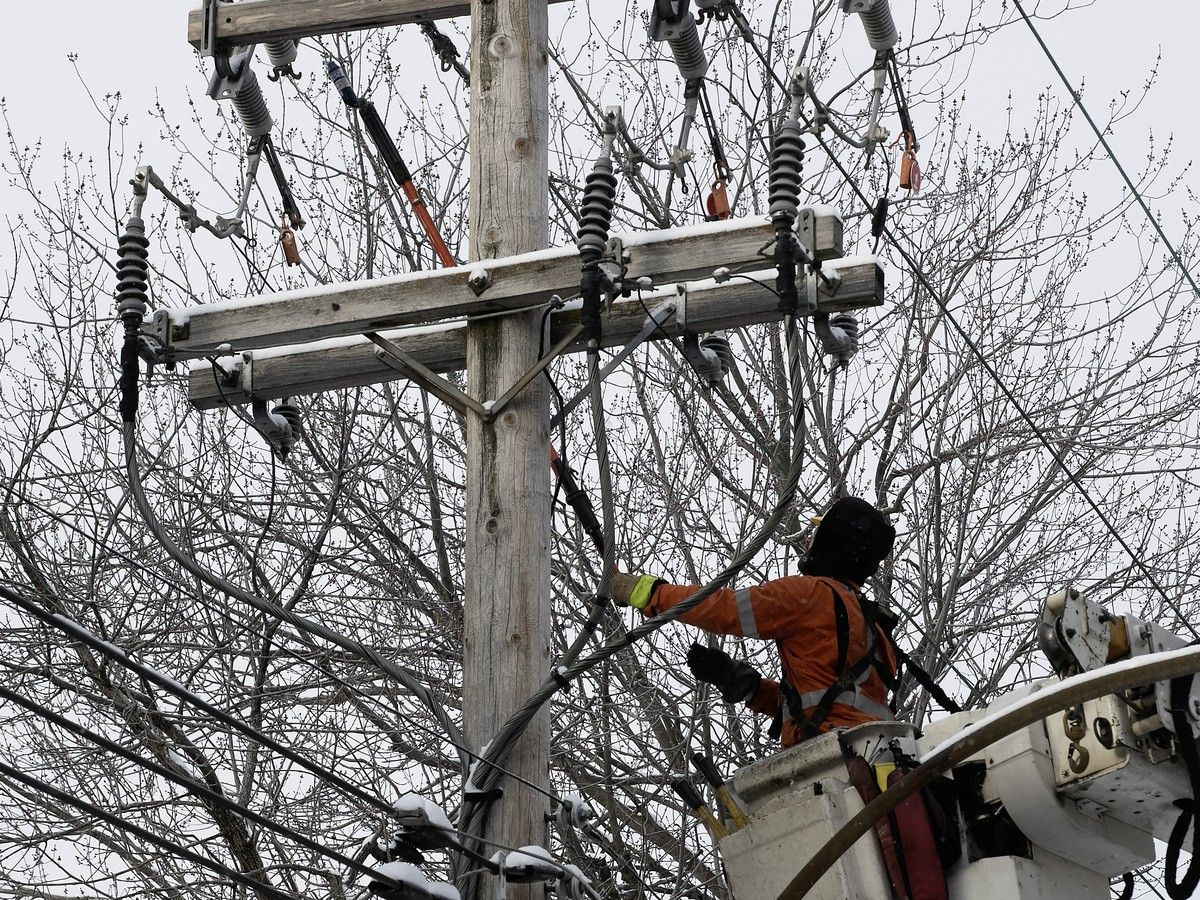
MONTREAL — Tens of thousands of Quebec residents were still grappling with power outages on Wednesday morning following a fierce windstorm that battered the province the previous day, leaving a trail of downed lines and uprooted trees in its wake.
According to Hydro-Québec, repair crews had restored electricity to nearly 294,000 addresses by 10:30 a.m. Wednesday, a significant improvement from the peak disruption that affected 320,000 customers on Tuesday. However, about 26,000 addresses remained without power, with the Montérégie region bearing the brunt at nearly 10,000 affected sites.
The storm's high winds, gusting strongly across much of southern Quebec, snapped branches and hurled debris into power infrastructure, causing widespread blackouts. On the island of Montreal, the situation was far less severe, with only 336 addresses still offline. In contrast, other areas like Lanaudière saw 2,728 addresses without power, Laval had 3,487 impacted, and the Laurentians reported 1,852 still in the dark.
Hydro-Québec officials expressed confidence in a swift resolution, stating that the network should be fully restored by the end of the day. "We expect to have our network restored by the end of Wednesday," the utility said in a statement, highlighting the tireless efforts of repair teams working through the night.
The outages came as no surprise to meteorologists, who had warned of severe weather conditions earlier in the week. Strong winds, fueled by a low-pressure system moving through the region, reached speeds that toppled trees and strained the electrical grid, reminiscent of similar events in recent years. In 2022, a comparable wind event left over 100,000 Quebecers without power for days, underscoring the vulnerability of the province's infrastructure to such natural forces.
Residents in the hardest-hit areas shared stories of inconvenience and minor disruptions. In Montérégie, where the majority of lingering outages persisted, local authorities reported no major injuries but noted challenges for elderly residents relying on electrically powered medical devices. One homeowner in Longueuil, speaking on condition of anonymity, described the scene: "The wind howled all night, and suddenly everything went dark. We've been using flashlights and the grill for cooking since yesterday."
While the primary cause was attributed to fallen branches on lines, some reports suggested that aging poles in rural areas contributed to the extent of the damage. Hydro-Québec has invested heavily in grid hardening over the past decade, including burying lines in high-risk zones, but Tuesday's storm tested those improvements. Engineers from the utility were on site assessing long-term fixes even as immediate restorations continued.
In Laval, where 3,487 addresses awaited reconnection, traffic lights flickered back on in some neighborhoods by early Wednesday, easing morning commutes. However, schools and businesses in the area reported delayed openings, with the local chamber of commerce estimating economic losses in the tens of thousands of dollars from the downtime. "It's a reminder of how dependent we are on reliable power," said a spokesperson for the chamber, who requested not to be named.
The Laurentians, known for their rugged terrain, faced additional hurdles in repairs due to inaccessible roads blocked by debris. Crews utilized helicopters in some instances to survey damage, a tactic employed in previous storms. By midday, progress was evident, with outages dropping by several hundred in the region.
Lanaudière's 2,728 affected addresses included remote communities where backup generators were in short supply. Provincial emergency services coordinated with Hydro-Québec to distribute aid, including water and non-perishable food to those most impacted. Officials emphasized that while the outages were widespread, the rapid response minimized risks.
Beyond the immediate electrical concerns, the winds also prompted scattered reports of structural damage, including roofs torn from sheds and fences flattened. Environment Canada recorded gusts up to 80 kilometers per hour in parts of the province, classifying the event as a significant weather episode but not on the scale of a full-blown hurricane.
As repairs progressed, attention turned to prevention measures for future storms. Quebec's government has allocated funds for resilience projects, including smart grid technologies that could detect and isolate faults more quickly. Experts from McGill University's climate center noted that intensifying weather patterns, linked to broader climate trends, may increase such incidents. "These events are becoming more frequent, and our infrastructure must adapt," one researcher commented in a recent report.
By afternoon, Hydro-Québec updated its outage map, showing further reductions across all regions. The utility urged customers to report downed lines and avoid hazardous areas, while praising the community's patience. In Montreal proper, with just 336 addresses left offline, life was largely returning to normal, with cafes and offices buzzing once more.
Looking ahead, the full restoration by Wednesday's end would mark a successful mobilization, but it also highlights ongoing challenges for a province prone to harsh winters and sudden summer squalls. As Quebecers powered through the day, the storm served as a stark reminder of nature's unpredictability and the critical role of public utilities in maintaining daily life.
In the broader context, this event aligns with a string of weather-related disruptions in eastern Canada this season, including floods in Ontario and ice storms in the Maritimes. Federal officials have discussed bolstering national infrastructure support, though details remain under review. For now, the focus in Quebec remains on getting the lights back on for those final thousands.