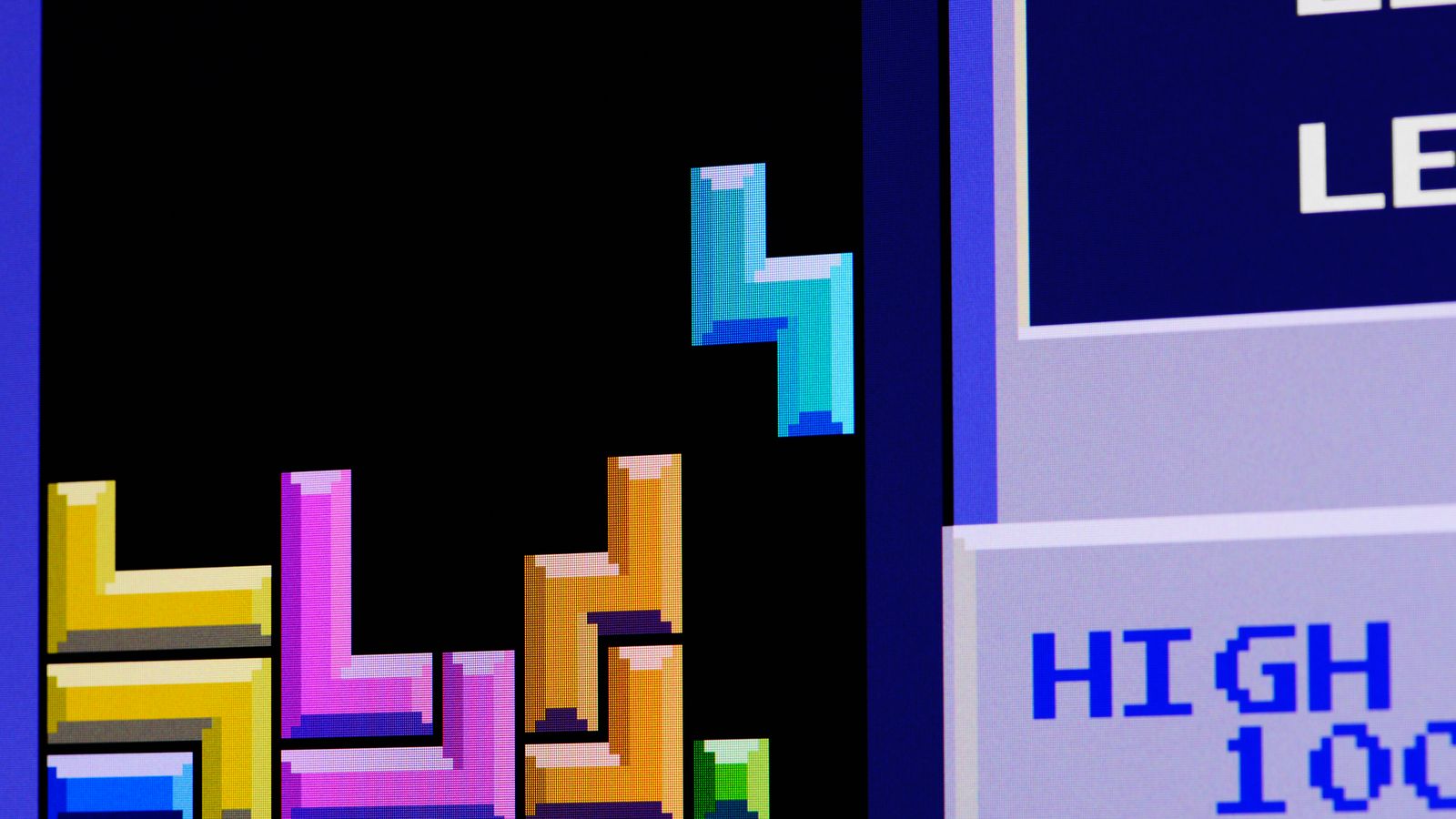
In a surprising turn for mental health treatment, researchers have discovered that playing the classic video game Tetris could significantly reduce flashbacks and intrusive memories associated with past trauma. The study, conducted by teams in the UK and Sweden, involved nearly 100 NHS staff members who had witnessed traumatic events, such as deaths during the COVID-19 pandemic. Published on Thursday, February 19, 2026, the findings suggest that a brief intervention using a modified version of the game can weaken the grip of traumatic recollections, offering a simple, accessible tool for those suffering from post-traumatic stress disorder (PTSD).
The trial focused on healthcare workers exposed to high-stress situations at their jobs, a group particularly vulnerable to psychological strain in recent years. According to the study led by Professor Emily Holmes of Uppsala University in Sweden, participants who engaged in the imagery competing task intervention (ICTI) experienced markedly fewer flashbacks compared to those receiving standard care or alternative distractions. ICTI involves patients briefly recalling a traumatic memory and then playing a slow-paced version of Tetris, mentally visualizing the game's falling blocks to occupy the brain's visuospatial processing areas.
These visuospatial regions, responsible for analyzing physical space and imagery, are believed to play a key role in how traumatic memories replay involuntarily. By flooding them with the game's geometric patterns, the intervention aims to disrupt the vividness of those memories. "Even a single, fleeting intrusive memory of past trauma can exert a powerful impact in daily life by hijacking attention and leaving people at the mercy of unwanted and intrusive emotions," Professor Holmes explained. "By weakening the intrusive aspect of these sensory memories via this brief visual intervention, people experience fewer trauma images flashing back."
The study divided participants into groups: around 40 received the ICTI treatment, while others underwent standard psychological support or listened to Mozart's music accompanied by podcasts about the composer. Within just four weeks, the Tetris group reported 10 times fewer flashbacks than the control groups. Follow-up assessments after six months revealed that 70 percent of those in the ICTI cohort had no intrusive memories whatsoever, a stark improvement that also alleviated broader PTSD symptoms.
Professor Holmes described the results as "a real breakthrough," emphasizing the treatment's design for practicality. "While the treatment is more than just playing Tetris, it is designed to be as gentle, brief, and practical as possible to fit into people's busy lives," she said. The intervention typically lasts only a short session, making it feasible for integration into everyday routines without requiring extensive therapy sessions or verbal recounting of trauma, which can be distressing for many patients.
The research was funded by Wellcome, a global charitable foundation supporting mental health initiatives. Tayla McCloud, the organization's research lead for digital mental health, hailed the potential scalability of the approach. "It's rare to see something so accessible, scalable and adaptable across contexts," McCloud stated. "It doesn't require patients to put their trauma into words and even transcends language barriers." This non-verbal method could prove especially valuable in diverse or multicultural settings, where expressing deep-seated experiences might be hindered by linguistic or cultural differences.
The concept draws on the well-known "Tetris Effect," a phenomenon first observed in the 1990s among heavy players of the game. Created in 1984 by Soviet programmer Alexey Pajitnov, Tetris involves rotating and stacking falling tetrominoes to form complete lines, a task that heavily engages spatial reasoning and visual memory. Prolonged play has led some to report seeing the blocks in their dreams or perceiving real-world objects as if they were aligning like game pieces. Early studies hinted at the game's ability to influence mental imagery, but this latest research marks the first rigorous application to trauma recovery.
Participants in the trial were primarily NHS staff from the UK, many of whom had endured the front lines of the pandemic, witnessing patient suffering and loss firsthand. The study recruited close to 100 individuals, ensuring a robust sample size for initial findings. Researchers from Uppsala University collaborated with UK-based institutions, combining expertise in clinical psychology and neuroscience to refine the ICTI protocol. The slow version of Tetris used in the sessions was specifically adapted to maximize cognitive load on visuospatial functions without overwhelming participants.
While the results are promising, experts caution that this is an early-stage trial. The team now plans to expand testing to larger, more diverse populations, potentially including veterans, accident survivors, or refugees. "The impact of the study could be enormous," McCloud noted, pointing to the low cost and widespread availability of the game as key advantages. Tetris, now over four decades old, is accessible on nearly every digital platform, from smartphones to computers, requiring no specialized equipment.
Broader context underscores the urgency of such innovations. PTSD affects millions worldwide, with healthcare workers alone reporting elevated rates since the pandemic began in 2020. Traditional therapies, like cognitive behavioral therapy, often demand time and resources that many lack. The ICTI approach, by contrast, offers a quick, self-administered element that could complement existing treatments. However, not all mental health professionals are immediately convinced; some sources suggest further randomized controlled trials are needed to confirm long-term efficacy across different trauma types.
One related study from the early 2000s, also involving Holmes, explored Tetris's role in preventing PTSD symptoms shortly after trauma exposure, such as in emergency room settings. That work laid groundwork for this intervention, showing that playing the game soon after an event could reduce subsequent intrusions. Building on that, the current trial targeted established memories, demonstrating the method's versatility for both prevention and treatment.
The findings have sparked interest beyond academia. Mental health advocates see potential for digital therapeutics to democratize care, especially in under-resourced areas. Wellcome's involvement signals institutional backing, with the foundation having invested heavily in digital mental health solutions post-pandemic. McCloud highlighted how ICTI avoids the emotional toll of retelling stories, allowing patients to engage passively through gameplay.
Looking ahead, researchers aim to integrate ICTI into NHS protocols, possibly via apps that guide users through the visualization process. Professor Holmes and her team are preparing multicenter trials to include non-healthcare trauma survivors, with preliminary discussions underway for international collaborations. If successful, this could redefine how we approach memory-based disorders, blending entertainment with evidence-based therapy.
As the study gains attention, it also revives curiosity about video games' psychological effects. From the Tetris Effect to modern applications in cognitive training, gaming's role in health is evolving. For the NHS staff who participated, the intervention provided not just relief but a novel way to reclaim mental space from past horrors. One anonymous participant reportedly described the sessions as "like hitting pause on a nightmare," illustrating the personal resonance of the findings.
In summary, this breakthrough positions Tetris not as mere pastime but as a potential ally in healing. With experts like Holmes and McCloud advocating for wider adoption, the coming years may see this 1980s icon fitting into contemporary mental health arsenals, offering hope to those haunted by trauma's echoes.